Grace Ceperley, the Heiress Who Chose Gardens Over Parties
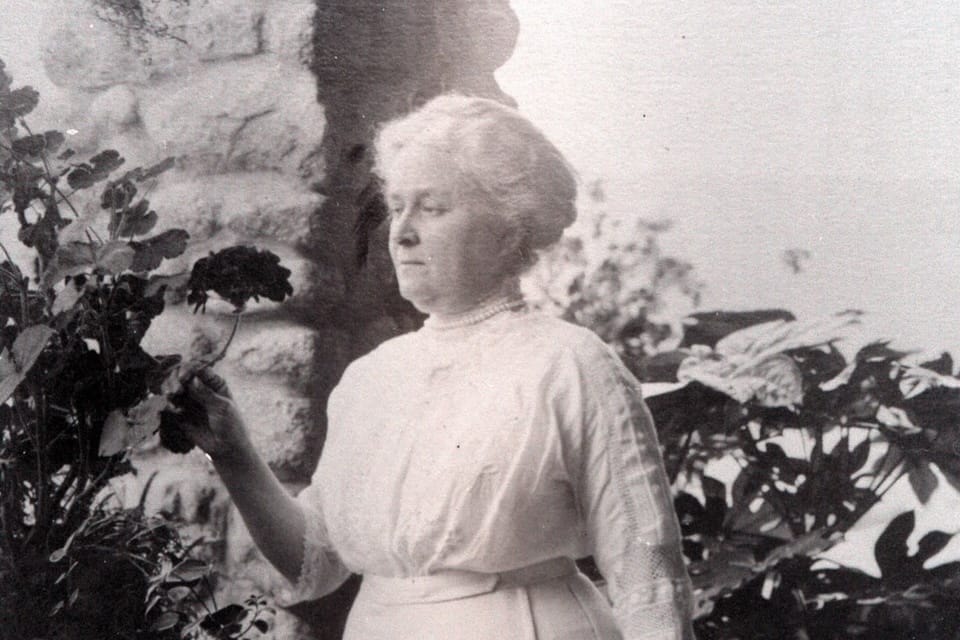
Most mornings, while her husband entertained guests in the parlour, Grace Ceperley walked alone through the gardens at Fairacres. Ten acres of terraced rockeries, winding paths, rose beds, and manicured lawns sloped toward the still water of Deer Lake. The North Shore mountains held the horizon. If anyone called for her, she didn't always come back quickly. The gardens were hers and not just in spirit, but on paper.
It was an unusual arrangement for 1909. The twenty-acre estate on Deer Lake's north shore, purchased from strawberry farmer George Clayton, was registered solely in Grace's name. In an era when married women in British Columbia seldom exercised their legal right to hold property independently, this was not a formality. It was the clearest statement Grace ever made — not in a speech or a newspaper column, but in a deed.
Everything she would leave behind — the playground, the gallery, the cultural heart of a city — grew from that quiet act of ownership.
A fortune with conditions
Grace Elizabeth Dixon was born February 24, 1863, in Mount Clemens, Michigan. She came to Vancouver through family. Her sister Marion had married A.G. Ferguson, one of Vancouver's wealthiest pioneers and among its first park commissioners. Ferguson was a man who loved Stanley Park so deeply that when city funds ran dry, he paid its maintenance costs from his own pocket. Grace lived with the Fergusons as a young woman; the 1891 census lists her in their household as a twenty-eight-year-old sister-in-law. The couple had no children. Marion died in August 1902, the newspapers noted her charity work and her place among the city's earliest residents. Ferguson himself, already ill, died in San Francisco the following year. With no children and no wife, he left a substantial portion of his fortune to Grace, the closest family he had left, with one condition: that the money should eventually benefit Vancouver's children.
In 1894, she had married Henry Tracey Ceperley in Vancouver. Henry was a figure of a different kind: gregarious, well-connected, a born dealmaker. He had arrived in the city in 1886, the very year of its incorporation, and built Ceperley Rounsefell and Company into one of British Columbia's largest real estate and insurance firms. He was the sort of man who encouraged CPR Vice-President William Van Horne to establish the military reserve as Stanley Park, and then made sure the right people knew about it. Grace became stepmother to his two surviving children from his first marriage, Ethelwynn and Arthur.
They were a study in contrasts. Henry wanted the social calendar. Grace wanted the garden.
Building Fairacres
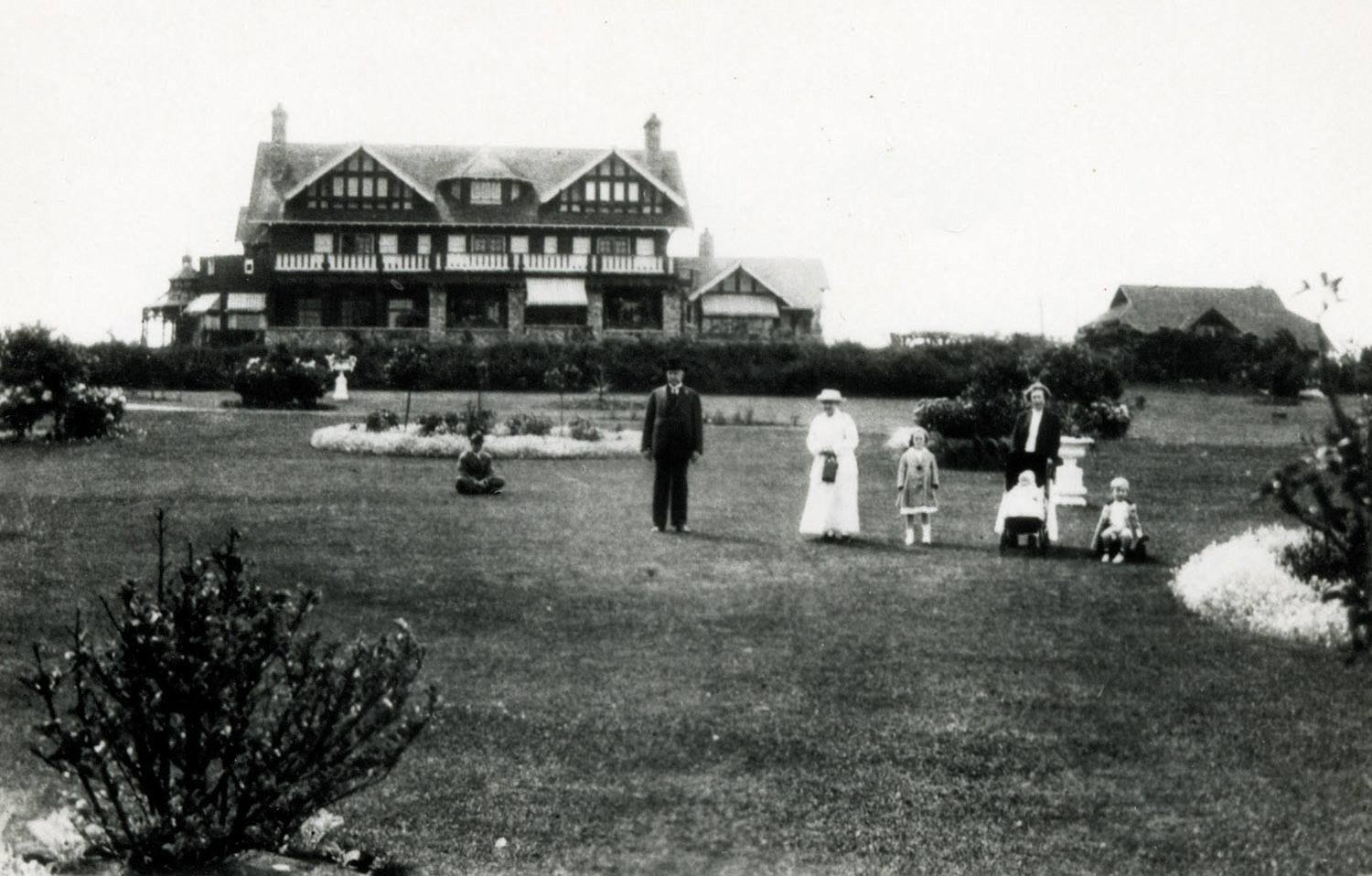
When Grace decided to use her Ferguson inheritance to build a house, she did not build something modest. Fairacres, completed in 1911, cost $150,000 (4-6 million dollars today) making it the largest and most expensive residence in Burnaby. The scale was about a vision that belonged entirely to her.
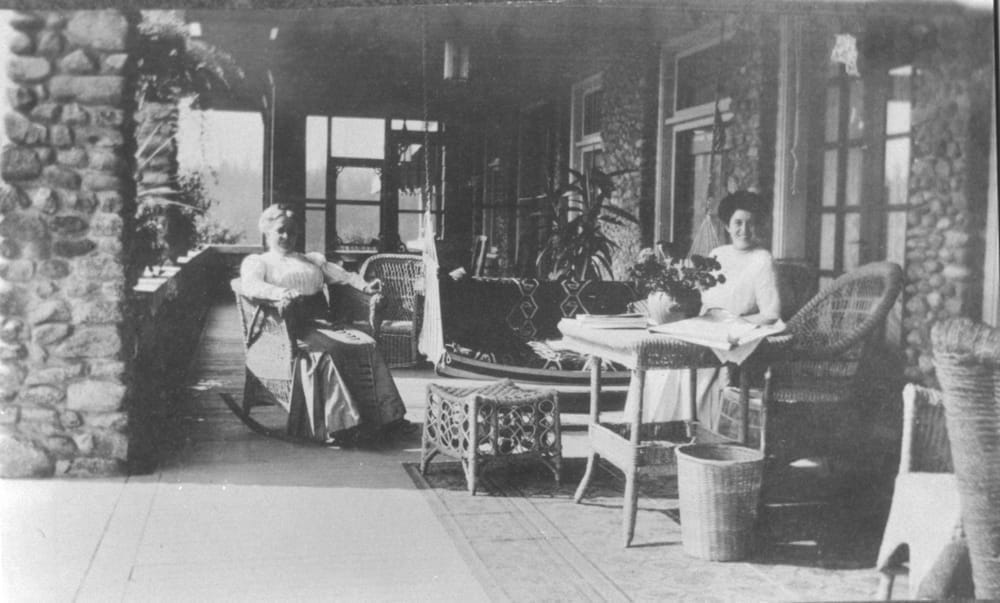
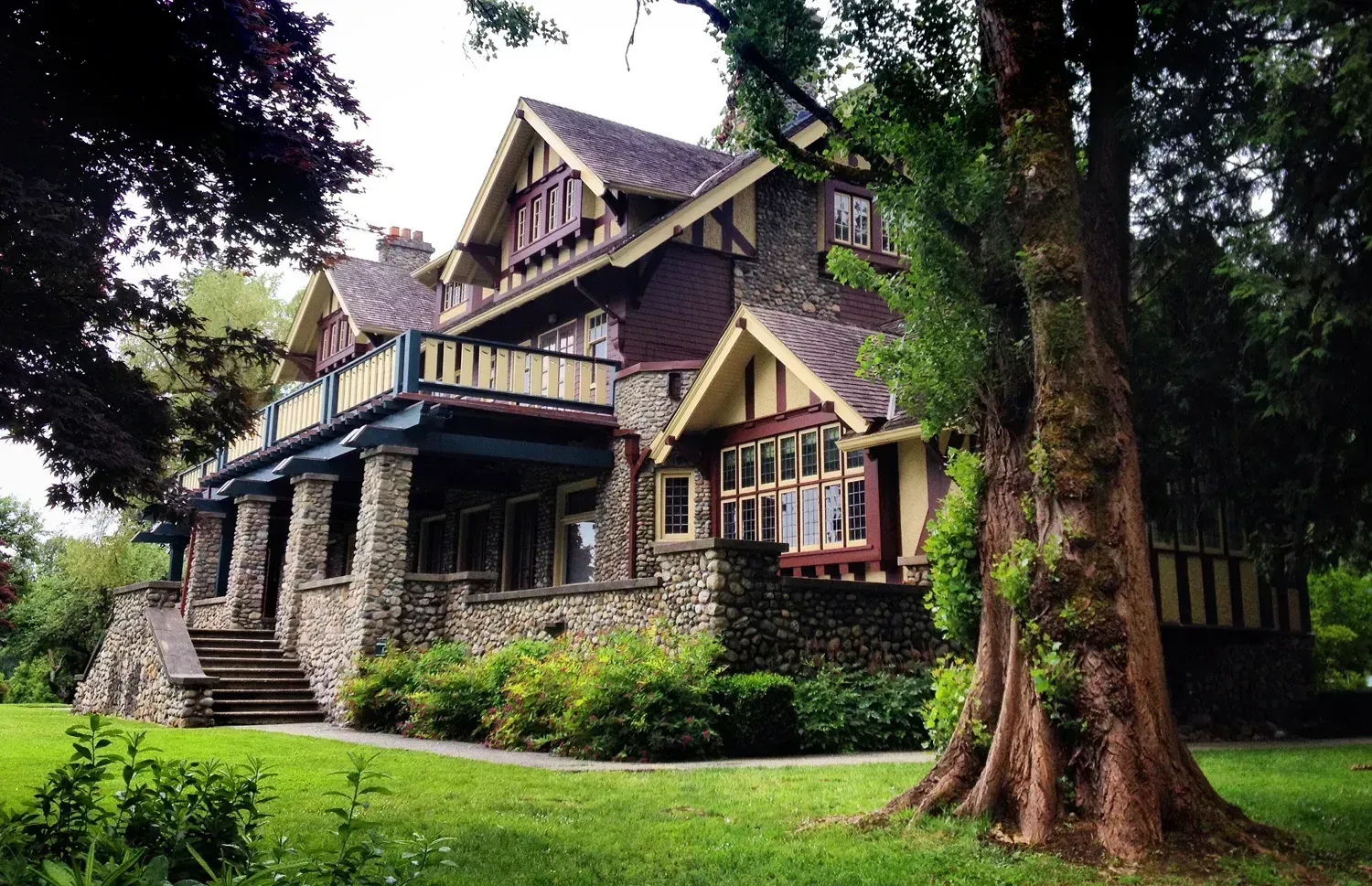
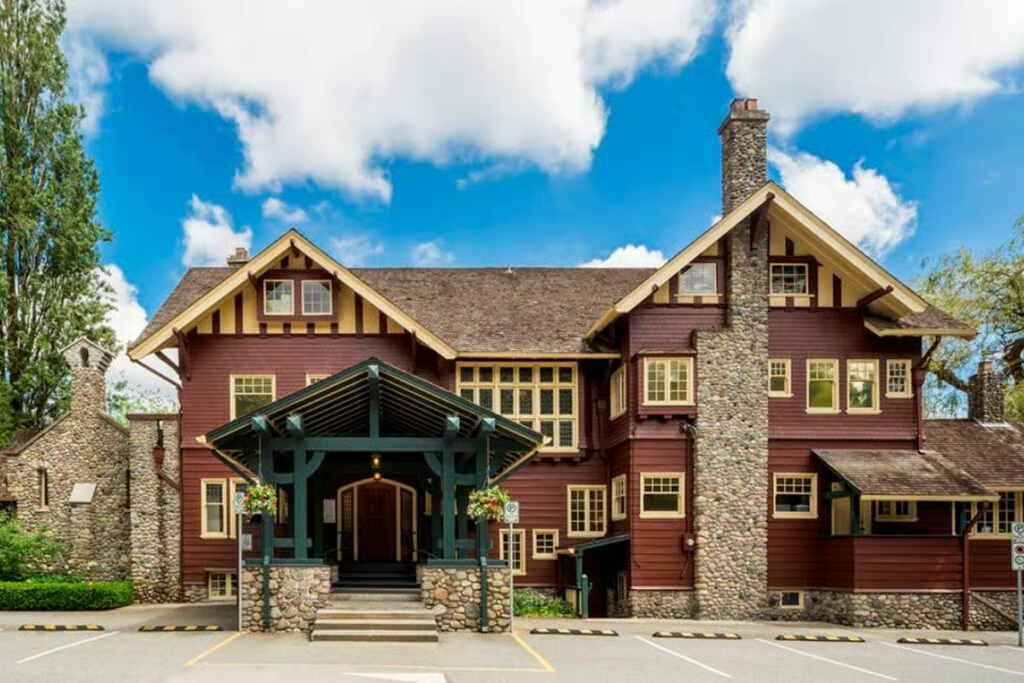
English architect Robert Percival Sterling Twizell designed the two-and-a-half-storey mansion in the British Arts and Crafts style, with a river rock veranda that opened onto the lake. Inside, Scottish master woodcarver George Selkirk Gibson created intricate panelling that is still visible today. Imported Medmenham tiles (the earliest documented use outside the United Kingdom) lined the fireplaces. The billiard room had an inglenook. Crystal chandeliers hung in the main rooms. But Grace's attention, by all accounts, went to the grounds.
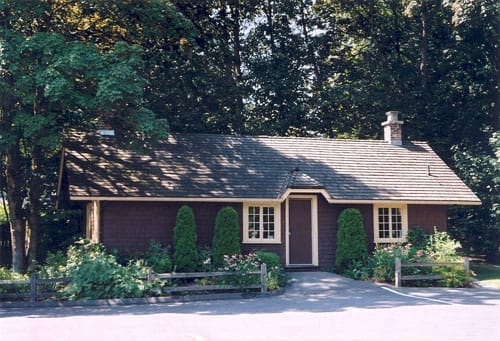
The landscape gardener Mr. Legge laid out terraces, rockeries, sprawling lawns, and garden ponds — the kind of grounds that required a small army of workers and a dedicated steam plant to maintain. A lodge, stables, greenhouse, root house, and chauffeur's cottage filled out the property. When an English chauffeur named Mr. Muttit arrived for his post and saw the cottage, he refused to live in it. "As a socialist," he told the Ceperleys, "he would not live a 'feudal life' on the estate."
A 1912 newspaper wrote that Fairacres, with "its fine lawns, terraces, rockeries, greenhouses, pumping station for irrigation, lodge stables and outbuildings, costing $150,000 is alone worth a visit to Deer Lake."
Grace did not write a letter to the editor in reply. She went back to her garden.
A quiet life, closely watched
Author Jo-Anne Christensen later described Grace as "quiet," someone who "often kept to herself." While Henry threw parties for Vancouver's social elite, Grace preferred solitude. She walked the paths she had designed. She tended to what she had planted. The house was full of people; the garden was hers alone.
Those who knew her noted one thing above all: her deep affection for children. She had none of her own, but she was devoted to her stepchildren and passionate about youth causes. It was a tenderness that would outlast her, though she could not have known how far it would reach.
The years at Fairacres were not long. Grace lived there for less than a decade before her health declined.
The will
Grace Ceperley died on November 21, 1917, at age fifty-four, at the family's Shaughnessy Heights residence. BC women had won the provincial vote just seven months earlier, in April 1917. Whether Grace ever cast a ballot remains unknown.
What is known is that she wrote a will, carefully, specifically, with the precision of someone who had thought about this for a long time. She earmarked $13,000 for a children's playground in Stanley Park. The gift honoured Ferguson's original wish: that his fortune would benefit Vancouver's children. Grace had carried that condition since 1903. Now she passed it forward.
Henry, who had always preferred city life to the seclusion of Deer Lake, did not stay. He sold Fairacres in 1922 to Frederick Buscombe, a former Vancouver mayor. The gardens Grace had walked every morning passed into someone else's hands. Henry himself died in 1929, and only then, with both Ceperleys gone, did the conditions of Grace's bequest finally come to fruition.
The playground
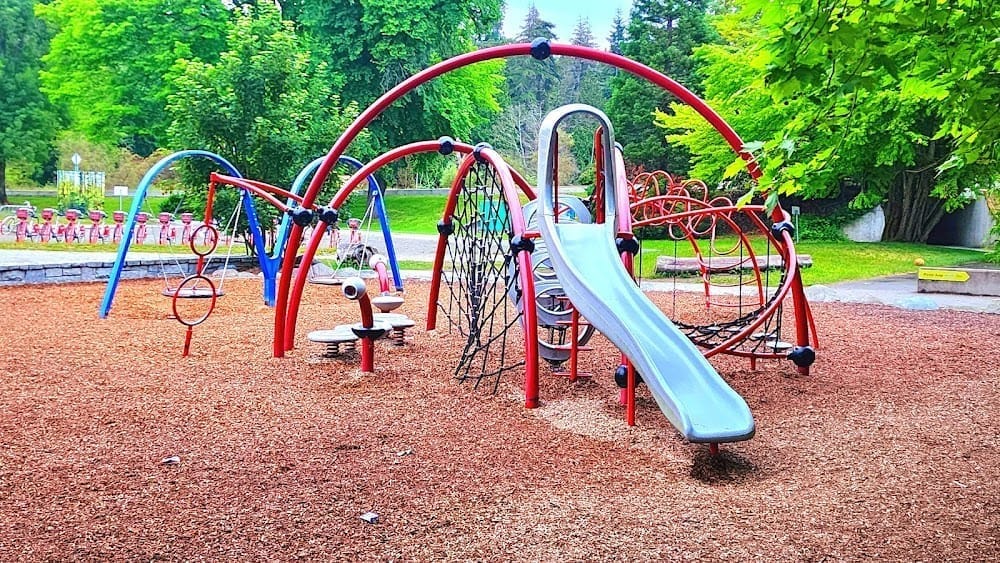
The resulting Ceperley Playground near Second Beach became one of the largest in Canada: giant slides, ladders, seesaws, a sandbox, a wading pool, a bridge canal, track and field facilities. A place built for the noise and chaos and joy of children, the one thing Grace loved most and the one thing her gardens had been too quiet to contain.
Today, the playground sits within the larger Ceperley Park, which encompasses surrounding meadows, a basketball court, picnic shelter, and two large play areas near Second Beach. The space hosts Movies in Stanley Park, the Terry Fox Run, and the Celebration of Light Festival (well, it was). The adjacent Ceperley Meadow, a wetland habitat currently being restored by the Stanley Park Ecology Society, preserves natural areas within the urban park. A commemorative plaque honours Grace as the benefactor whose vision made it all possible.
In 2007, the playground was refurbished alongside the unveiling of the Air India Memorial, commemorating the eighty-two children among the 331 victims of that 1985 tragedy, a fitting addition to a space dedicated to children by a woman who loved them.
What became of the house
The mansion Grace built lived many lives after her. Buscombe sold it in 1939 to Benedictine monks, who added a gymnasium, now the James Cowan Theatre. The monks departed in 1954. A private school moved in. Then, in 1966, the City of Burnaby purchased the property.
The timing could not have been better. Canada's 1967 Centennial celebration prompted communities nationwide to create lasting cultural projects. Burnaby transformed Fairacres into the Burnaby Art Gallery — the city's first civic heritage conservation project. Today, it remains the only public art museum in Canada dedicated exclusively to works on paper.
The surrounding grounds became Century Gardens, planted with rhododendrons (Burnaby's official flower) that echo, however faintly, the horticultural ambition Grace established over a century ago. Heritage Burnaby has noted that the construction of Fairacres "spawned the transformation of the Deer Lake area from a farming community into a preferred location for elite suburban homes." The neighbourhood Grace chose for its quiet eventually became Burnaby's cultural centre, home to the Shadbolt Centre for the Arts and Burnaby Village Museum.
The mansion was designated a heritage property under Burnaby Bylaw No. 9807 in 1992 and listed on the Canadian Register of Historic Places. Between 1998 and 2000, its exterior was restored to the 1911 appearance. Six original outbuildings survive: the Garage and Stables, Chauffeur's Cottage, Steam Plant Building, Root House, Greenhouse Foundation Wall, and the distinctive cobblestone-and-sandstone Estate Gate.
A presence that may linger still
Grace Ceperley's attachment to Fairacres has generated persistent folklore. Multiple staff members at the Burnaby Art Gallery have reported seeing a woman in a flowing white dress walking through the galleries. According to accounts compiled by author Eve Lazarus in "At Home with History: The Untold Secrets of Greater Vancouver's Heritage Houses", the apparition brings feelings of "peace and tranquility, but sometimes sadness and loneliness."
The stories have earned the mansion a spot on "Creepy Canada" and Halloween walking tours. They persist because the house still feels inhabited by intention — as if someone who once walked these rooms every morning never quite agreed to leave.
The name that remains
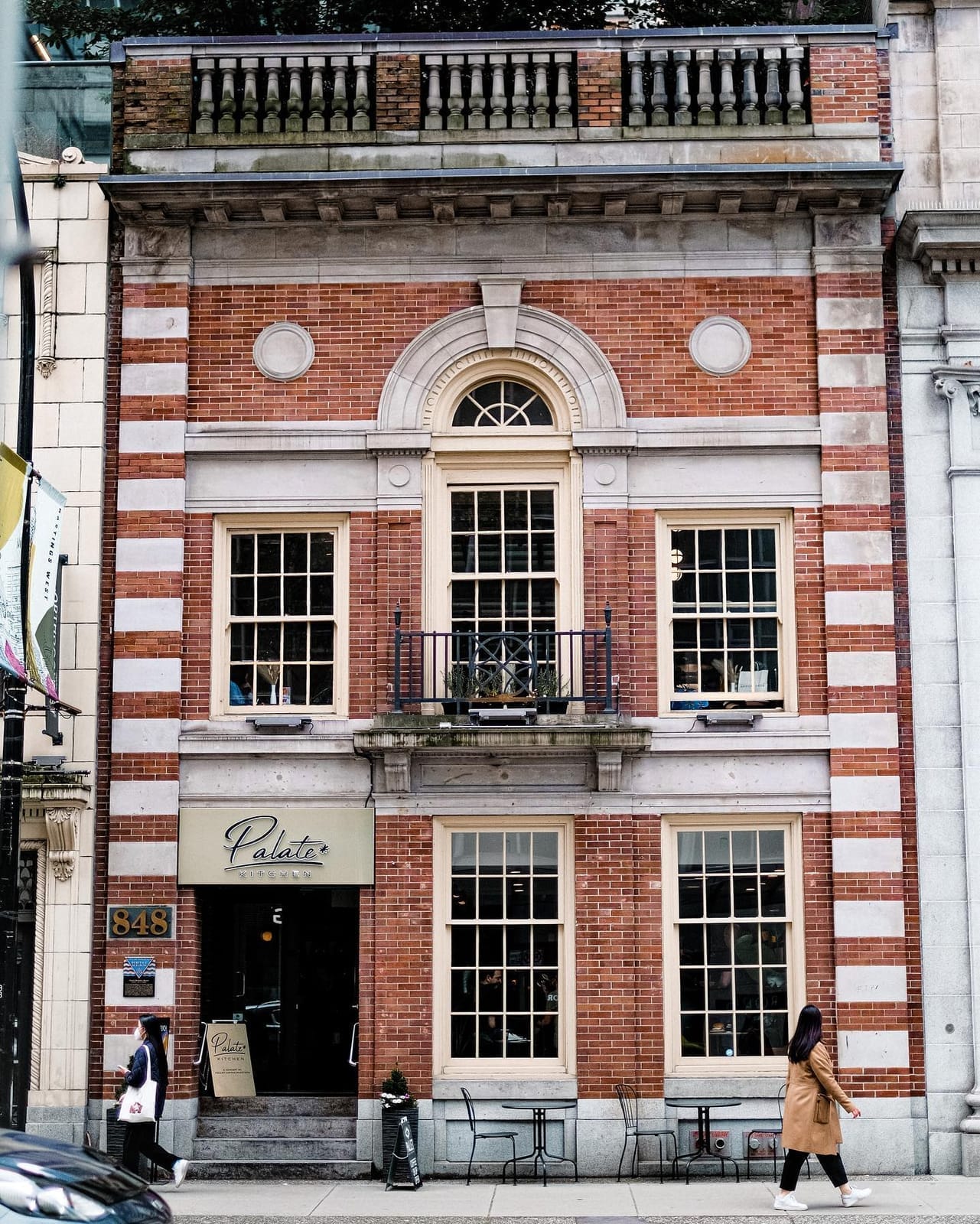
The Ceperley name is still visible across the Lower Mainland. Beyond the gallery and playground, Henry's former business headquarters still stands at 848 West Hastings Street in downtown Vancouver. The 1921 Ceperley Rounsefell Building (now home to Palate Kitchen) was restored in 2011 and retains its original Roman-themed interior details, ceiling skylights, and Georgian Revival facade. The company itself dissolved decades ago, but its building earned a Vancouver Heritage Award of Merit in 2013.
Grace Ceperley lived through one of British Columbia's most transformative eras. She witnessed Vancouver's founding, the Great Fire that destroyed the city in twenty-five minutes, the Klondike Gold Rush, multiple real estate booms and busts, the incorporation of Burnaby in 1892, and the suffrage movement that finally gave BC women the vote. She occupied an unusual position for a woman of her time: property owner, estate builder, philanthropic decision-maker. While her husband's name adorned the real estate company and the business dealings, it was Grace who held the deed to Fairacres, Grace who funded its construction, and Grace whose will ensured her fortune would benefit children for generations.
The garden and the crowd
Grace Ceperley sought no monuments. She preferred her gardens to parties, solitude to society. Yet the quiet woman who loved children and roses left an indelible mark on two of the region's most visited public spaces.
Every child who scrambles up the playground equipment at Ceperley Park, every art lover who wanders through the galleries at Fairacres, every jogger who passes through Ceperley Meadow walks through the landscape of her generosity. What she planted in private became, in time, profoundly public. The garden she kept to herself gave way to a playground full of noise, and that may have been exactly what she wanted.
She built a house; it became a gallery. She endowed a playground; it became a gathering place for thousands. In an era when women's contributions were often invisible, Grace Ceperley's legacy endures in stone and green space, art and laughter, a testament to what quiet determination and thoughtful giving can leave behind.
Editor & Publisher
Artom Butenko
Founder and editor of 8 Pages Burnaby. Writes the fact-dense, archival pieces — origins, infrastructure, and the documents that explain how the city works.
More from February 2026
Full issue →
Burnaby's basement rebellion: How suburban teenagers built Vancouver's punk revolution
Canada's most influential punk scene wasn't born in gritty urban streets—it emerged from the split-level basements of Burnaby Mountain. How childhood friendships in a bedroom community produced D.O.A., The Subhumans, and the country's first indoor skatepark.
Artom Butenko · 17 min read
The Butterfly Painter of Capitol Hill: a story of Jack Shadbolt
For 48 years, Canada's most celebrated modern painter worked from a skylit studio on a Burnaby mountainside, transforming wartime trauma into butterflies and leaving behind the community arts centre that bears his name.
Brenda · 10 min read
What Remains of Expo 86 in Burnaby
Forty years ago, a world's fair transformed Vancouver. But its true legacy isn't the pavilions or the fireworks. It's the concrete pillars carrying trains above Burnaby's streets every day. It's the route you may have taken this morning.
Artom Butenko · 10 min read