The School That Stayed: Gilmore Community, The Silent Witness
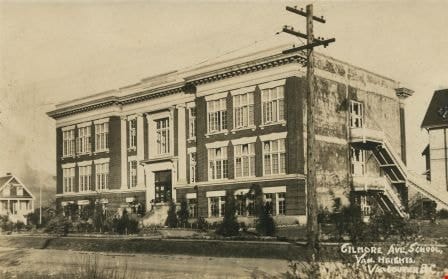
Gilmore Community School is easy to miss. It sits on a calm stretch of South Gilmore Avenue, set back from the street, half-hidden by trees and surrounded by lonely buildings. No landmark signs, no architectural drama, just a brick building from 1915 with a dentilled cornice and heavy wooden doors. The neighbourhood around it is unhurried, residential, the kind of place where you hear birdsong between the school bells. It takes a moment to register what you're looking at: the only surviving brick school from that era in all of Burnaby. Over more than a century, this building has watched the world change while barely changing itself. It survived two world wars, the Great Depression, the Cold War, and the building boom that reshaped the city around it. Children from a squatter settlement on stilts once sat in its classrooms. So did the sons and daughters of railway workers, mill hands, and immigrants building new lives on cheap land.
This is the story of one building, but within it lies the story of Burnaby itself.
A Tent in the Forest
In 1911, the site of today's school was forest. The nearest railway station had only just appeared, on February 27th of that year, BC Electric Railway drove the last spike on the Burnaby Lake line at Hastings Townsite. Regular service began on June 12th. The interurban cars carried milk, eggs, and chickens as Fraser Valley farmers shipped their goods to Vancouver's markets. They also carried settlers, families buying cheap land in the Vancouver Heights area.
By autumn 1911, enough children had arrived for the Burnaby School District to consider their education. But there was no time or money to construct a building. The solution was simple: they pitched a tent. And so the first lessons began — among stumps and ferns, under the drumming of rain on canvas.
Fifty-Three Students and One Teacher
In January 1912, a wooden building replaced the tent - Vancouver Heights Public School. One room, one teacher, fifty-three students aged six to sixteen. The teacher's name was Miss Mary Anne Crossan.
Almost nothing is known about her, not where she came from, how long she worked at the school, or where she went afterward. Her name appears once in the school district archives, in a list from 1912. But try to imagine her work: one young woman, fifty-three children of different ages, one room, one blackboard. A first-grader learning to read sits beside a sixteen-year-old solving equations. And beyond the window forest still being cleared for new streets.
A Mistake That Became a Name
In 1913, the school was renamed to honour Hugh Bowie Gilmour, a local politician and reformer. Gilmour was born in Toronto in 1861, worked as a mechanical engineer, served on Vancouver City Council, and was a member of the BC Legislative Assembly from 1900 to 1903. He later became the first commissioner of the Workmen's Compensation Board, a position he held until his death in 1934.
But someone in the municipal clerk's office made an error. The surname Gilmour was recorded as Gilmore, with an 'o' instead of 'ou.' The mistake went unnoticed. The school became Gilmore Avenue School, the street was named Gilmore Avenue, and seventy years later, when SkyTrain was built, the station was also named Gilmore. A clerical error from 1913 became the official name of an entire neighbourhood.
The First Brick School
In 1915, a brick building replaced the wooden one. Architect Joseph Bowman designed it as part of the "Grey Buildings" program, standardized modular schools for Burnaby's growing suburbs. The style was restrained Classical Revival: red brick, symmetrical facade, tall windows, dentilled cornice.
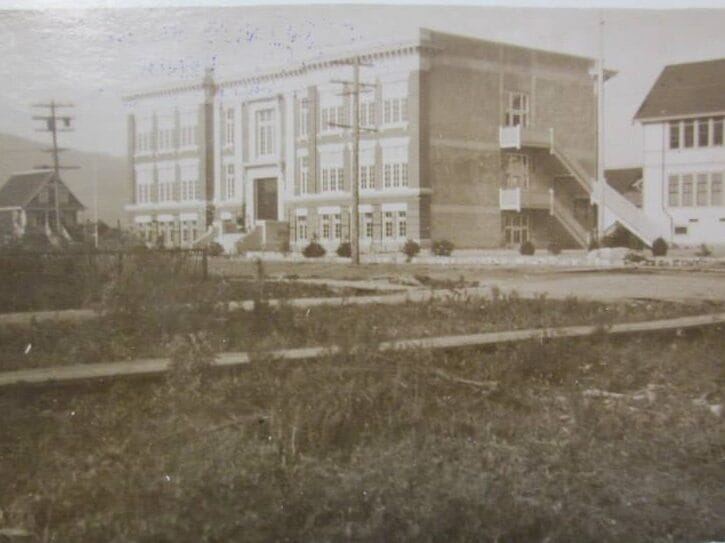
Today, this building is the only surviving brick school from that era in all of Burnaby. All the others were demolished or rebuilt. Gilmore School was expanded in 1922 (four classrooms added) and 1929 (an auditorium built), and in 2013 underwent a $10.7 million seismic upgrade. But the original 1915 structure still stands, with its heavy wooden doors, rounded classroom walls, and coat hooks in the cloakrooms.
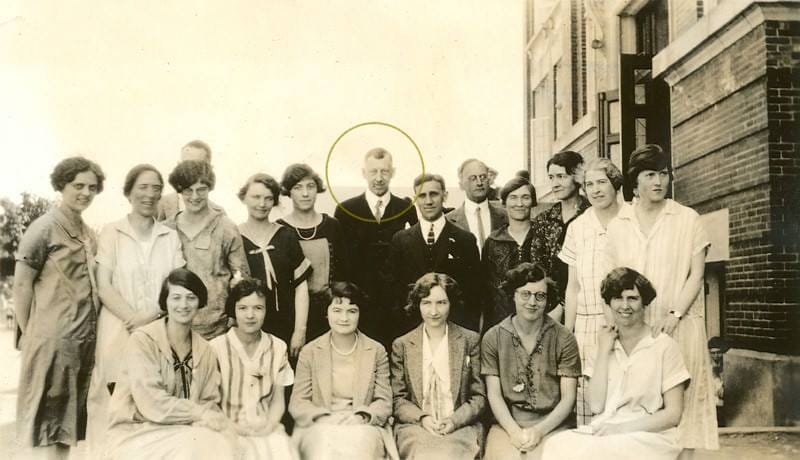
That same year, 1915, S.J. Griffiths arrived, a new principal. He would serve for thirty-two years, until 1947. In that time, the world changed several times over.
In 1915, his students watched their fathers and older brothers leave for the First World War, many never returned. In the twenties, the school lived through the Jazz Age and prosperity. In the thirties — the Great Depression, when families lost homes and jobs, and children came to class hungry. In the forties — war again, more farewells, more telegrams bearing bad news. Griffiths witnessed it all from his office window. Governments, fashions, and technologies changed, but every morning he opened the heavy door and greeted the children.
The Children from Crabtown
The most poignant chapter in the school's history is connected to a settlement that no longer exists. Crabtown — that's what they called the squatter community on the shore of Burrard Inlet, between the railway tracks and the water. Houses stood on pilings, connected by wooden boardwalks. The settlement grew in 1912, when sawmill workers couldn't find housing. During the Great Depression, families who had lost everything moved in.
By 1957, Crabtown had 130 people living in 114 homes. Historian Chuck Davis, who spent his childhood there, recalled that his father bought a shack for $300 in 1944. "When a train went by, the whole shack trembled," Davis wrote. "But I loved the place." Trudi Tuomi, who lived in the settlement from 1937 to 1947, described the "modern conveniences": a toilet that flushed with the tide, and a refrigerator that was a hole in the ground where they kept butter cold.
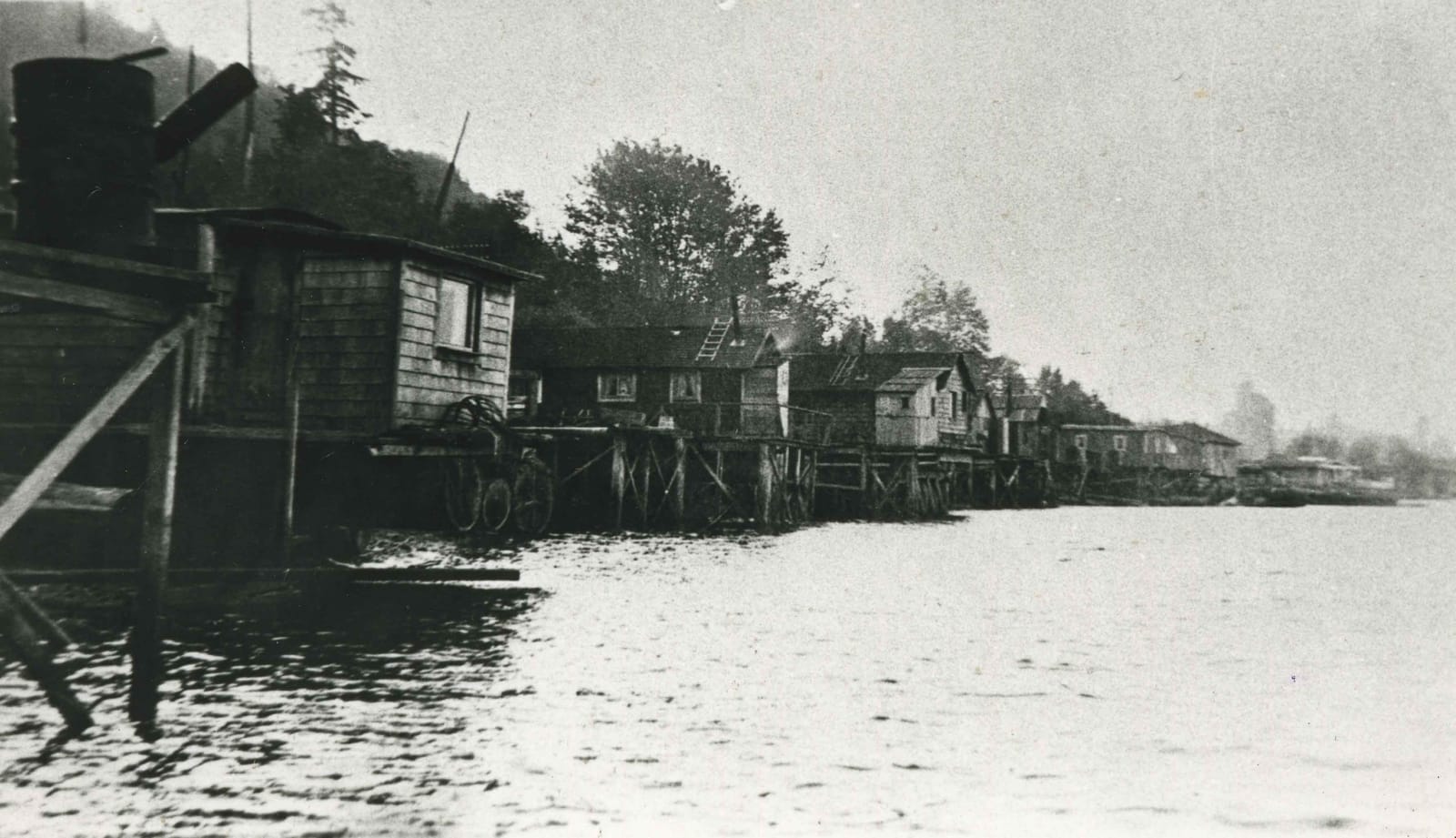
The residents of Crabtown were talented people, fishermen, carpenters, boat builders, artists. They built the settlement's infrastructure themselves: the boardwalks, the water supply, the stairs and trails up the bluff. Those trails led to Gilmore School.
Every morning, the children of Crabtown climbed the steep steps, walked through the streets, and arrived at the same school as children from "normal" houses. But there was one difference: the journey from the shore took so long that the Crabtown children couldn't go home for lunch. They were the only students who stayed at school to eat their packed sandwiches.
In 2016, for the school's centennial, filmmaker Yunuen Perez Vertti made a documentary in which former students shared memories of those times. The oral histories are preserved in the Heritage Burnaby archive: stories of the Great Depression, of the Second World War, of children who walked to school every day from a village on stilts.
In 1957, the National Harbours Board evicted all of Crabtown's residents for "encroaching on federal property." All 114 homes were demolished. Today, only a commemorative plaque remains on the Trans Canada Trail, near the Ironworkers Memorial Bridge.
The Siren on the Roof
In the 1950s, an air raid siren was installed on the school's roof. Bruce McRae, whose mother worked as an assistant at the school, remembered the drills: "The sound was terrifying." Children hid under their desks, covering their heads with their hands — preparing for a nuclear attack that, thankfully, never came. The Cold War had reached Burnaby.
From Swamp to Skyscraper
When the school was built, the surrounding area was swampland. Still Creek flowed through the undergrowth, and the interurban carried farmers and milk. Then the swamp was drained, a highway was built, SkyTrain arrived. The neighbourhood became known as Brentwood, land prices soared, and towers rose.
In 2024, the Onni Group completed the Gilmore Place development — seven towers beside the Gilmore SkyTrain station. The central tower, Two Gilmore Place, rises 64 storeys and 215.8 metres, surpassing Vancouver's Living Shangri-La to become the tallest building in British Columbia. It contains 643 homes. Below are a T&T Supermarket, shops, and offices.Gilmore School stands a few hundred metres from this colossus. From the upper floors of the tower, you can probably see the red brick roof. One wonders whether the skyscraper's residents ever think about what happened here a century ago, the tent in the forest, the children from a settlement on stilts, the air raid siren on the roof.
The Silent Witness
Today, Gilmore Community School operates as an elementary school with kindergarten (from K to Grade 7). The address remains the same: 50 South Gilmore Avenue. In 1976, it became a community school, and since the 2013 seismic upgrade, it has continued to welcome students.
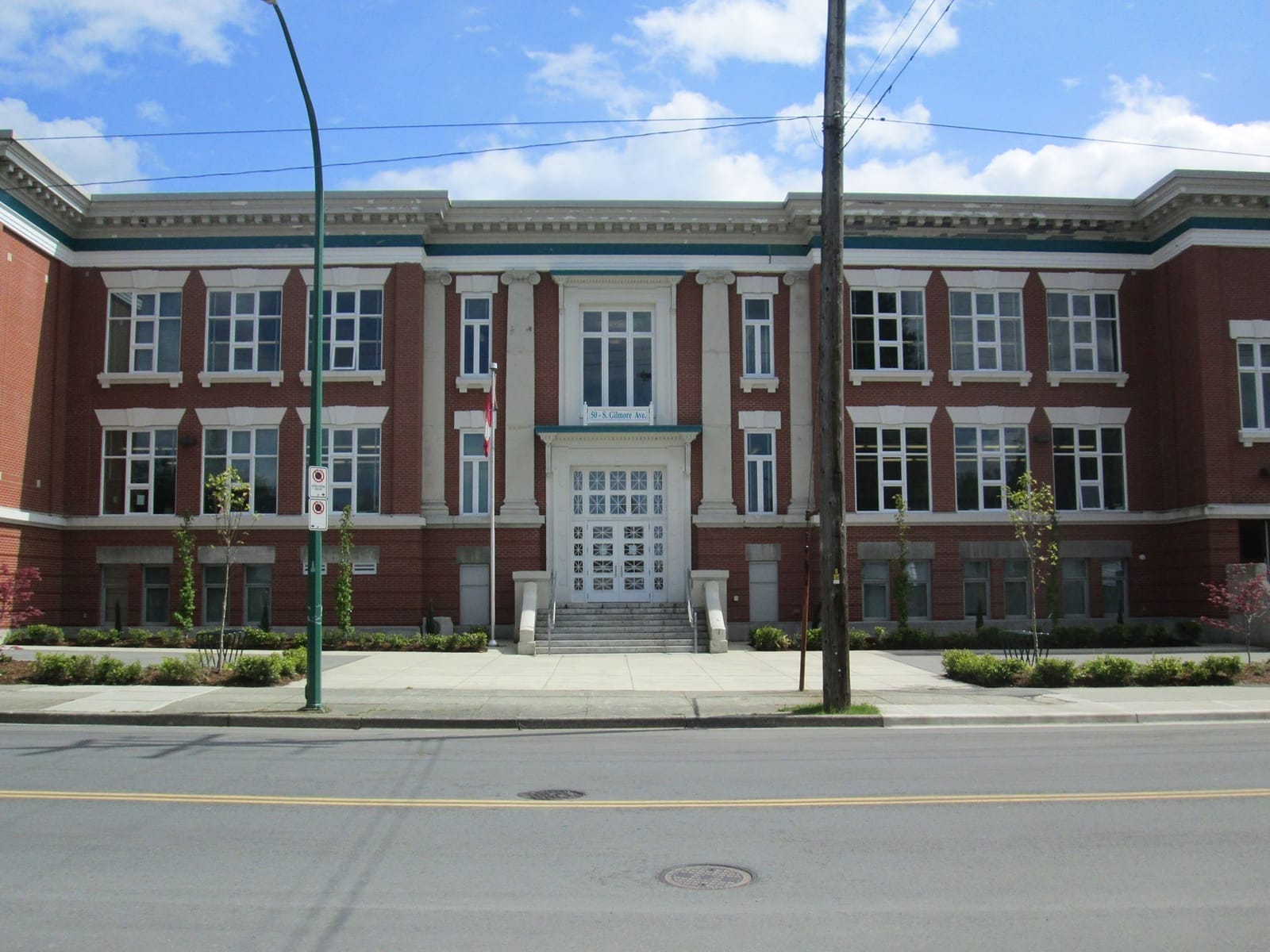
The building has survived epidemics and wars, depressions and booms, the arrival of the interurban and its closure, the coming of SkyTrain and the construction of skyscrapers. It remembers Miss Crossan and her fifty-three students, Principal Griffiths and his thirty-two years of service, the children of Crabtown with their packed lunches. Children still study within its walls — as they did a hundred and ten years ago, when it all began with a tent.
The school will tell you its story, but outside it's simply stands with red brick, heavy doors, dentilled cornice. A silent witness to a century of change.
More from February 2026
Full issue →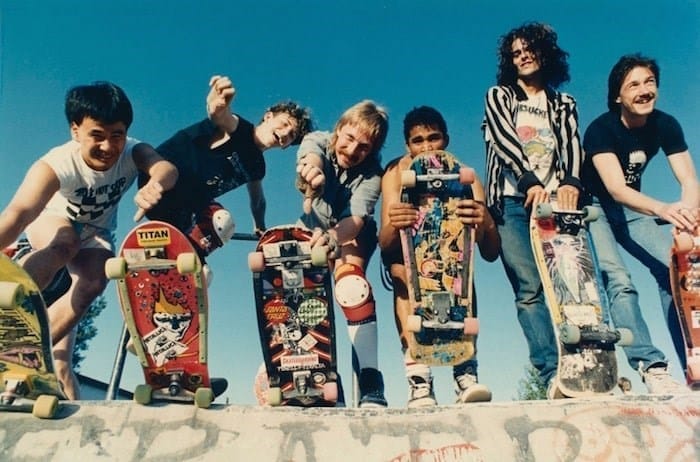
Burnaby's basement rebellion: How suburban teenagers built Vancouver's punk revolution
Canada's most influential punk scene wasn't born in gritty urban streets—it emerged from the split-level basements of Burnaby Mountain. How childhood friendships in a bedroom community produced D.O.A., The Subhumans, and the country's first indoor skatepark.
Artom Butenko · 17 min read
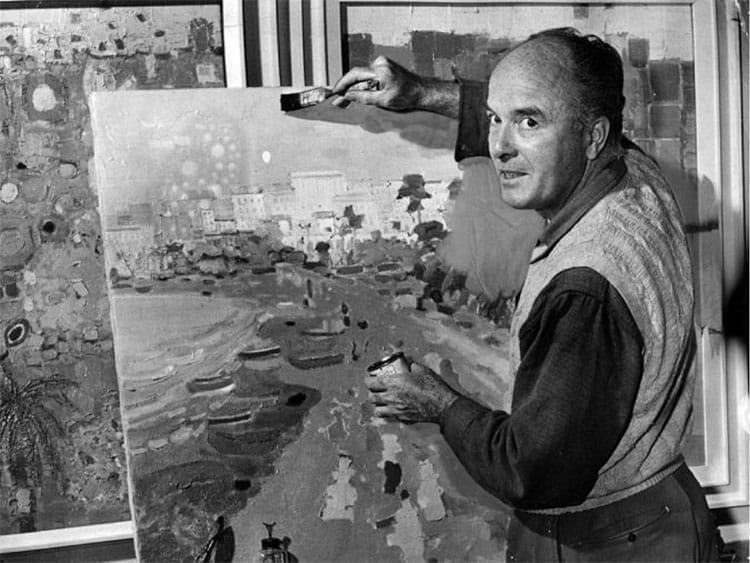
The Butterfly Painter of Capitol Hill: a story of Jack Shadbolt
For 48 years, Canada's most celebrated modern painter worked from a skylit studio on a Burnaby mountainside, transforming wartime trauma into butterflies and leaving behind the community arts centre that bears his name.
Brenda · 10 min read
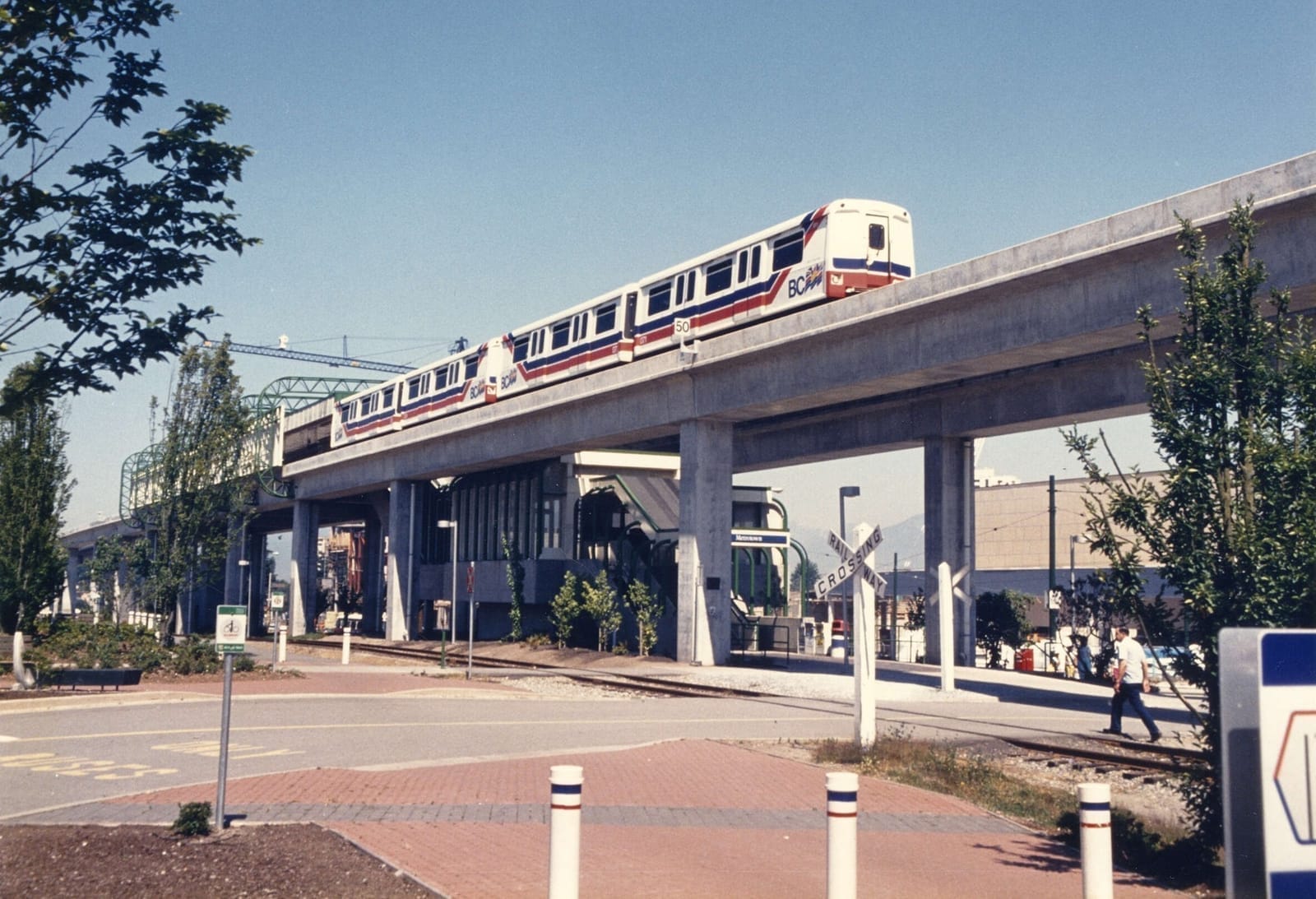
What Remains of Expo 86 in Burnaby
Forty years ago, a world's fair transformed Vancouver. But its true legacy isn't the pavilions or the fireworks. It's the concrete pillars carrying trains above Burnaby's streets every day. It's the route you may have taken this morning.
Artom Butenko · 10 min read