Burnaby's basement rebellion: How suburban teenagers built Vancouver's punk revolution
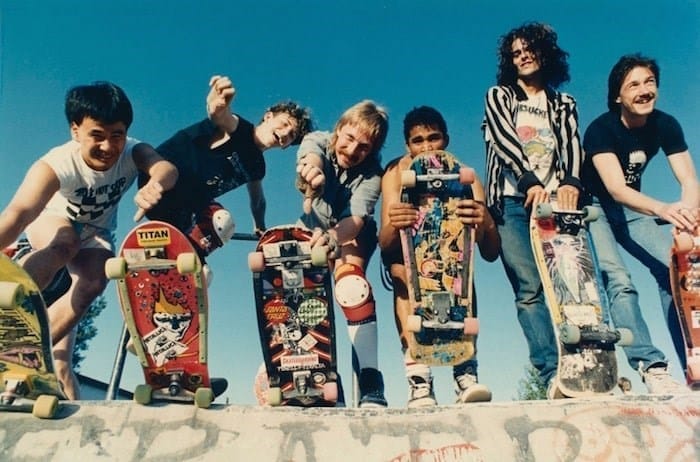
The most influential punk scene in Canadian history was born in the split-level basements and suburban sprawl of Burnaby. Between 1976 and 2000, this bedroom community sandwiched between Vancouver and New Westminster became an unlikely crucible for counterculture, producing internationally significant punk bands, hosting Canada's first indoor skatepark, and nurturing generations of teenagers who navigated the peculiar alienation of suburban adolescence. The story of Burnaby youth subculture is fundamentally a story about place how the strip malls, bus routes, and backyard ramps of a postwar suburb shaped a specific form of teenage rebellion that would ripple across North America.
What makes Burnaby's contribution extraordinary is its specificity: the childhood friendships formed on Burnaby Mountain in the 1960s directly produced both D.O.A. and The Subhumans, two bands that helped define hardcore punk. The Skateboard Palace that opened beneath a Burnaby curling rink in September 1977 was Canada's first indoor skatepark. And the SkyTrain system that transformed the region beginning in December 1985 fundamentally altered how suburban teenagers accessed urban culture. This is the largely untold history of counterculture in the Canadian suburbs.
The Burnaby Mountain connection forged a punk brotherhood
The origin story of Vancouver punk is inseparable from the geography of Burnaby Mountain and the Lochdale neighborhood. In the early 1960s, three boys, Joe Keithley, Brian Goble, and Gerry Hannah, lived within walking distance of each other on Burnaby Mountain, meeting when they were six and seven years old. A few years later, Ken "Dimwit" Montgomery's family moved to the Lochdale area of Burnaby, completing the quartet that would become the nucleus of Vancouver's punk scene.
Joe Keithley, who would later adopt the stage name Joey Shithead and found D.O.A., described the formation of this brotherhood in deeply personal terms: "Around the same time I also met Gerry Hannah who lived very near Brian, they were six years old and I was seven and we all lived on Burnaby Mountain. About four years later the three of us befriended Ken Montgomery, whose family had moved to the Lochdale area. From elementary to high school our friendship grew, through our collective love of music and social/political consciousness till we became the best of friends and inseparable. It occurred to me later on in life that we truly were 'The Four Amigoes.'"
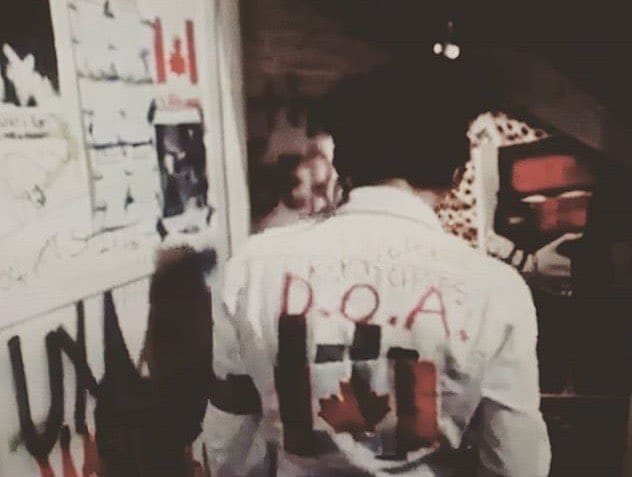
These Burnaby teenagers formed their first band, Misty Grey, at local high schools in the early 1970s, a band Keithley later admitted was "terrible, but we were learning." The musical education continued through years of experimentation. By 1975, when they were 18 and 19, the group attempted a "back to the land" communal experiment in the small BC towns of Lumby and Cherryville. "We were kind of junior hippies in a sense," Keithley recalled. When that fizzled, they returned to Burnaby and channeled their energy into something harder.
In 1976, the four friends formed Stone Crazy, a Burnaby heavy-metal quintet playing Led Zeppelin covers. The transformation came in August 1977 when they saw The Ramones live. Almost overnight, the long hair was cut, the metal riffs abandoned. Stone Crazy became The Skulls, Vancouver's second punk band, formed in Burnaby during the summer of 1977. The lineup included Keithley on vocals, Montgomery on drums, Goble on bass, and Simon Werner (Ring Wormer) on guitar. Hannah served as a roadie. By October 1977, they had recorded a demo at Psi-chords Studios, including the track "F**ked Up Baby" that would later become a D.O.A. anthem.
The Skulls attempted to break out by relocating to Toronto in November 1977, but by February 1978, the band had splintered. Keithley and Montgomery returned to Vancouver and immediately formed D.O.A. Meanwhile, Goble, Hannah, and Montgomery regrouped as The Subhumans, debuting at an Anti-Canada Day concert on July 1, 1978. Both bands remained rooted in Burnaby. D.O.A.'s Sudden Death Records eventually operated from a Burnaby, and Keithley has remained a Burnaby resident throughout his life, serving as a City Councillor from 2018 to the present.
The concentrated nature of this scene was not coincidental. As Maximum RocknRoll documented: "Gerry Hannah, along with several close friends, was instrumental in forming the Vancouver punk scene in 1977. Both the Subhumans and D.O.A. were composed largely of people in this close-knit group from the Vancouver suburb of Burnaby." The suburban environment , provided the physical infrastructure for punk to gestate with its affordable housing, garage space for rehearsals, and freedom from the surveillance of urban cores.
School gymnasiums and downtown dives created the live circuit
Keithley attended Burnaby North Secondary School, where the political consciousness that would define D.O.A.'s music was already forming. At age 16, in 1972, he participated in a protest at Burnaby North with 300 students opposing the Vietnam War and nuclear testing. The school's notable alumni list now includes Keithley alongside more conventional success stories, a testament to how thoroughly punk eventually became absorbed into mainstream recognition.
The early bands played wherever they could. "We played a few high schools," Keithley recalled of the Stone Crazy/Skulls era, "but we really didn't have the chops to make any dough and we barely had enough gear to play a show." Equipment was scarce, Keithley later mentioned Brad Kent stealing a Les Paul guitar from a Kingsway music store because the band couldn't afford proper instruments.
Once the Vancouver punk scene coalesced, the primary venue became the Smilin' Buddha Cabaret at 109 East Hastings Street. Between 1979 and 1983, this gritty bar became what The Canadian Encyclopedia called the "pulsing heart" of an internationally significant punk scene. D.O.A., The Subhumans, and touring acts like the Dead Kennedys all played there. A fire virtually destroyed the venue in November 1983, ending an era.
All-ages shows presented particular challenges. The West End Community Centre at Denman and Haro streets hosted a "Youth Explosion" series in 1982 that became legendary. The second installment, on May 29, 1982, featured D.O.A. alongside California's Circle Jerks — a pivotal moment when Vancouver punk connected directly with the American hardcore scene. The flyers advertised: "All Ages Welcome / No booze or glass / Door 7:30 / Showtime 8pm sharp / Tix: $5-6 advance."
For Burnaby teenagers, reaching these Vancouver venues required navigating the region's transit system, initially buses, then the transformative SkyTrain beginning in 1985. The physical distance between Burnaby bedrooms and Vancouver clubs created a particular suburban experience: punk was something you traveled to, planned around, coordinated with friends to access. This journey became part of the ritual.
Canada's first indoor skatepark opened beneath a Burnaby curling rink
On September 8, 1977, the same summer The Skulls were forming, the Burnaby Skateboard Palace opened to the public. Located underneath a curling rink, it was Canada's first indoor skatepark, part of a brief moment when the skateboarding industry attempted to capture the sport's explosive growth.
The facility was rough. Skater Brad Carr recalled 35 years later: "It was okay, but kinky. You had to put your time in to figure out the wall. It was nowhere near as much fun as Skatewave." Monty Little, a key figure in BC skateboarding history, remembered the conditions more vividly: "The Skateboard Palace was underneath the curling rink and the condensation on the pipes above would drip onto the concrete. But it didn't matter, we skated there."
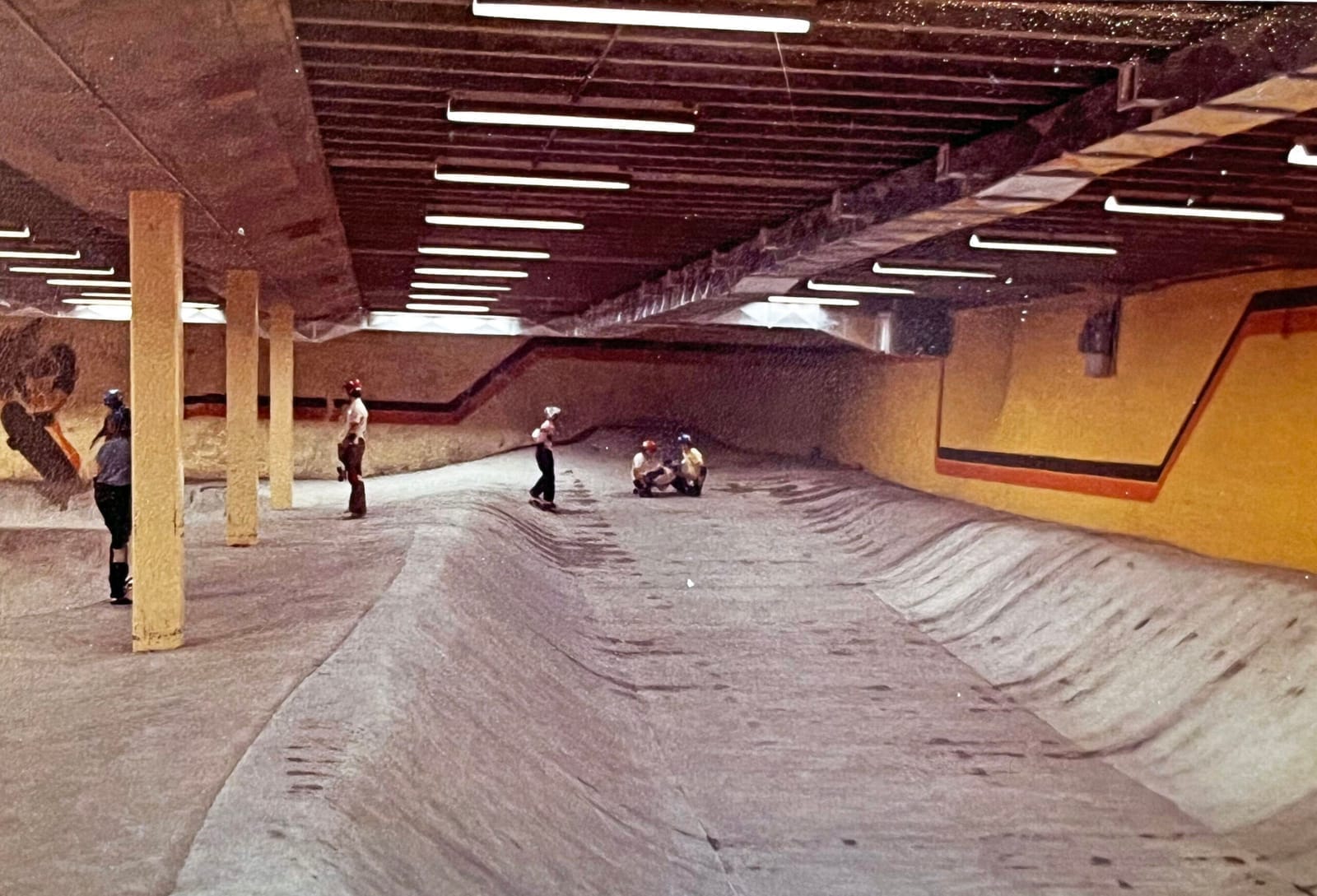
The walls were "kinked to vert hard," making tricks challenging. Concrete dust was a constant problem. The facility featured bowls (without proper coping), banked slalom areas, and walls, but lacked the snake runs that characterized outdoor parks. Photographer Eric Metcalfe documented the Palace in images now archived at northwestskater.com, among the few visual records of this pioneering facility.
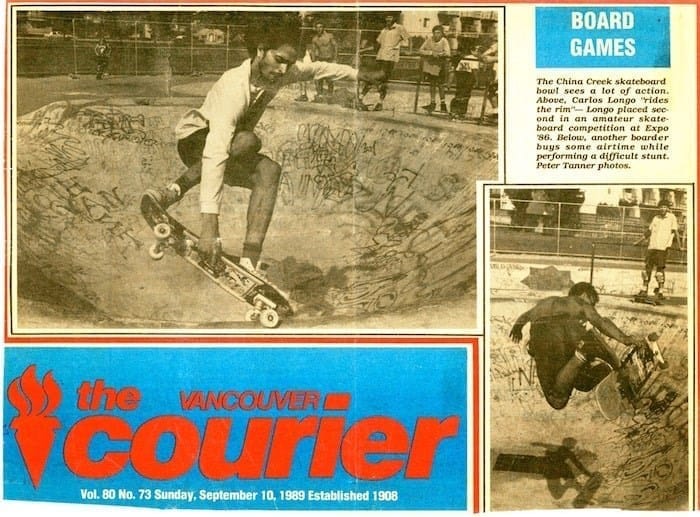
British Columbia led Canada in early skatepark development. The West Vancouver Inglewood "Mill" had opened earlier in 1977 as the country's first outdoor skatepark. Seylynn in North Vancouver followed in 1978 (still operating today as Canada's longest-running skatepark), and China Creek in Vancouver opened in 1979. The Burnaby Skateboard Palace occupied a unique niche, the country's only indoor option, crucial during Vancouver's rainy winters.
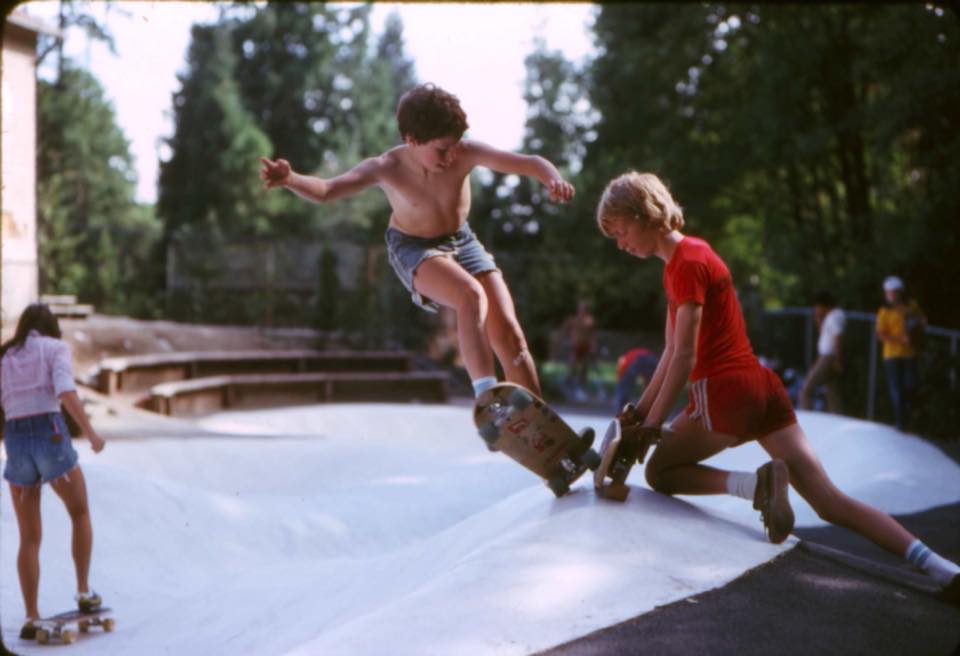
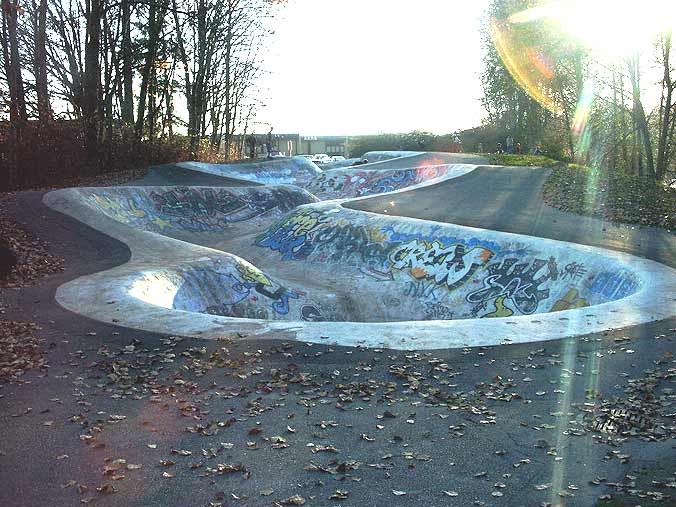
The crossover between skateboarding and punk culture was explicit and acknowledged. P.D. Ducommun, founder of Skull Skates (Canada's oldest skateboard company, established 1978), described the cultural moment: "There was this sort of greaseball scene, the dudes with the cut-off sleeve jean jackets and the deck of smokes doing one-handed wheelies on 10-speeds with the bars flipped up. People went from being these long-haired greaseballs to chopping their hair off and starting punk rock bands and going to punk rock shows. That was the backdrop that skateboarding kind of grew out of in this town."
During Skull Skates' California years (1983-1991), the company associated with Red Hot Chili Peppers, Social Distortion, and Slayer, the guitarist of which had a Skull sticker on his guitar. The punk-skate connection ran deep.
Suburban malls became the default teenage commons
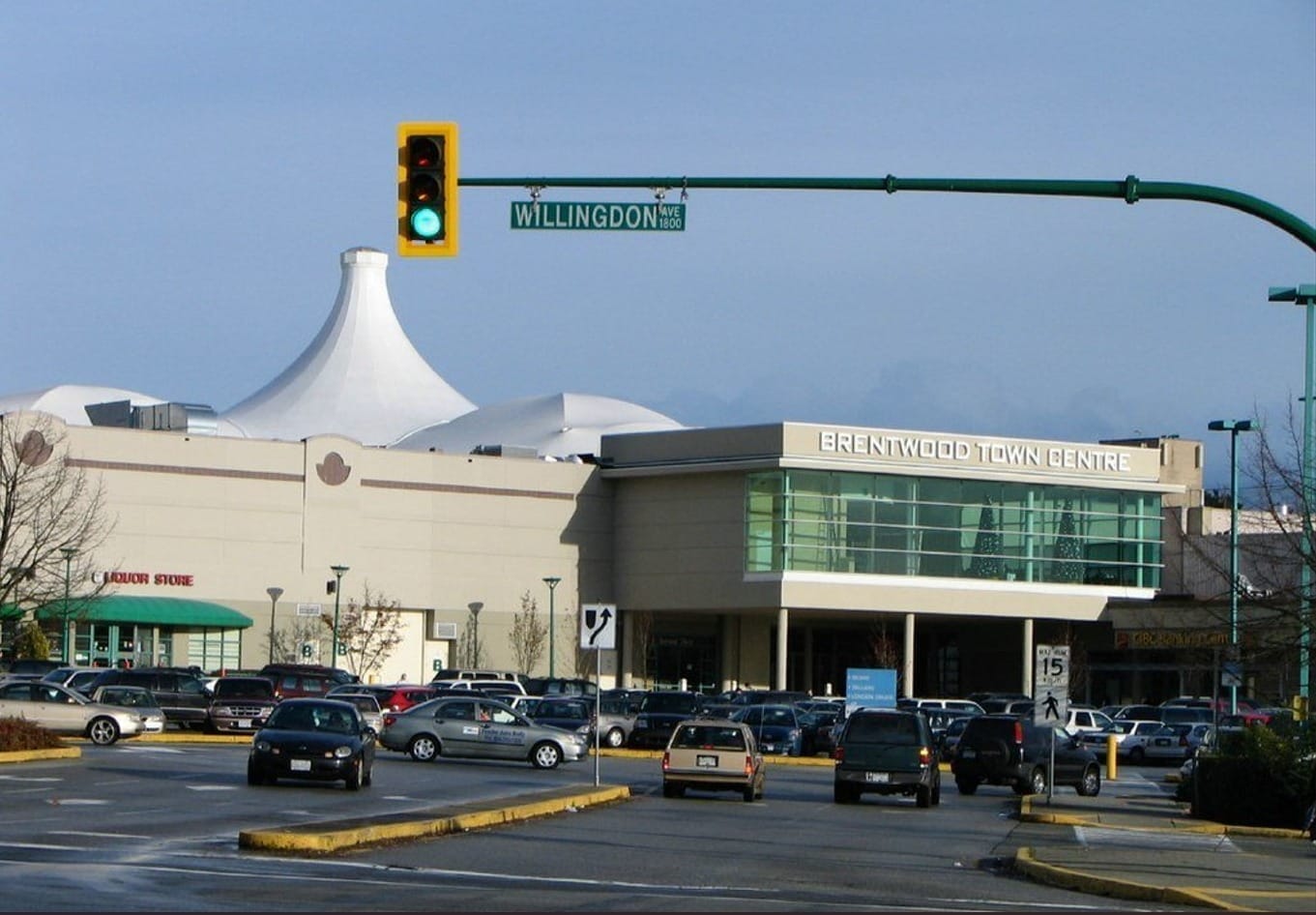
While punk and skateboarding cultures offered rebellion, most Burnaby teenagers in the 1970s through 1990s navigated a more conventional suburban landscape dominated by shopping malls. Brentwood Mall opened on August 16, 1961, as the largest shopping centre in Canada, 50 stores and 405,000 square feet of retail space anchored by Eaton's, Loblaws, and Zellers. Lougheed Mall followed in September 1969, featuring The Bay's first shopping centre location and a three-screen Famous Players cinema that operated until 1991.
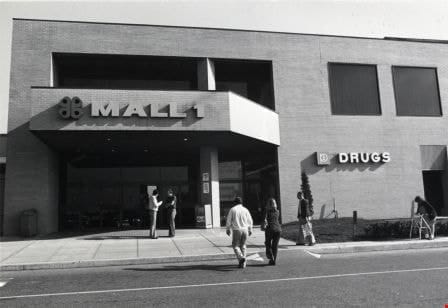
But Brentwood, despite its size, never became a teenage destination in the way some malls did. The mall was considered "sad" compared to emerging competitors. Teenagers remember the malt shop in Eaton's, testing pens at Wilson's Stationery, and staring at puppies in the pet store. Jack Cullen's Record Store, where the CKNW DJ broadcast a music show and sold records, offered one of the few connections to youth culture.
The landscape shifted dramatically when Metrotown opened in 1986, built on the former Ford Canada motor factory site adjacent to the new SkyTrain station. Metrotown was explicitly designed as a suburban destination, eventually growing into BC's largest mall with 27 million annual visitors. For teenagers, it represented a new kind of space. Journalist Katherine Monk wrote in 1998: "Developed as an integrated amusement package, Metropolis marks the dawning of a new day for the battered suburban mall."
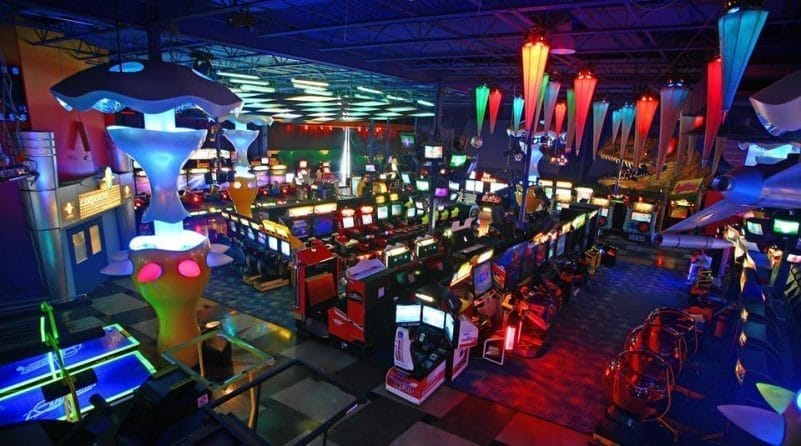
The ultimate expression of this mall-as-entertainment-center concept was Playdium Burnaby, which opened in 1998 in Metrotown's upper level. The 40,000-square-foot, $42-million arcade became the defining teenage gathering place of its era. The Burnaby Beacon captured its significance: "If you were a teenager, it was the place to rally your friend group, and spend hours and hours hanging out and avoiding any contact with your parents, while your eyes glazed over at brightly-lit gaming consoles."
Features included a $1-million simulated Indy car race, live simulators that "made you feel like you were moving in the game," and official Dance Dance Revolution tournaments in 2000-2001. Andy Yan, now director of SFU's City Program, explained the cultural context: "I think, in one way, you can imagine the Playdium being the apex of suburbia… [It was about] trying to find other spaces to meet people and to entertain yourself as a group."
Playdium filed for bankruptcy in 2001 and closed in 2005, defeated by PlayStation 2, Xbox, and home gaming systems. Its brief existence bracketed a specific moment when suburban malls attempted to capture teenage leisure time through spectacle.
SkyTrain transformed how suburban teenagers accessed culture
The opening of the Expo Line on December 11, 1985, with free weekend rides celebrating the new system before full service began January 3, 1986, fundamentally altered youth mobility in Burnaby. For the first time, teenagers could reach downtown Vancouver quickly, cheaply, and without depending on parents or buses.
The original route ran from Waterfront to New Westminster Station, passing through Burnaby with stops at Patterson (at Central Park's northeast corner), Metrotown, Royal Oak, and Edmonds. The system followed the route of the former BC Electric Railway Central Park interurban line (1890-1950s), repurposing century-old transit corridors for automated light rail.
Prince Charles and Princess Diana rode SkyTrain from Waterfront to Patterson Station during Expo 86, giving Burnaby an unexpected moment of royal attention. But for local teenagers, the significance was more practical. One Brentwood-area resident later reflected: "There's way more restaurants and a fancy SkyTrain station that would have made life for the teenager me so much better", speaking to how transit access shaped adolescent experience.
The Millennium Line, which opened in 2002 with stations at Brentwood Town Centre, Holdom, Lake City Way, and Production Way-University, further integrated North Burnaby into the regional transit network. By then, the pattern was established: Burnaby teenagers could access Vancouver's urban culture, its all-ages shows, record stores, and scene gatherings - with unprecedented ease.
This transit access was essential because suburban Burnaby offered limited alternatives. As one writer in MONTECRISTO magazine described the suburban experience: kids from areas like Maple Ridge (adjacent to Burnaby) "couldn't find independently released punk records locally — no record stores in the suburbs stocked it." Youth had to travel to Vancouver's Quintessence Records (West Fourth Avenue, Kitsilano) or later Zulu Records (opened 1981, same street) to access the scene materials, zines, records, imported British music papers, that defined punk culture.
Zines circulated through record stores and mail networks
Vancouver's punk zine culture was concentrated in the city rather than its suburbs, but suburban teenagers participated as consumers and occasional contributors. SnotRag, launched in November 1977 by Steve Taylor and Don Betts, was Vancouver's first punk zine and "almost single-handedly kept alive the illusion of a punk 'scene' in Vancouver" during 1978-79 when the Skulls had departed for Toronto. Nineteen issues documented the scene's expansion.
Public Enemy (1978-79), created by Georgia Straight staffers including Ken Lester (who would manage D.O.A.), published six issues as a tabloid-format publication modeled on New York Rocker. Idle Thoughts (1979-84), created by teenager Len Morgan from North Delta (suburban area adjacent to Burnaby), became what one historian called the "next GREAT Vancouver fanzine." Morgan was among the first Vancouverites to connect with the international fanzine and cassette trading network that accompanied punk and hardcore subculture, exposing readers to bands they might never see live.
Distribution centered on a handful of Vancouver stores. Quintessence Records on West Fourth Avenue employed Grant McDonagh, whose sister Lynn became SnotRag's photographer. When Quintessence closed in 1981, McDonagh founded Zulu Records on the same street, a store that continues operating today and served for decades as a cultural hub and distribution point for zines and local releases. Other outlets included D&G Collectors Records on Hastings Street near Kootenay Bus Loop, accessible to Burnaby youth.
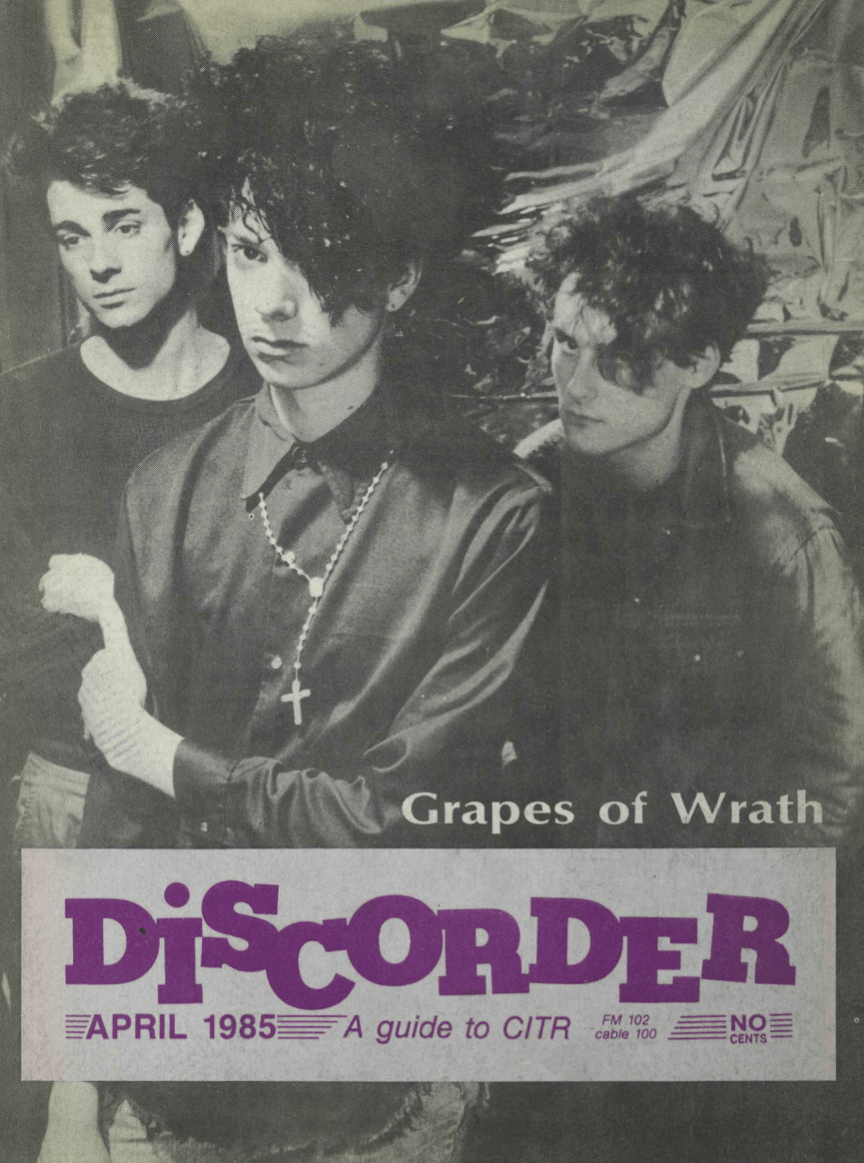
Discorder Magazine, founded in February 1983 by CiTR (UBC's student radio station), provided more sustained documentation of the local scene. Now the longest-running independent music magazine in Vancouver with over 450 issues, Discorder offered coverage that extended to suburban bands and scenes. Its complete archive has been digitized by UBC Library.
Burnaby-specific zines remain largely undocumented. No publications have been identified as originating specifically from Burnaby high schools or neighbourhoods. This gap likely reflects both the concentration of zine culture in Vancouver proper and the suburban reality that teenagers commuted into the city rather than building parallel infrastructure locally.
Graffiti culture remained urban while suburban youth participated
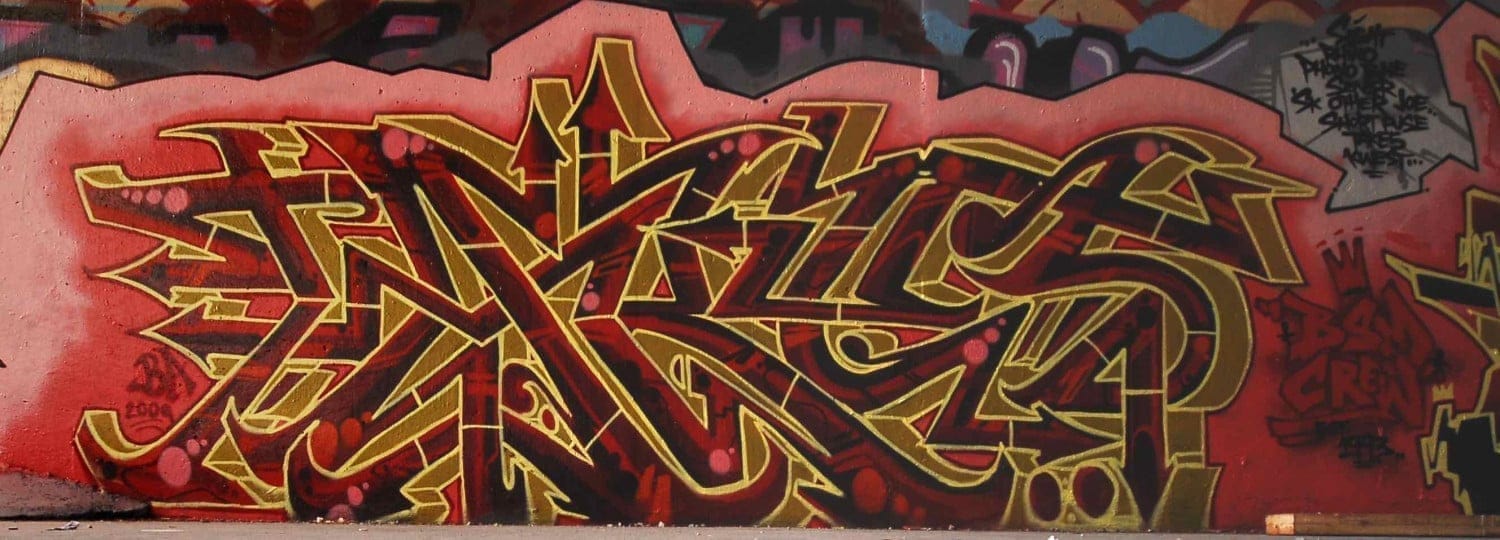
Graffiti and street art culture in the Burnaby area from the 1980s through 2000 is the least documented aspect of local counterculture. The scene was concentrated in Vancouver's Downtown Eastside and Gastown alleys. Take5, active since 1992, and Smokey D, who emerged in the 1990s Downtown Eastside and spent eight months in jail for graffiti, represent the earliest documented local writers.
The SkyTrain's 1985 opening created new canvas along elevated guideways passing through Burnaby, but historical documentation of construction-era graffiti is absent. Modern incidents, including a 2022 arrest of a writer who posted video of tagging inside the SkyTrain tunnel between Production Way and Lake City Station in Burnaby, suggest ongoing activity, but the archive begins much later than the 1980s scene.
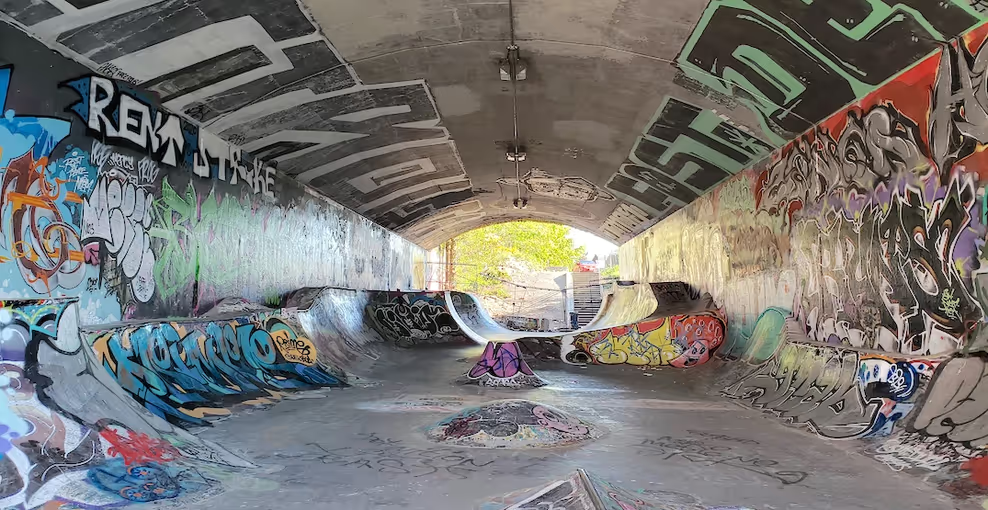
One significant location straddled the Burnaby border: Leeside Skatepark in East Vancouver, near Cassiar Connector at East Hastings and Highway 1. Built in the mid-1990s by Lee Matasi (tag: "Avers"), a skateboarder and graffiti artist who constructed the DIY park as a teenager, Leeside became one of Vancouver's few designated legal graffiti walls after the Parks Board officially recognized the community-rebuilt park in 2006. Matasi was murdered outside a Vancouver nightclub in 2005, but his legacy endures.
The Art Crimes website (graffiti.org) began documenting Vancouver-area writers in 1996, providing the earliest comprehensive visual archive. Photographers like Al Fossen, who documented East Vancouver "alleys and graffiti" during the 1980s and 1990s in his book "Freedom in East Vancouver," captured the urban scene that suburban youth accessed via transit but rarely replicated at home.
The suburban experience produced a distinctive counterculture
The peculiar contribution of Burnaby to Vancouver counterculture derived from its suburban character. The affordable basements where bands rehearsed, the garages converted to practice spaces, the backyard ramps where skaters learned their craft, these domestic infrastructures enabled scenes that urban density might have constrained. Ken "Dimwit" Montgomery's family home in Lochdale provided space for young musicians to experiment badly before getting good. The split-level houses of Burnaby Mountain created neighbourhoods where childhood friendships could endure for decades.
At the same time, suburban isolation created hunger. Teenagers who couldn't find punk records locally, who had to bus or SkyTrain into Vancouver for all-ages shows, who experienced counterculture as something accessed through effort rather than ambient environment, these youth brought particular intensity to their participation. The journey itself became meaningful.
Andy Yan's observation about Playdium applies more broadly to Burnaby youth culture: suburbia was "about trying to find other spaces to meet people and to entertain yourself as a group." The malls, parks, and transit systems of Burnaby provided infrastructure, but the culture that emerged through them reflected teenage agency, the determination to create meaning in spaces designed primarily for consumption and transit.
The legacies persist. Joe Keithley continues performing with D.O.A. while serving on Burnaby City Council. The SFU Vancouver Punk Rock Collection holds over 600 posters, photographs, and documents from the scene. Zulu Records remains operational. And teenagers continue navigating Burnaby's suburban landscape, finding or creating their own versions of the spaces where counterculture once thrivedб even if the forms that rebellion takes have inevitably changed.
Suburban soil nurtured unexpected growth
The history of youth subcultures in Burnaby from 1970 through 2000 challenges assumptions about where counterculture can flourish. The foundational role of Burnaby friendships in creating Vancouver's punk scene emerged not despite but partly because of suburban conditions: basements provided rehearsal space, transit provided access to urban scenes, and the very alienation of suburban adolescence provided motivation. What distinguishes this history is the specificity of place - the Burnaby Mountain addresses where future punk legends met as children, the curling rink beneath which Canada's first indoor skatepark opened, the Metrotown stop where SkyTrain connected teenagers to downtown. Understanding Burnaby's counterculture requires understanding its geography.
The gaps in this history are themselves significant. No Burnaby zines have been definitively documented; graffiti culture remained concentrated in Vancouver; school newspapers covering local counterculture have not surfaced. Oral histories from residents who came of age during this era remain the richest source for filling these gaps. The story of Burnaby youth counterculture is ultimately a story about navigation between suburban homes and urban scenes, between domesticity and rebellion, between the infrastructure adults built and the uses teenagers found for it.
Editor & Publisher
Artom Butenko
Founder and editor of 8 Pages Burnaby. Writes the fact-dense, archival pieces — origins, infrastructure, and the documents that explain how the city works.
More from February 2026
Full issue →
The Butterfly Painter of Capitol Hill: a story of Jack Shadbolt
For 48 years, Canada's most celebrated modern painter worked from a skylit studio on a Burnaby mountainside, transforming wartime trauma into butterflies and leaving behind the community arts centre that bears his name.
Brenda · 10 min read
What Remains of Expo 86 in Burnaby
Forty years ago, a world's fair transformed Vancouver. But its true legacy isn't the pavilions or the fireworks. It's the concrete pillars carrying trains above Burnaby's streets every day. It's the route you may have taken this morning.
Artom Butenko · 10 min read
Hidden Green: the Stories Buried Beneath Burnaby Parks
A beaver pond that became a real estate joke. A garbage dump where children now dig for treasure. A cenotaph built by the veteran it honours. Four Burnaby parks hiding stories that never made it onto plaques.
Ilarion Bohatyrov · 11 min read