Everything Changes on Hastings Street
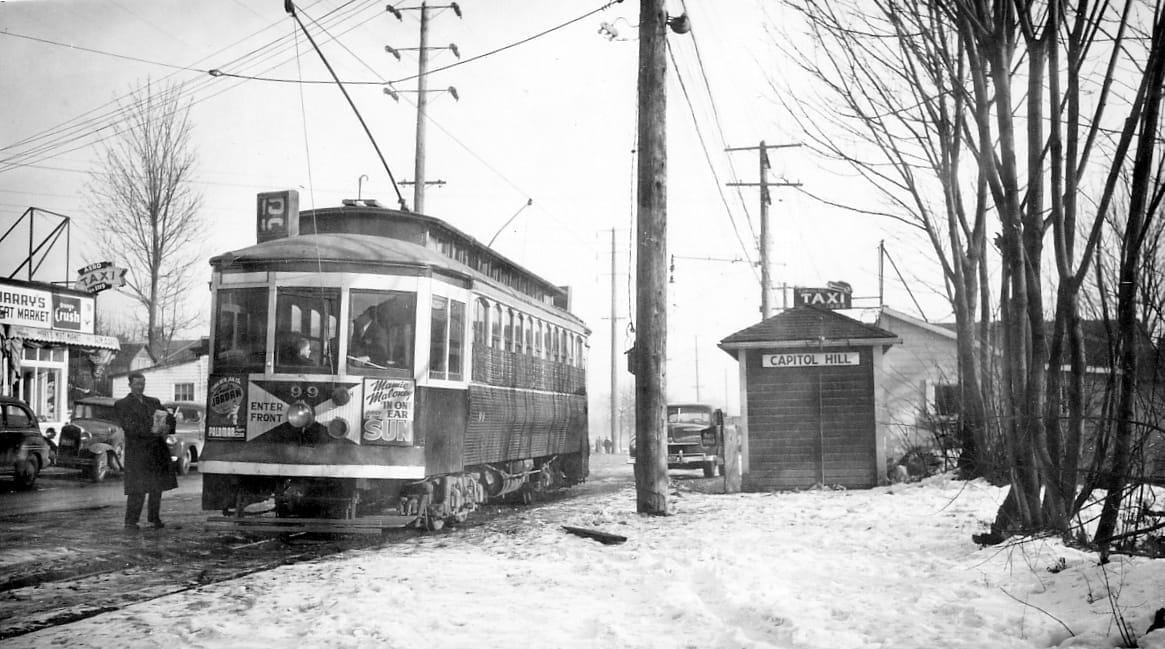
From plank road to neon paradise, Hastings Street in Burnaby Heights traces one of the Lower Mainland's most distinctive commercial corridors, a neighbourhood shaped by hydroelectric ambition, streetcar speculation, Dutch bakers, and the stubborn resilience of local merchants. This 125-year story begins with a rough timber pathway hauling electrical equipment and culminates in a vibrant "urban village" attracting 60,000 visitors to its annual street festival. The Heights emerged as what historians call an "instant suburb" - homes and businesses sprouting directly over freshly cleared forest, propelled by the promise of electric transit. That promise delivered decades of prosperity, followed by the trauma of streetcar removal in 1955, then decades-long battles against traffic engineers determined to sacrifice neighbourhood commerce for automobile throughput. Through it all, the merchants of Hastings Street fought back and prevailed.
A plank road built for electricity changed everything
The modern story of Hastings Street begins in 1903 when the BC Electric Railway Company needed to transport materials for their ambitious Buntzen Lake hydroelectric project. The provincial government ordered Hastings Street extended eastward from Renfrew Street to connect with the rough Barnet Road, and workers laid a plank road through the wilderness of what would become Burnaby Heights.
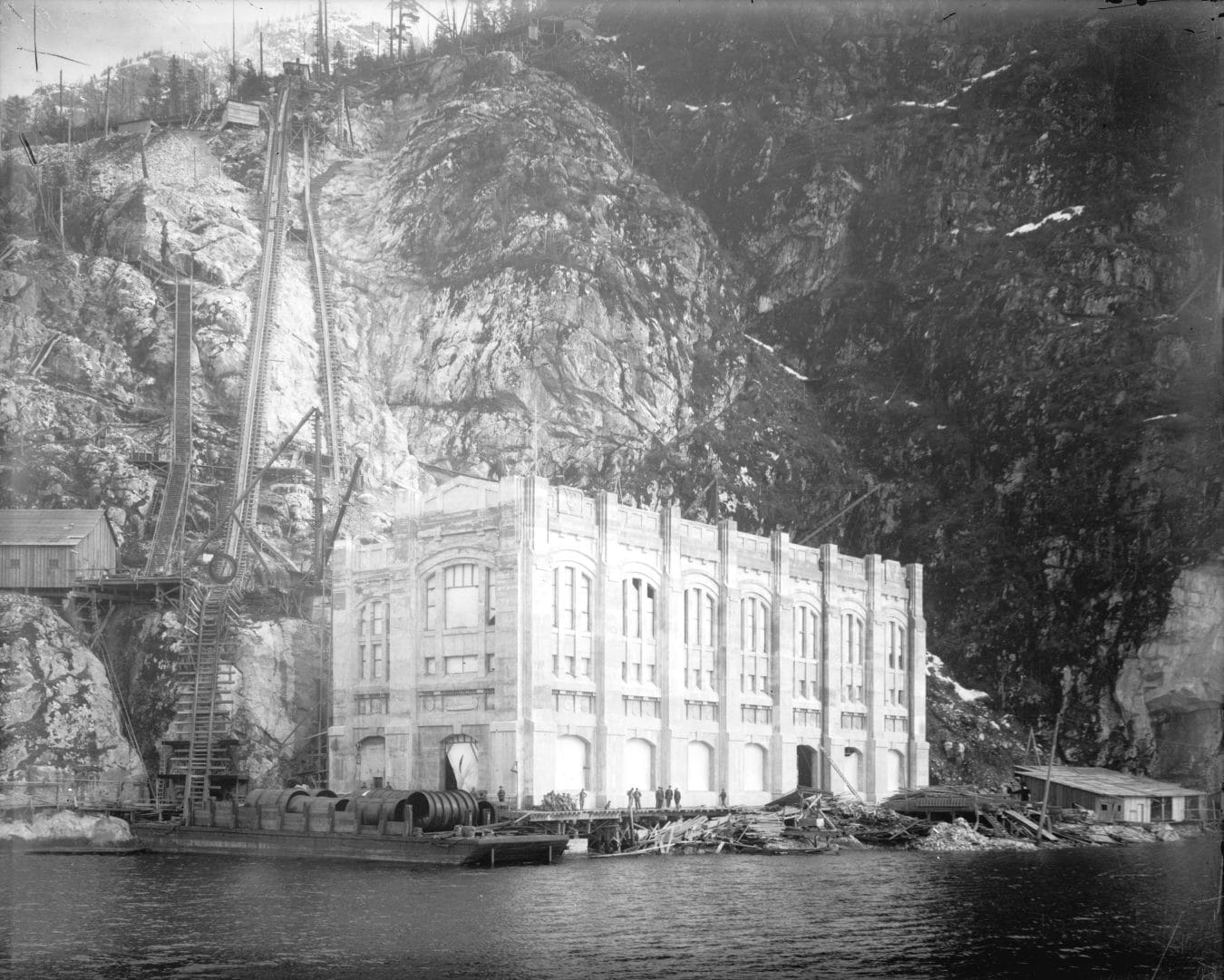
Power from the Lake Buntzen generating station first flowed to Vancouver on December 17, 1903, carried by a 17-mile pole line that crossed Burrard Inlet on steel towers 140 feet and 60 feet tall at Barnet Beach. Two days later, Vancouver became the first major city on the Pacific Coast lit entirely by hydroelectric power, a $1.2 million project that had overrun its $800,000 budget but transformed the region's future.
The plank road immediately attracted attention from real estate speculators. By 1908, ventures were "quite active" in the Vancouver Heights and Capitol Hill areas, and in 1909, the area now known as Capitol Hill was formally subdivided by brokerage firms who purchased large tracts and sold them in parcels. The Scott Brokerage Company marketed Capitol Hill as "one of Vancouver's swellest suburbs," though as historian George Green later noted, the name derived from ancient Rome's Capitoline Hill - the civic center of the eternal city.
Streetcar speculation fueled a real estate frenzy
The November 6, 1909 extension of streetcar service to Boundary Road ignited a speculative fever that remade the landscape. Between 1908 and 1913, overseas capital flowing into BC real estate increased by an astonishing 1,175%, much of it from Britain. Burnaby's population spiked from roughly 500 residents in 1900 to approximately 14,000 by 1913.
When BCER announced plans for the Hastings Extension, land prices exploded. For context, CPR lots in Kitsilano that sold for $400 to speculators were quickly resold for $5,000. On Vancouver's Hastings Street, a 52-foot lot valued at $26,000 in 1904 commanded $90,000 by 1908 and $175,000 by 1909. The fever infected buyers who never saw their purchases, many Capitol Hill lots were subdivided without consideration of topography, leaving owners with parcels too steep or otherwise unsuitable for construction.
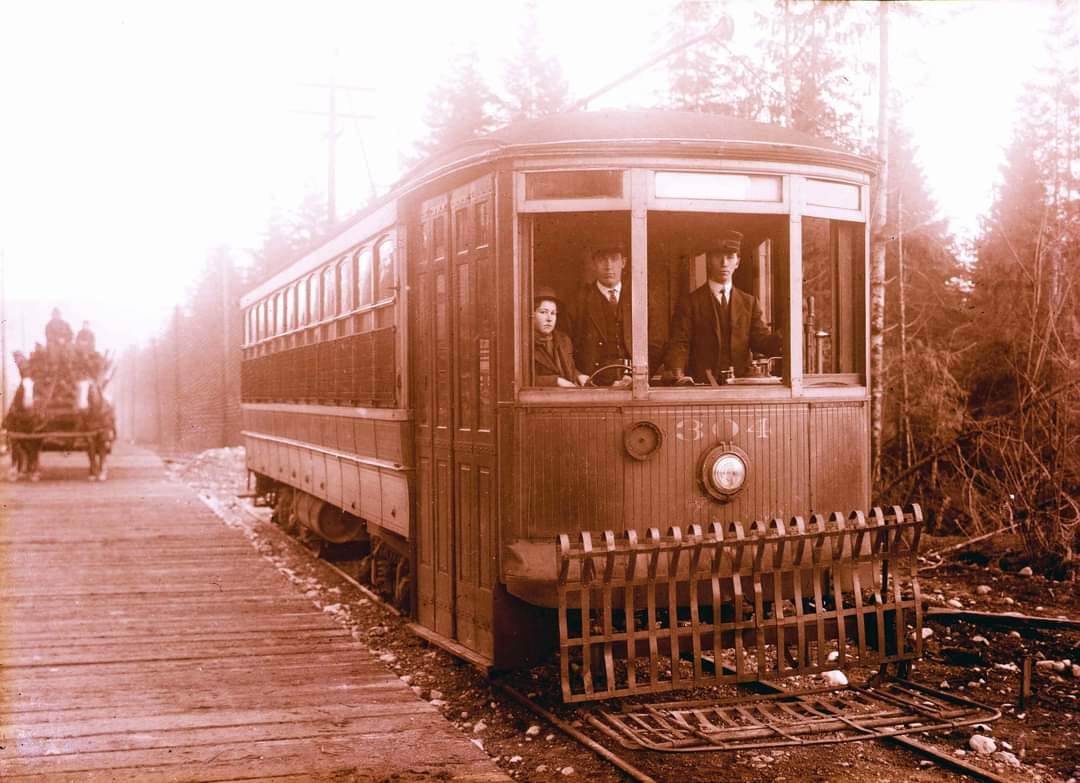
The Hastings Street Tramline Extension finally opened on December 22, 1913 (some sources cite December 23), running approximately 10,000 feet from Boundary Road to a terminus at Ellesmere Avenue. Joe Toffaletto headed the BCER construction team, and at the opening ceremony, Burnaby Reeve McGregor stood near the tram door while Councillor Eber Stride posed in front wearing a bowler hat. A surviving photograph shows uniformed men, a boy in his Sunday suit, and behind them, the planked wooden road that started it all.
The boom collapsed almost immediately. A global recession in 1913 and the outbreak of war in 1914 sent property values plummeting. Many owners defaulted on taxes, and so much land reverted to municipal ownership that Burnaby eventually accumulated 22 acres of vacant lots, which would later become Confederation Park. By the 1930s, Capitol Hill lots that might have fetched hundreds during the boom sold for $50 with $5 down and 50 cents per month.
Dynamite blasts and discriminatory bylaws cleared the stumps
While developers cleared Vancouver Heights for buyers, Capitol Hill property owners were left to manage their own lots, which often meant blasting stubborn tree stumps with dynamite. The practice was so widespread that residents recall the cry "Fire in the hole!" echoing across the hillside well into the 1930s. Children learned to run for cover when they heard the warning.
The proliferation of blasting prompted the City of Burnaby to enact Bylaw No. 138 in 1912, the Blasting Regulation Bylaw. However, this law contained explicitly discriminatory language, prohibiting "any person who is not conversant with the English language" from obtaining a blasting license, effectively excluding Chinese workers from stump-clearing employment during early settlement. Remarkably, this bylaw technically remains on Burnaby's books as of 2024, though licensing explosives has long been a provincial responsibility. A replacement bylaw is planned for 2026.
Salvage loggers, often Chinese, Japanese, South Asian, or Indigenous workers, would cut stumps into bolts for local shingle mills before property owners blasted the remaining wood. The City of Burnaby Archives holds a photograph of an unidentified man, believed to be John William "Jack" Holmes, preparing a large stump for detonation.
Three churches and a basement launched neighbourhood institutions
By December 1912, Vancouver Heights had three churches and a school that had already been enlarged twice. For a neighbourhood still blasting stumps out of the ground, this was optimism made of wood and nails.
The Presbyterians came first, in the summer of 1911. The Methodists followed in July 1912. St. Nicholas Anglican held its first service on Christmas Day 1911, in a schoolhouse, because the building wasn't ready yet. Architect Frank Barrs finished the proper church by the following summer. God was patient.
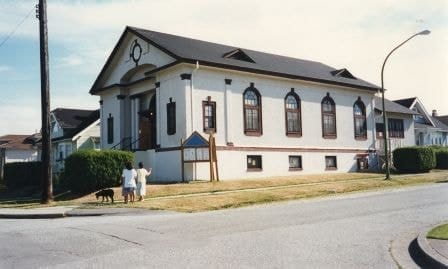
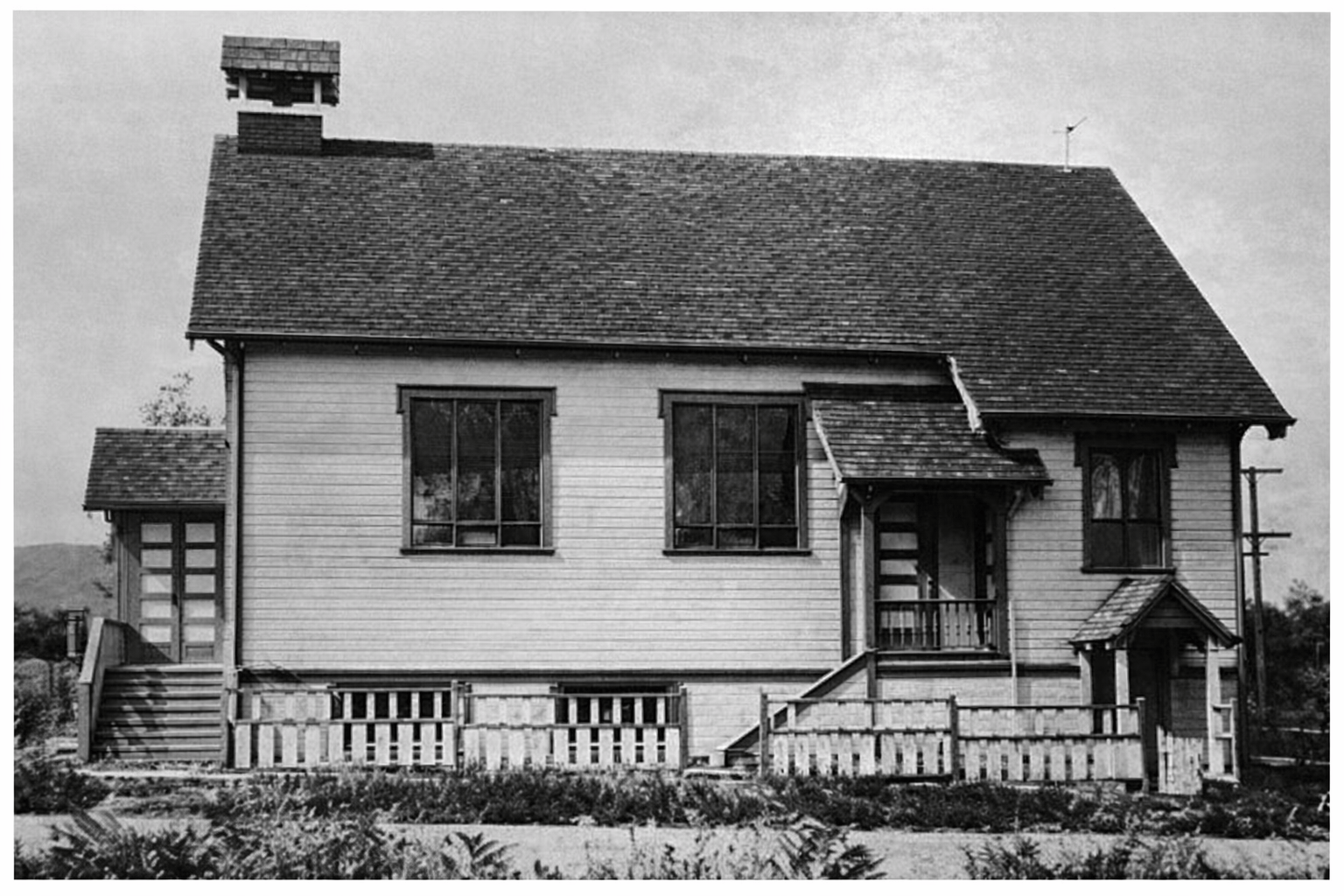
These buildings did double duty. When Burnaby North High School opened in 1922, its fifty-odd students had no building of their own, so they met in the Presbyterian church basement on MacDonald Avenue. The school wandered for decades, Pandora Street, then Willingdon, finally Hammarskjold Drive in 1962, before settling down. Joe Sakic came out of that school. So did a few thousand others who didn't make the NHL.
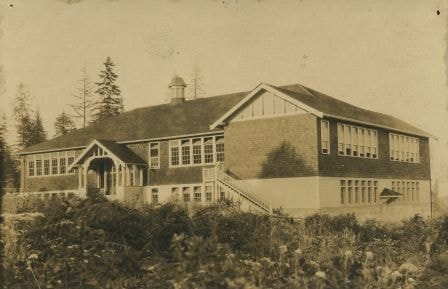
Capitol Hill School arrived in 1923, designed by Bowman & Cullerne, the firm that built half of Burnaby's schools in those years. The Arts and Crafts building on Holdom Avenue still stands, which is more than you can say for most of what was here in 1923.
The last streetcar departed in April 1955
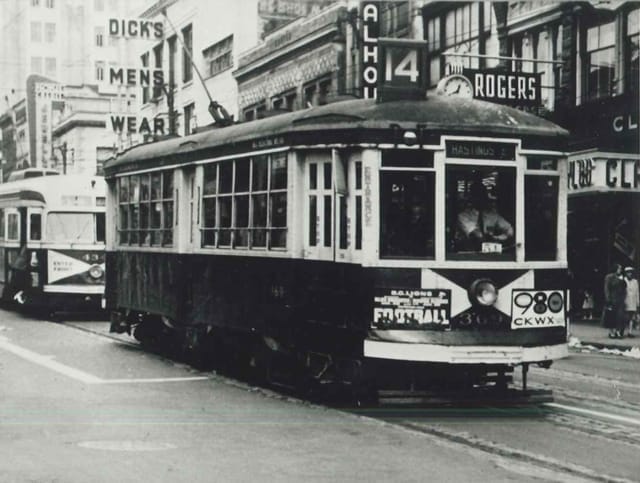
The No. 14 Hastings East streetcar line served Burnaby Heights for four decades, running from Main Street to Kootenay Loop with modern PCC (Presidents' Conference Committee) cars in its final years. At its height, BC Electric operated 457 streetcars and 84 interurbans, many built at their New Westminster factory. Initial fares were 5 cents, with special "Lacrosse specials" to Queens Park charging 50 cents return.
But the system faced mounting pressures. The Great Depression and two World Wars forced BCER into financial hardship. Rising automobile ownership eroded ridership while aging wooden cars required expensive maintenance. When Vancouver announced plans to replace the Granville Bridge, BC Electric abandoned any hope of retaining significant streetcar service.
The last streetcar on Hastings Street ran on April 22, 1955 (some sources cite April 21 or 24), a snowy evening at Kootenay Loop where final rides were offered free to the public. The route was immediately replaced by the 14 Hastings trolley bus along with branch routes 16 Renfrew and 24 Nanaimo.
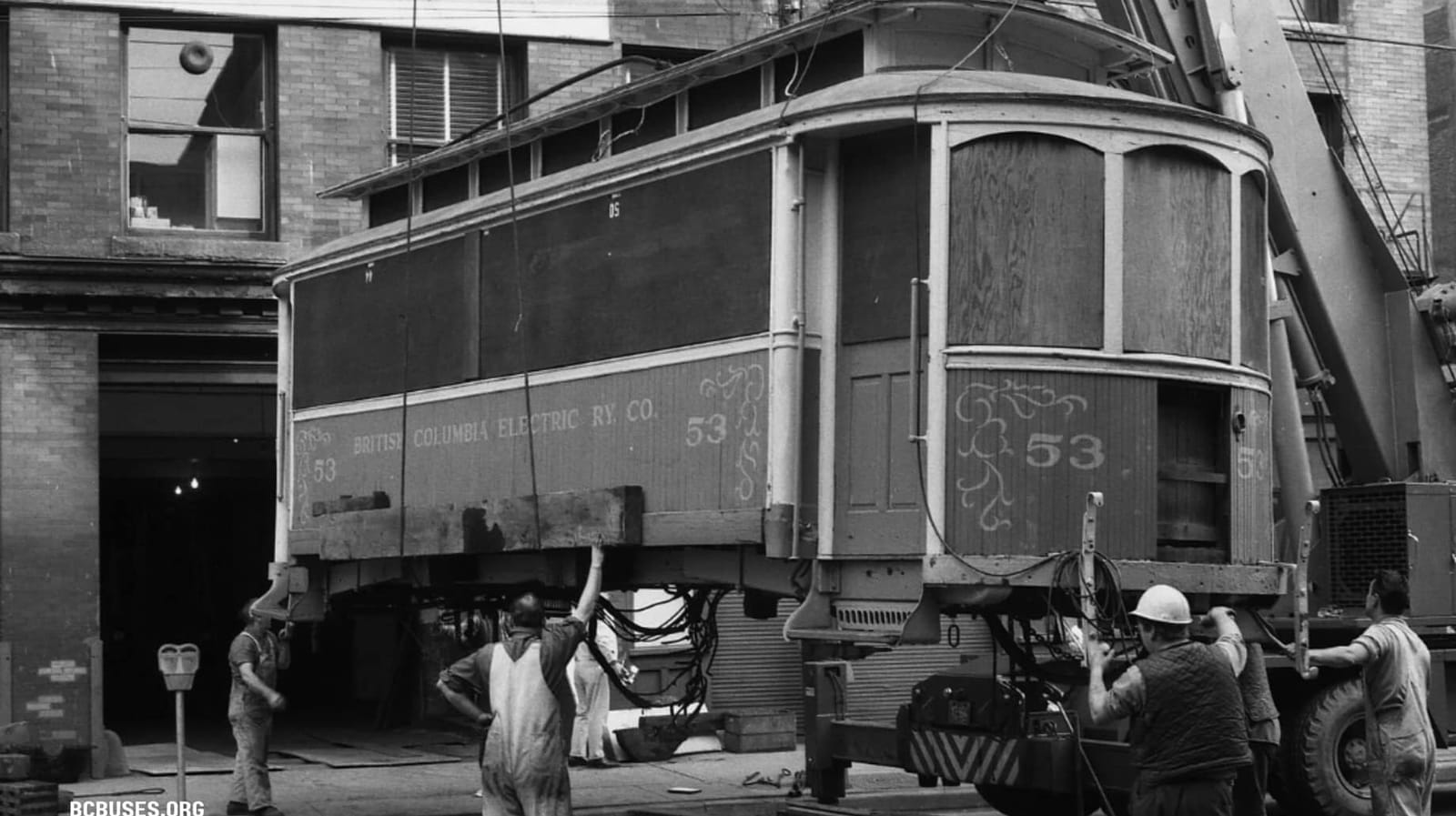
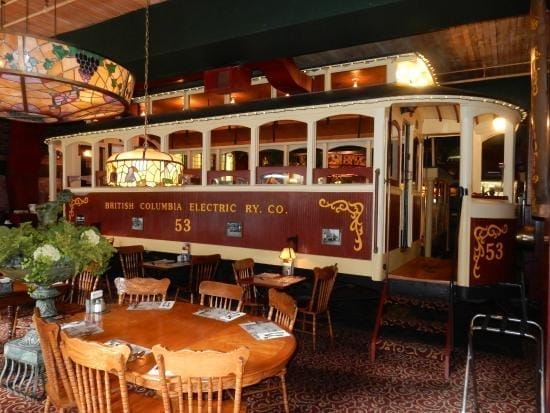
Most streetcars went to the scrap heap. Only three BCER-built vehicles survive: Car 53 sits inside the Spaghetti Factory on Water Street in Vancouver; Interurban 1207 is stored at the Fraser Valley Heritage Railway carbarn in Cloverdale; and Interurban 1304 is undergoing restoration at the same facility. Tram 1223 was moved to Burnaby Village Museum as a permanent exhibit. The complete interurban system didn't close until February 28, 1958, when the final Marpole-Steveston car departed at 1:30 AM.
Neon signs illuminated the postwar commercial peak
The 1950s marked the commercial zenith of Hastings Street, when nearly 90% of businesses belonged to the North Burnaby Merchants Association and neon signs transformed the streetscape into a glowing corridor of commerce.
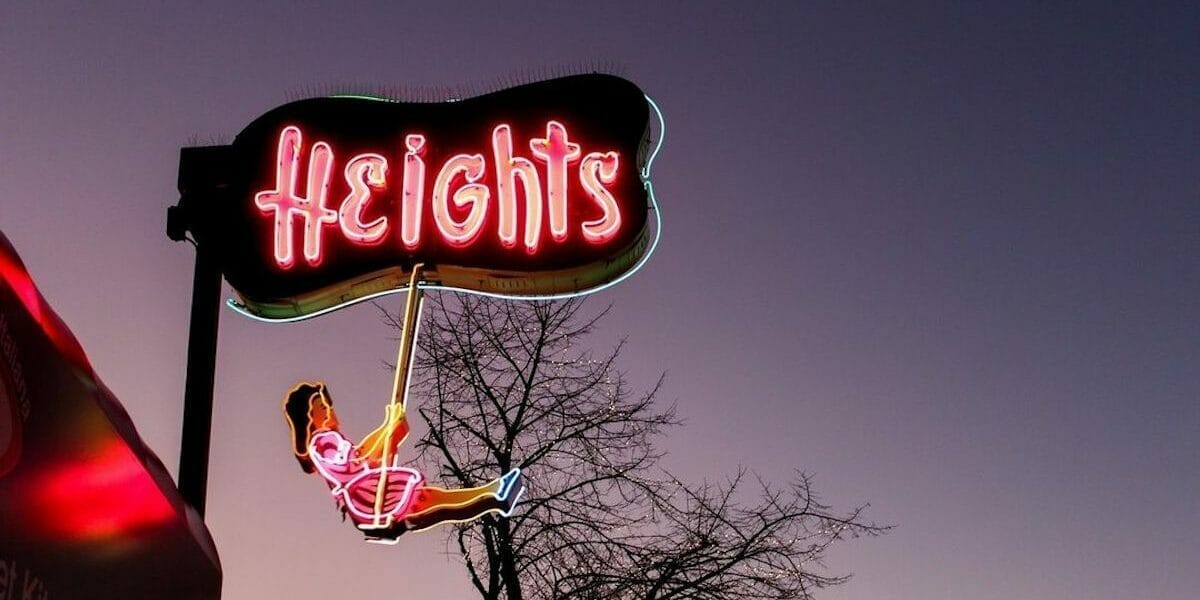
The most beloved survivor is the "Swinging Girl" sign at 4142 Hastings Street, created for Helen's Children's Wear in 1956 by Wallace Neon Company of Vancouver. Designer Reeve Lehman crafted the 9-foot-6-inch by 9-foot animated masterpiece featuring a cloud-shaped section reading "Helen's" and an animated girl on a swing powered by internal motors and gears. It remains one of the best surviving examples of kinetic neon art in North America.
Helen Arnold (née Trainer) had opened her children's clothing store in 1948 on East Hastings, next door to the old North Burnaby Municipal offices. When those offices relocated in 1955, she moved into the vacated building. Her mother, Nettie Trainer, was a well-known maker of custom figures for commercial displays who created handmade figurines for the store throughout the early 1950s.
Helen's Children's Wear operated for nearly 60 years before closing in 2007. The City of Burnaby purchased the sign from Sicon Signs (which had bought out Wallace Neon Company in the 1970s) and designated it a heritage landmark on April 19, 2010. The sign was refurbished with the typography changed from "Helen's" to "Heights" and continues to swing above Cioffi's Meat Market, which now occupies the building. Helen Arnold kept her promise to sell the building to Rino Cioffi's father at BC assessment value; she died December 15, 2019, at age 99.
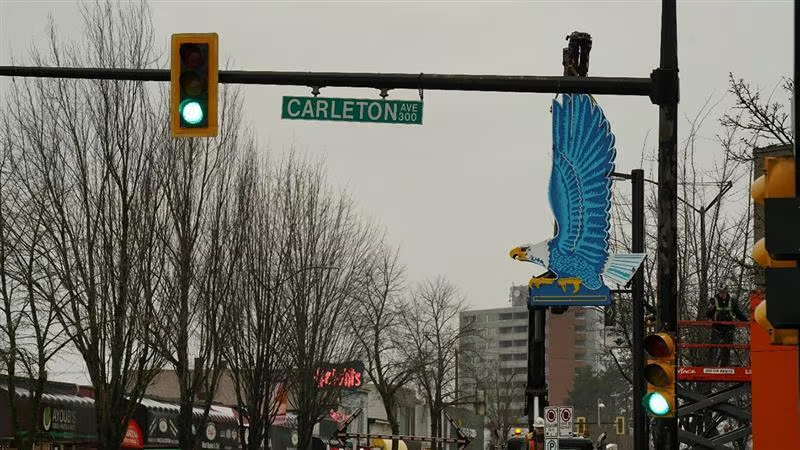
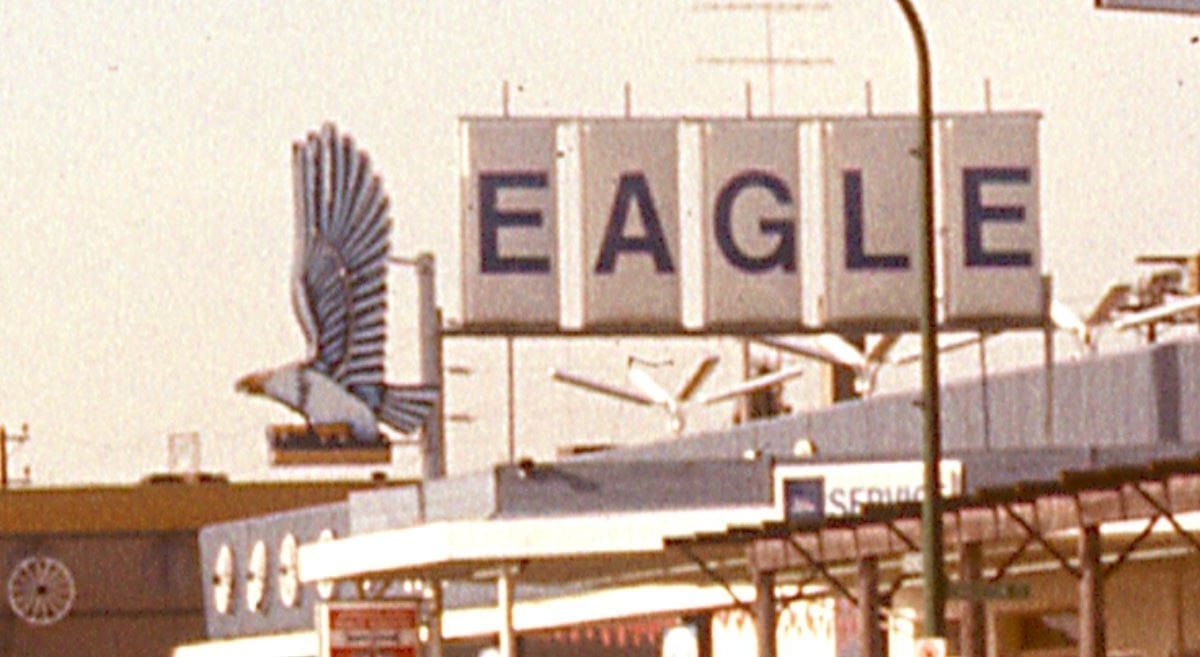
Another significant neon artifact recently returned to Hastings Street. The Eagle Ford sign, a large double-sided eagle 13.3 feet tall by 8.9 feet wide, originally hung at Walsh Motors (later Eagle Motors Limited) at 4161 Hastings Street. Installed in the 1940s by Neon Products of Vancouver, the blue and white sign with gold neon tubing was based on Richfield Oil Company's eagle mascot. After Eagle Ford closed in 1985 during a recession (it had been BC's largest Ford dealer since 1948), the sign was vandalized, then reclaimed by Neon Products. A local collector preserved it for 25 years before the City of Burnaby purchased it in September 2012. Following restoration by Galaxie Signs, it was reinstalled on a sidewalk post at 4191 Hastings Street in February 2025.
The Admiral Hotel and Malcolm Lowry's rowing legend
The Admiral Hotel at 4125 Hastings Street has anchored the neighbourhood since the 1940s, becoming Burnaby's second premises licensed to sell alcohol in the 1950s. Local legend holds that Malcolm Lowry, author of "Under the Volcano," would row across Burrard Inlet from his squatter's shack in Dollarton to drink at the Admiral Pub. Lowry lived in Dollarton from 1940 to 1954, writing much of his masterwork in a waterfront cabin while struggling with alcoholism.
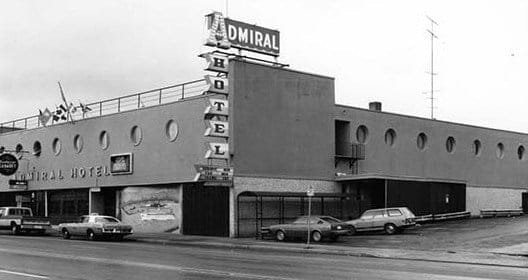
The pub (now known as Admiral Pub & Grill) maintains an "old school vibe" with warm wooden walls, live cover bands, and a large beer selection. The hotel portion operates as Howard Johnson North Burnaby Boutique Hotel. Heritage Burnaby holds 19-21 archival records documenting the establishment, including historical photographs showing the exterior, murals, signage, and the nautical decor at the entrance to the Admiral Lounge.
Dutch immigrants built a bakery dynasty
Valley Bakery was founded in 1957 by Gerardus "George" Jacobus Kuyer, a Dutch immigrant who had apprenticed as a baker in Holland at age 13 before emigrating to Canada in 1954. He opened at 4059 Hastings Street near Gilmore Avenue, bringing European baking traditions to the Heights. The "scratch bakery" made everything on-site (except donuts), becoming known for buttercream cakes, cookies, pies, breads, and pastries.
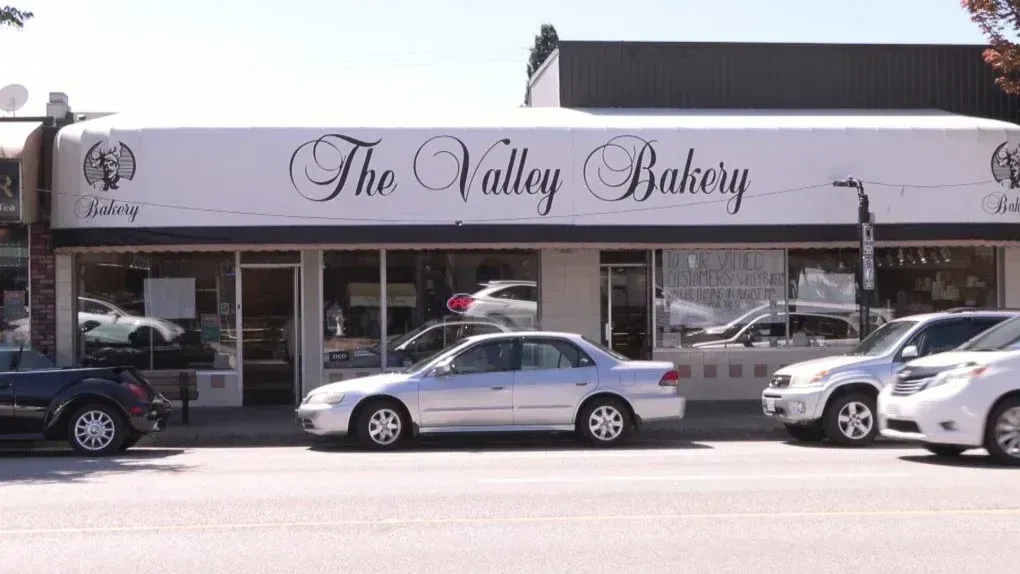
George's son Jack Kuyer purchased the business in 1979 and became one of the neighbourhood's most consequential advocates. Jack was among four Burnaby Heights merchants, along with Clayton Budd, Larry French, and Ed Wood, who organized the first Hats Off Day in approximately 1981-1982 as a "customer appreciation day" with merchants "taking their hats off" to thank customers.
Jack also led successful efforts to halt a 1979 Department of Highways plan to remove all street-level parking from Hastings Street and was integral in forming the Burnaby Heights Business Improvement Area (BIA) in 1994 - Burnaby's first. In 2015, Valley Bakery was inducted into the Burnaby Board of Trade's Business Excellence Awards Hall of Fame.
Jack retired in August 2023 after 44 years, transferring the business to new management. The bakery, now at 4058 East Hastings Street, continues operating after more than 66 years.
Hats Off Day became Burnaby's largest street festival
What began as a sidewalk appreciation event evolved into Burnaby's largest street festival, now attracting up to 60,000 attendees on the first Saturday of June. The 1989 addition of a parade, coinciding with Neighbourhood Pride Week, established the event's current format.
Early years drew 10,000-15,000 visitors, growing to 15,000-20,000 by the late 1990s. The addition of a Show and Shine vintage car show in 2002 (now featuring up to 100 vehicles) expanded the festival's appeal. Hastings Street closes from Gamma to Boundary (approximately 2 kilometres or 12 blocks) for the Family Fun Dash, mainstreet parade, live music, sidewalk sales, multicultural food vendors, and children's activities.
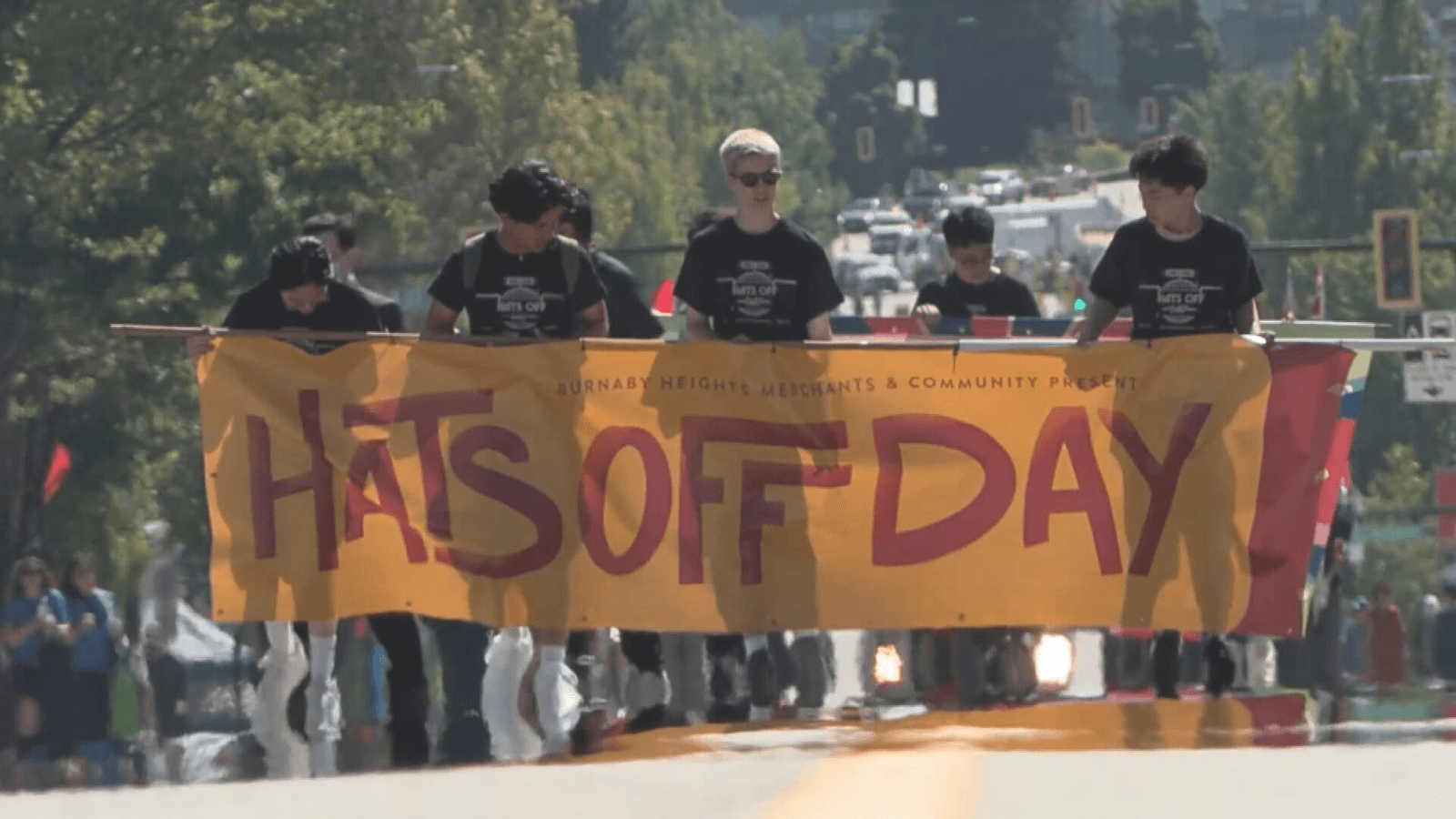
Burnaby Now readers have voted Hats Off Day "Burnaby's Best Festival" for over a decade. The 2025 edition features a "Disco Fever" theme.
HOV lanes sparked a decades-long merchant rebellion
The most contentious chapter in recent Heights history began in the 1990s when traffic volume on Hastings peaked at approximately 40,000 cars per day. The provincial government designed the Barnet/Hastings People-Mover Project starting in 1991, and despite fierce opposition from Burnaby Heights merchants, pushed through HOV lanes completed on September 4, 1996 at a cost of $105 million.
The lanes removed prime street parking from 3-6 PM every weekday (later refined to 6:00-8:30 AM toward Vancouver and 3:30-6:00 PM toward Port Moody). Hastings was widened to six lanes as part of the broader Barnet Highway upgrade.
Isabel Kolic, longtime Executive Director of the Heights Merchants Association, has been a vocal critic, claiming merchants lost 20% of their revenue overnight when the HOV lanes opened. She estimates ongoing losses at "more than $20 million a year." The province purchased off-street parking lots as an offset, and the HMA launched its "Park It, Walk It, Shop It" marketing campaign.
The HOV controversy spurred formation of the BIA in 1994, which expanded in 1999 to include three blocks east of Willingdon to Gamma Avenue. The 1991 Hastings Street Community Plan reduced 12-storey zoning to 4 stories to preserve the "urban village" character. In November 2024, Burnaby City Council approved a compromise on proposed all-day bus lanes, limiting them to the stretch between Delta Avenue and Duthie Avenue, preserving the Heights retail district. Implementation is planned for 2026.
A Century
Hastings Street in Burnaby Heights embodies a particular Lower Mainland story: infrastructure built for industrial purposes (hydroelectric power) inadvertently created urban neighbourhoods; speculation and bust cycles shaped the physical landscape; streetcar removal forced reinvention; and organized merchants repeatedly defended their commercial district against regional transportation priorities. The $400 lot that once represented wild speculation would now fetch well over a million dollars; the dynamite blasts have faded but Bylaw remains technically on the books; and the swinging girl still moves above a street that has traded children's clothing for Italian meat markets while retaining its essential character as a walkable, human-scale commercial corridor.
What distinguishes the Heights from similar postwar suburban strips is precisely this continuity of resistance, from the 1979 parking fight through the 1990s HOV battles to the 2024 bus lane compromise. Jack Kuyer's bakery operated for 66 years; Helen Arnold ran her shop for nearly 60. The merchants' stubborn insistence that neighbourhood commerce matters as much as regional traffic flow has, against considerable odds, largely prevailed.
Editor & Publisher
Artom Butenko
Founder and editor of 8 Pages Burnaby. Writes the fact-dense, archival pieces — origins, infrastructure, and the documents that explain how the city works.
More from February 2026
Full issue →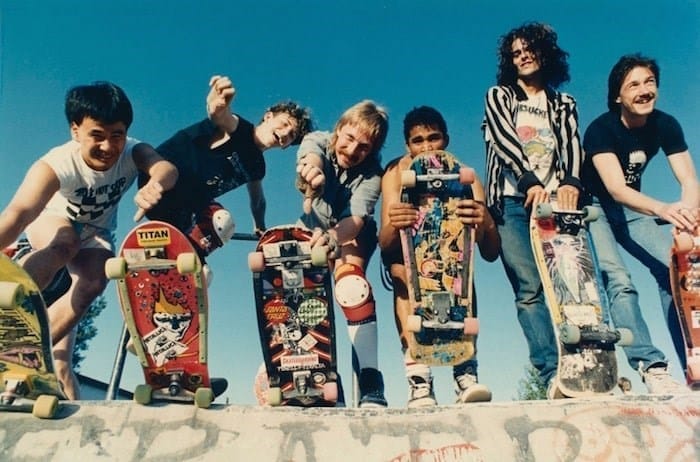
Burnaby's basement rebellion: How suburban teenagers built Vancouver's punk revolution
Canada's most influential punk scene wasn't born in gritty urban streets—it emerged from the split-level basements of Burnaby Mountain. How childhood friendships in a bedroom community produced D.O.A., The Subhumans, and the country's first indoor skatepark.
Artom Butenko · 17 min read
The Butterfly Painter of Capitol Hill: a story of Jack Shadbolt
For 48 years, Canada's most celebrated modern painter worked from a skylit studio on a Burnaby mountainside, transforming wartime trauma into butterflies and leaving behind the community arts centre that bears his name.
Brenda · 10 min read
What Remains of Expo 86 in Burnaby
Forty years ago, a world's fair transformed Vancouver. But its true legacy isn't the pavilions or the fireworks. It's the concrete pillars carrying trains above Burnaby's streets every day. It's the route you may have taken this morning.
Artom Butenko · 10 min read