Bridge Studios: How Burnaby Built the Foundation of BC’s Film Industry
Bridge Studios didn't just host TV shows—it built the foundation of BC's film industry. From The X-Files to Supernatural, this is where the Pacific Northwest learned to play other worlds.
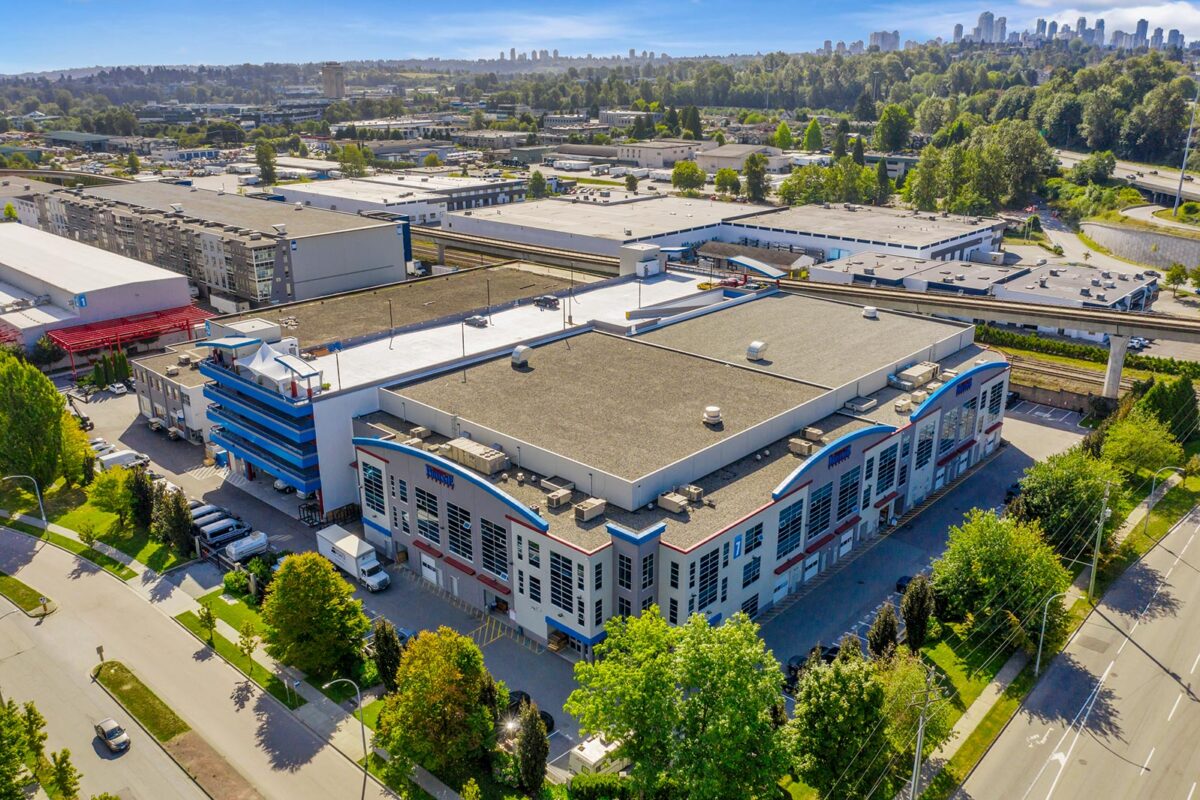
In 1987, a former Versatile Pacific shipyard on Boundary Road was converted into film production space. The building had been empty since the shipyard closed in 1985. What happened next helped turn British Columbia into one of North America’s major film production centres.
Bridge Studios occupies a large industrial building at 2400 Boundary Road, on the edge where Burnaby meets Vancouver. From the outside, it is unassuming—concrete, functional, surrounded by parking lots and loading bays. Inside are sound stages, production offices, workshops, and post-production facilities.
Between 1993 and 2018, Bridge Studios hosted The X-Files, a television series that became one of the most significant productions in BC film history. After The X-Files ended, the studio became home to Supernatural, which filmed there for 15 seasons until 2020. Other productions have used the facility for shorter periods: Stargate SG-1, Smallville, The Man in the High Castle, Altered Carbon.
Bridge Studios is neither the largest nor the oldest production facility in Metro Vancouver. Its significance lies in its role during the 1990s, when BC transitioned from a location for occasional Hollywood shoots to a permanent production infrastructure capable of supporting long-running television series.
From Shipyard to Studio
The building at 2400 Boundary Road was constructed in the early 1940s as part of wartime industrial expansion. Versatile Pacific Shipyards operated on the site, building and repairing vessels for military and commercial use. The facility included dry docks, fabrication shops, and large covered work areas designed for ship construction.
After the war, the shipyard shifted to commercial work, but BC shipbuilding declined due to international competition and reduced subsidies. Versatile Pacific struggled financially and closed in 1985. The building sat vacant for two years, industrially zoned and difficult to redevelop for other uses.
In 1987, developer Donald Tarlton purchased the property to convert it into film production space. Timing was key: BC was beginning to attract more production thanks to a lower Canadian dollar, favourable tax policies, and proximity to Los Angeles. Productions were filming in Vancouver but lacked dedicated studio space. Tarlton saw an opportunity.
The conversion was straightforward. The building’s high ceilings and wide interiors suited sound stages. Loading bays allowed easy access for trucks. Industrial design made it resilient and practical for heavy use. Sections were leased to production companies starting in 1988, and Bridge Studios officially opened in 1989. The name “Bridge” came from the nearby Boundary Road bridge, though some suggest a metaphorical meaning: bridging Hollywood and Vancouver.
Early Productions and The X-Files
In its early years, Bridge Studios hosted television movies produced on tight budgets. The breakthrough came in 1993 when The X-Files leased multiple sound stages. The series, created by Chris Carter, filmed in Vancouver and Burnaby until 1998, using Bridge Studios as its home base for interior sets: FBI offices, laboratories, and residential interiors remained standing throughout each season.
The show employed hundreds of BC crew members—set designers, carpenters, electricians, camera operators, sound technicians, and transport coordinators—mostly local hires. The economic impact extended to equipment rentals, catering, transportation, accommodation, and local services. Estimates from the BC Film Commission suggest the series contributed around $100 million to the provincial economy over five years.
For many crew members, Bridge Studios represented something rare in the early 1990s: continuity. Instead of moving from project to project or city to city, camera assistants, set builders, electricians, and production coordinators could remain in Metro Vancouver for years at a time. Long-running series made film work resemble a stable profession rather than a temporary contract economy. Careers were built quietly, season by season, inside the same concrete building on Boundary Road.
The X-Files demonstrated that BC could support long-running series, not just occasional location shoots. It proved the province could host sound stages, post-production facilities, and a reliable crew base.
Supernatural and Long-Term Tenancy
Supernatural began filming at Bridge Studios in 2005, producing 327 episodes over 15 seasons until 2020 and became one of the longest-running North American science fiction series. Like The X-Files, it required standing sets and stable production infrastructure. The studio adapted to the show’s needs, expanding stages and providing post-production space as necessary.
This long-term tenancy created a symbiotic relationship: Supernatural needed reliable, affordable space, and Bridge Studios needed anchor tenants to sustain operations and maintenance. The series employed BC crews continuously for 15 years, and the studio’s identity became linked to these two iconic productions.
By the time Supernatural ended production in 2020, Bridge Studios had hosted the series longer than it had hosted The X-Files. The facility’s identity was tied to both shows. Tour groups visited. Fans photographed the exterior. Local crew members built entire careers working on productions housed at Bridge.
Incentives, Infrastructure, and Growth
Bridge Studios exists because of a specific set of policy and economic conditions that made British Columbia attractive for film and television production beginning in the 1990s. Three factors mattered most: currency exchange rates, government incentives, and the availability of skilled labour.
Throughout the 1990s, the Canadian dollar traded well below the US dollar, significantly reducing production costs for American studios. A production budget denominated in US dollars stretched further in Canada, particularly for labour and services. This currency advantage made British Columbia competitive even before formal incentive programs were introduced.
Tax incentives amplified that advantage. In the late 1990s, provincial and federal governments introduced film and television tax credits that allowed productions to claim a portion of their labour costs. Depending on the program and structure, these incentives reduced effective production budgets by approximately 30 to 40 percent. For long-running television series, the savings accumulated season after season, making British Columbia an economically viable alternative to Los Angeles.
The third factor was crew. Vancouver already had an experienced workforce from decades of location shooting, but that base expanded rapidly as production volume increased. Training programs at institutions such as Capilano University and the Vancouver Film School produced camera operators, editors, technicians, and production managers. At the same time, experienced crew members from other Canadian cities and the United States relocated to Metro Vancouver, drawn by the promise of steady work.
Bridge Studios benefited from this infrastructure without creating it. The studio provided physical space—sound stages, workshops, offices—but it relied on a broader ecosystem of crew, equipment suppliers, post-production houses, and support services that had developed across the region. The success of the studio was inseparable from the growth of that ecosystem.
Other studios opened in Metro Vancouver during the same period, including Canadian Motion Picture Park (now Mammoth Studios) in Burnaby, Vancouver Film Studios, and North Shore Studios. Competition increased. Bridge Studios differentiated itself not by scale, but by strategy. Rather than competing for short-term feature films or rotating productions, it focused on securing long-running television series as anchor tenants.
That strategy proved effective when television production was stable and series routinely ran for multiple seasons. It became more difficult in the 2010s, as streaming platforms altered production models. Seasons became shorter. Productions moved more frequently between cities. Long-term tenancy became less common. The conditions that had once favoured permanence began to shift.
Bridge Studios Today
Bridge Studios continues to operate as a production facility. Since Supernatural ended in 2020, the studio has hosted a range of projects, though none with the same duration or cultural footprint as The X-Files or Supernatural.
The building at 2400 Boundary Road is aging. Constructed in the early 1940s, converted for film production in the late 1980s, and in continuous use for more than three decades, it requires ongoing maintenance. The facility now competes with newer studios in Metro Vancouver that offer larger sound stages, purpose-built infrastructure, and more modern technical systems.
The surrounding area has also changed. Industrial sites along Boundary Road are being redeveloped, and residential towers are rising nearby. While industrial zoning currently protects the site from immediate redevelopment, land values have increased significantly. The long-term future of Bridge Studios as a production facility depends on market conditions, ownership decisions, and the evolving needs of the film industry.
What is not in question is the studio’s historical role. Between roughly 1993 and 2020, Bridge Studios housed two of the most significant long-running television series in British Columbia’s film history. That period marked the province’s transition from a place used primarily for location shooting to one capable of sustaining full-scale, long-term television production.
Bridge Studios didn’t create that shift alone. But it was where much of it happened. The sets were built there. The episodes were filmed there. The crews worked there for years, sometimes decades.
The building is still anonymous from the outside. Concrete, functional, surrounded by parking lots. Inside is where the work happened.

Comments
Join the conversation! Please log in or register to comment.
Log In to Comment