Robert Burnaby: The Private Secretary Who Became a City
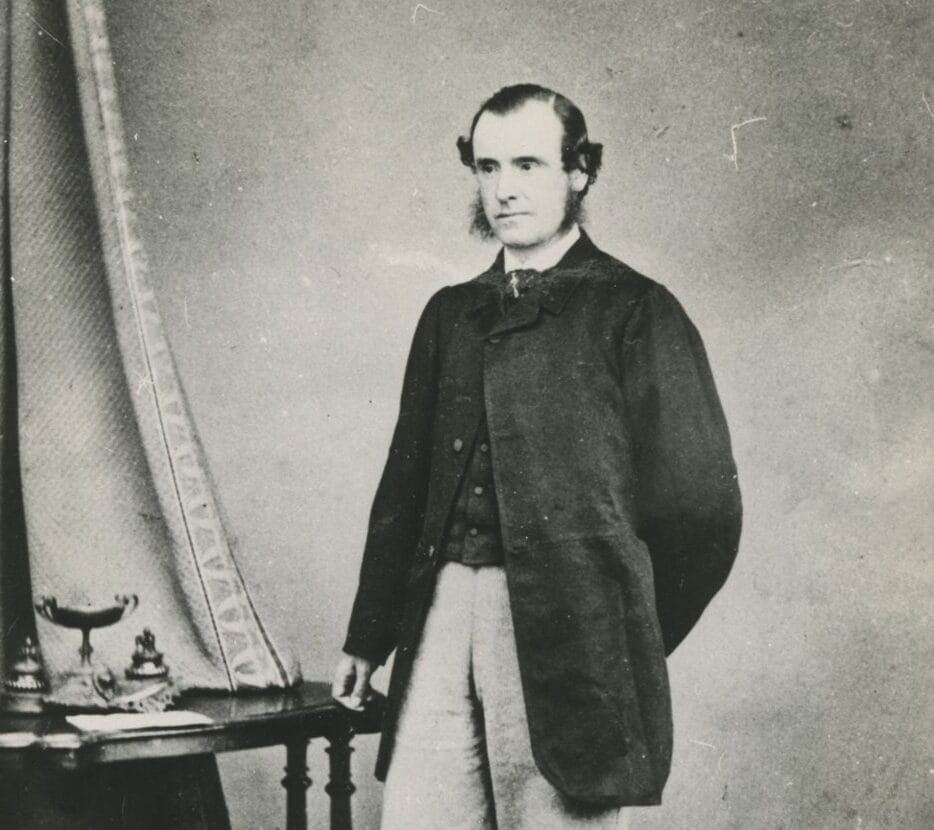
How a clerk's name ended up on 98 square kilometres
In 1859, Colonel Richard Moody named a lake east of New Westminster after his administrative clerk. The lake gave its name to a municipality in 1892. Today, 249,000 people live in a city named for a man who never lived here.
The city of Burnaby is named after Robert Burnaby, private secretary to Colonel Richard Clement Moody, commander of the Royal Engineers detachment that surveyed British Columbia between 1858 and 1863. Burnaby never governed the area, never owned land within its boundaries, and left the colony before it developed beyond scattered settlement. His connection to this place is a lake named in his honour during a surveying expedition.
This is unusual but not unique in colonial nomenclature. Many BC place names commemorate people with tangential connections to the locations they mark. What distinguishes Burnaby is the modesty of the origin - a man honoured for managing paperwork.
The Royal Engineers Arrive
In 1858, the Fraser Canyon Gold Rush brought approximately 30,000 prospectors to the mainland colony in a single year. Governor James Douglas had minimal infrastructure and no capacity to manage the influx. He requested military engineers from Britain.
Colonel Moody arrived in November 1858 with 172 Royal Engineers. Their mandate included surveying the Fraser River, establishing the colonial capital at New Westminster, designing roads, and mapping the interior. The work required administrative coordination.
Robert Burnaby was not a random hire. He came from Her Majesty's Customs Office in London, an experienced civil servant, and carried a personal letter of introduction from Sir Edward Bulwer-Lytton, Secretary of State for the Colonies, to Governor Douglas. Moody hired him as private secretary on Lytton's recommendation. The two became close friends.
Burnaby's work involved managing Moody's correspondence, coordinating survey documentation, and maintaining the administrative framework for the detachment's operations. He also witnessed the political conflicts that plagued the colony. In letters that survive in the BC Archives, Burnaby complained that Douglas was "muddling [Moody's] work and doubling his expenditure" and employing administrators to "work a crooked policy against Moody."
It is the only direct quotation from Burnaby that historians have found. He left almost no personal record.
The Lake
The body of water that became Burnaby Lake had been used for millennia by Coast Salish peoples, including the Squamish and Tsleil-Waututh, as a seasonal fishing site. If the lake had a name in hən̓q̓əmin̓əm̓ or Sḵwx̱wú7mesh, it was not recorded by European surveyors and has not survived.
Colonial naming practice in this period was casual. An officer marked a feature on a survey map, wrote the name in a report, and it became official. Moody named multiple features after members of his detachment: Sapperton after the sappers, Mary Hill after his wife, and several creeks after officers. Burnaby Lake was named for administrative staff. The choice appears to have been personal recognition—a gesture of friendship from a commanding officer to a valued assistant.
Robert Burnaby likely never saw the lake. Survey records do not place him in the field with mapping parties. He remained in New Westminster managing paperwork. This was just a name written on the map.
After the Secretaryship
Burnaby's time as Moody's secretary was brief—perhaps a year. He soon turned to business, founding the commission merchant firm Henderson and Burnaby with an old school friend. He explored for coal at Burrard Inlet with surveyor Walter Moberly. He helped establish the Victoria Chamber of Commerce and the first Masonic lodge in Victoria. He served as president of Victoria's Amateur Dramatic Association.
He was, in other words, far more than a clerk. But the lake had already been named for his clerical work, not for his later achievements.
In 1869, severe illness forced Burnaby's retirement. He returned to England in 1874 and died in Leicestershire in 1878, at age 49. Burnaby never came back to British Columbia. He had no children. His estate was modest.
Robert Burnaby had been dead for fourteen years when the municipality took his name.
From Lake to Municipality
The name "Burnaby" referred exclusively to the lake for three decades. The surrounding area remained sparsely populated—logging operations, small farms, and Indigenous communities. Settlement accelerated in the 1890s when the British Columbia Electric Railway Company extended interurban tram lines between Vancouver and New Westminster, passing through the area around Burnaby Lake.
On September 22, 1892, residents voted to incorporate as the District of Burnaby. The name was adopted from the lake without recorded debate. Municipal records from the incorporation do not discuss alternative names. The lake was already marked on regional maps and in common usage.
The new municipality stretched from Burrard Inlet to the Fraser River, encompassing approximately 98 square kilometres. Initial population was fewer than 1,000 residents.
The Lake Today
Burnaby Lake is now a 354-hectare regional park. The lake and surrounding wetland form one of the most significant urban wildlife habitats in the Lower Mainland—approximately 200 bird species have been recorded here. Water levels were artificially lowered in the early twentieth century; pollution degraded the ecosystem through the mid-1900s. Conservationists saved what remained in the 1970s.
It is the namesake feature: the place where the name originated before it spread to streets, neighbourhoods, and institutions across 98 square kilometres.
A Name That Persisted
Burnaby is now the third-largest city in British Columbia. It includes Metrotown, Simon Fraser University, and functions as a residential and commercial hub in Metro Vancouver. A good neighbourhood.
None of this was imaginable in 1859 when Moody's surveying party marked a lake on a map. The name persisted because it was there. Once attached to the lake, it is enlarged and transferred to the municipality. Once attached to the municipality, it spread to infrastructure and civic identity. The name became self-reinforcing.
Robert Burnaby's contribution to this process was indirect. He worked competently in an administrative role. His commanding officer chose to honour that work by naming a geographic feature after him. The feature happened to be in a location that later became central to municipal development.
There is no evidence Burnaby sought recognition or expected his name to outlast him. The records suggest he was simply doing his job—and then moved on to other things.
That job—organizing documents, managing correspondence, coordinating logistics—is the kind of work that makes large projects possible but rarely receives public acknowledgment. Moody named the lake as a form of acknowledgment. The city inherited it by accident of geography.
The result is a city named for clerical work and a friendship between two men in a colonial outpost. It is not a heroic origin story. It is a bureaucratic one—and perhaps that is the best one.
Editor & Publisher
Artom Butenko
Founder and editor of 8 Pages Burnaby. Writes the fact-dense, archival pieces — origins, infrastructure, and the documents that explain how the city works.
More from January 2026
Full issue →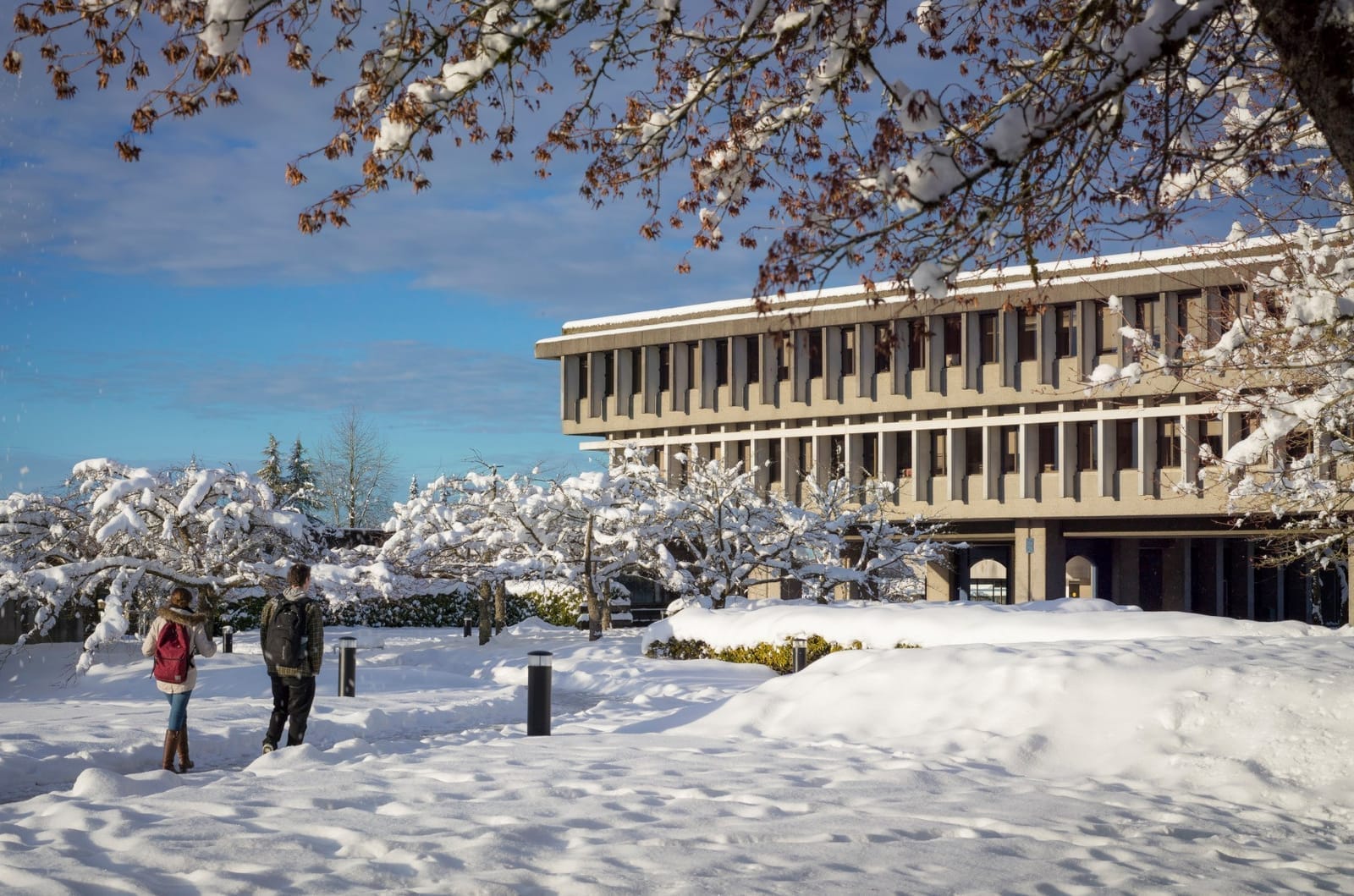
What the Burnaby Mountain Holds: SFU in Winter
Arthur Erickson's mountaintop campus becomes something else in January—a stark landscape of shadows and ice that Hollywood keeps casting as the future.
Ilarion Bohatyrov · 6 min read
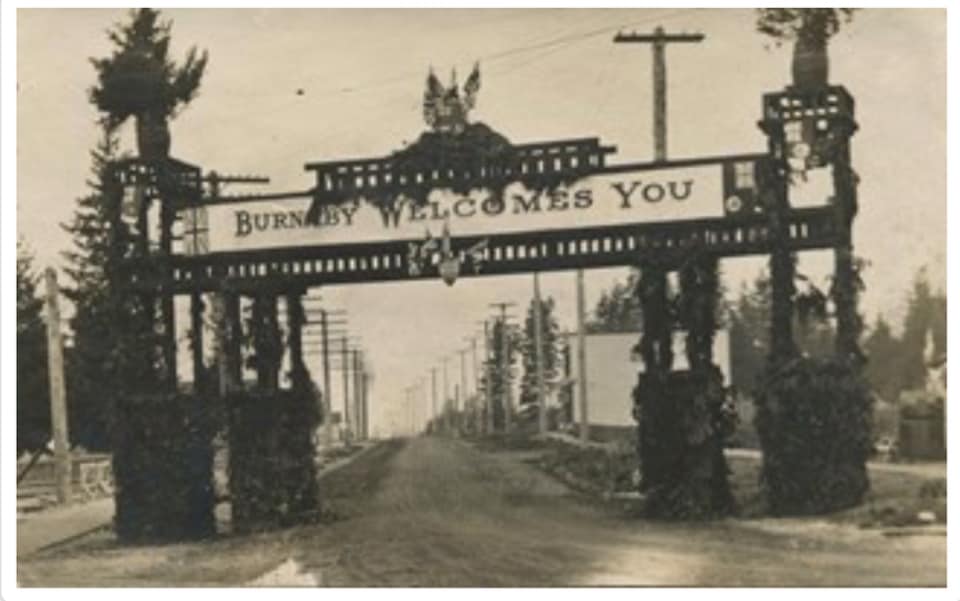
The Beginning of Burnaby
On September 22, 1892, a scattered collection of farms and logging camps voted to become something more. What changed when Burnaby broke away from New Westminster?
Artom Butenko · 8 min read
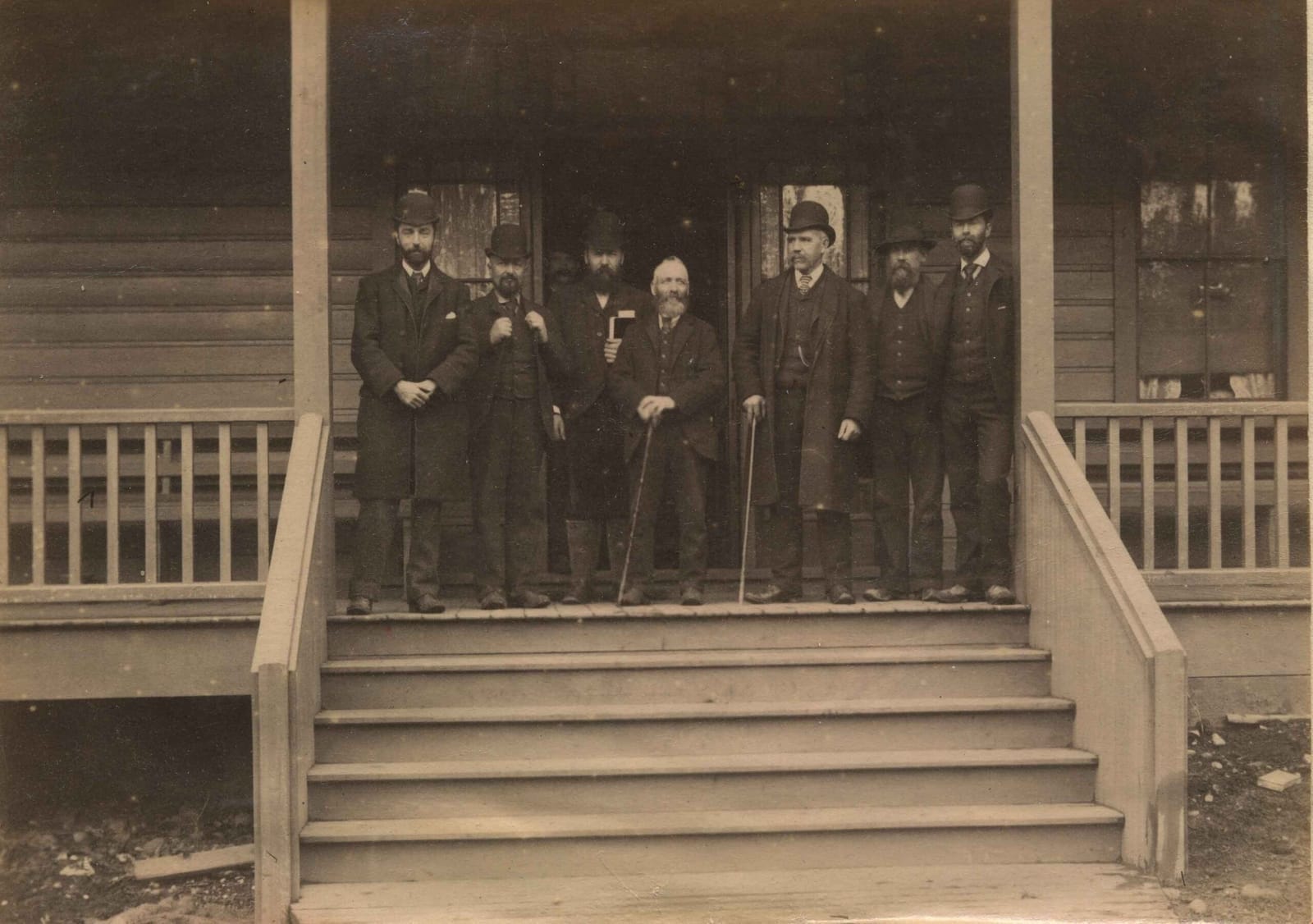
William Stride: Burnaby's First Reeve and the Work of Starting a Municipality
In 1892, the new city needed someone to lead it. The man they chose was a farmer, a community builder, and a believer in what this place could become.
Artom Butenko · 8 min read