The Secret Submarines of Barnet Beach
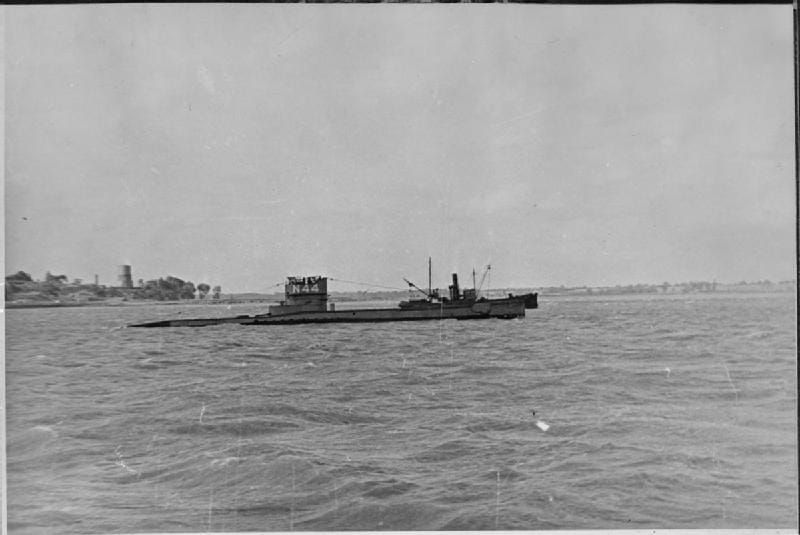
During the First World War, 460 workers assembled submarine hulls for the Russian Imperial Navy on a Burnaby beach. The official story was barges. Guards patrolled behind barbed wire. Three hulls were finished before the Revolution ended the contract in 1917.
In the spring of 1915, a Scottish engineer named James Venn Paterson received an order from the Electric Boat Company for five submarines. The buyer was the Imperial Russian Navy, which needed them to counter the German fleet in the Baltic Sea. The United States was neutral. Building military equipment for a belligerent power on American soil was illegal. Paterson had a dry dock company in Seattle. He could not use it.
His solution was to move the work across the border. Specifically, to a beach.
Oil Barges on Burrard Inlet
Paterson incorporated the British Pacific Construction and Engineering Company in British Columbia, set up offices in Vancouver, and established the assembly yard on the beach at Barnet, beside the CP rail line on Burrard Inlet. The site already sat in the middle of an industrial zone — the North Pacific Lumber Company mill, company housing, the Nichols Chemical acid plant. One more operation on the waterfront did not attract unusual attention.
That was the idea, anyway. A high barbed wire fence went up around the yard. Searchlights swept the perimeter at night. Nine military guards, on loan from the Canadian military, patrolled the grounds. Workers — over two hundred at first, eventually 460 on day and night shifts — were sworn to secrecy. The official explanation for anyone who asked: they were constructing oil barges.
Nobody was constructing oil barges. Four hundred and sixty people knew it. The guards knew it. The barbed wire knew it.
What They Were Actually Building
The submarines were H-class vessels, built to a modified EB602 design. Each displaced 440 tons on the surface, 500 submerged. One hundred and sixty-four feet long, fifteen feet three inches across the beam. Twin diesel engines, 480 horsepower. Thirteen knots on the surface, eleven submerged. Crew of twenty-five.
The parts came from Seattle. Historical accounts use the word "smuggled," which is probably accurate enough. Workers assembled the hulls on scaffolding directly on the beach — sand and gravel underfoot, the inlet in front of them, the mountains beyond that — then disassembled them for transport by rail to Vladivostok. From there, the Trans-Siberian Railroad carried them to Saint Petersburg and Nikolayev for final reassembly. The submarines were designed for exactly this kind of modular construction — engineered, as one source puts it, to be "dismantled and shipped by rail or sea to customers who could then reassemble them closer to the theatre of war."
Build it. Take it apart. Ship it across the world. Put it back together. Send it underwater.
In December 1916, three completed hulls shipped from Vancouver. Two additional hulls, assembled at other Electric Boat Company facilities, also reached Russia. Five in total.
Paterson
James Venn Paterson was born in Glasgow on June 17, 1867. He graduated from the University of Glasgow in 1888, studying mathematics and naval science. By 1914, he was already well established in the submarine trade. He had sold two submarines to the BC government on the eve of the war — purchased by Premier Richard McBride in what amounted to a personal arms deal to defend the coast. The Barnet operation was his second act in Pacific submarine construction.
His papers are held at Southern Methodist University in Texas. A Scottish-born engineer who built submarines on a Burnaby beach for the Russian navy, archived in Dallas. Archives follow the paper, not the story.
What Happened to the Submarines
The fates are scattered. AG-14, one of the submarines that reached Russia, was captained by Antonius Essen, the only son of Admiral Nikolai Essen. The elder Essen had commanded the Russian Baltic Sea Fleet before his death in 1915. AG-14 hit a mine and was lost with all hands in 1917. A diving company recovered the wreck from the Baltic in June 2003. Eighty-six years on the sea floor, having started life on a Burnaby beach.
Four other Russian-assembled submarines were scuttled in Finland in early April 1918 to prevent their capture by advancing German forces. Six hulls that had not yet been delivered when the contract collapsed were purchased by the United States Navy after America entered the war. They became US submarines H-4 through H-9.
Why It Stopped
The Russian Revolution disrupted the contract — no more Russian Imperial Navy, no more orders. And in April 1917, the United States entered the war, which eliminated the neutrality problem that had forced the work to Canada in the first place. American shipyards could now build submarines openly. The strategic reason for a secret yard on a Burnaby beach ceased to exist.
The facility was dismantled. W. Kaye Lamb, the historian who documented the operation, wrote that it left "little behind but bits of wood and rusty metal." Workers dispersed. The beach returned to its prior uses — lumber, chemicals, the ordinary industrial life of Burrard Inlet's south shore.
The Beach Today
The site is now part of the Barnet Marine Park area, adjacent to the current Chemtrade Solutions building, which sits behind its own fences and no-trespassing signs. Of the submarine yard, nothing remains above ground. On weekends, people walk dogs along the water. Golden retrievers and terriers trot across the same gravel where submarine hulls once sat on scaffolding, pointed toward the inlet.
Heritage Burnaby holds photographs of a submarine hull under construction on the beach. Eve Lazarus has written about the yard. The academic source is Lamb's paper, "Building Submarines for Russia in Burrard Inlet," available at forposterityssake.ca.
Four hundred and sixty people worked on that beach, building weapons of war in secret, behind barbed wire, under a cover story about barges. The operation lasted roughly two years. It produced submarines for a navy that would soon cease to exist, commanded by an empire that had months left. The workers went home. The fence came down. The beach stayed.
Editor & Publisher
Artom Butenko
Founder and editor of 8 Pages Burnaby. Writes the fact-dense, archival pieces — origins, infrastructure, and the documents that explain how the city works.
More from April 2026
Full issue →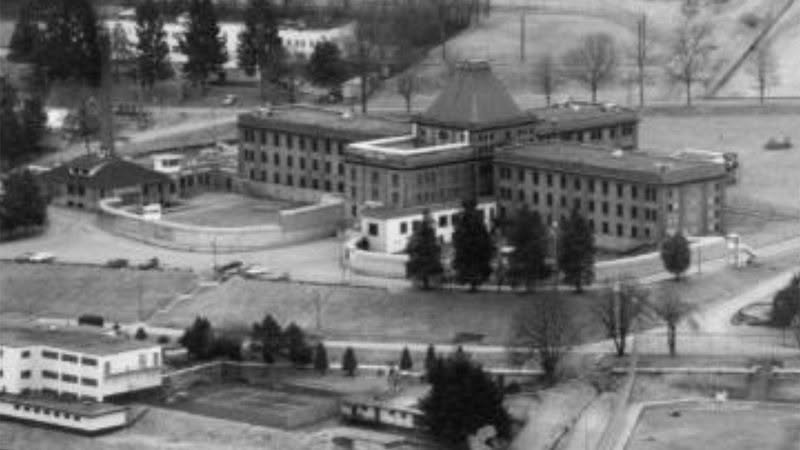
Oakalla: The Prison That Became a Neighbourhood
For eighty years, a 185-acre prison farm stood beside Deer Lake. Inmates grew vegetables, milked cows, and were hanged in an abandoned elevator shaft. A doctor gave them new faces. A punk bassist served time in the cells. When the last inmates left in 1991, the city tore everything down and sold townhomes on the land. The bricks from the cellblocks line the new walkways.
Artom Butenko · 8 min read
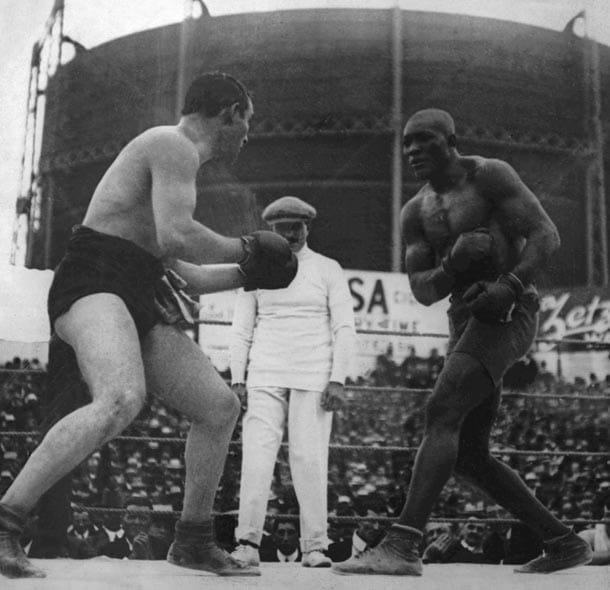
The Boxer, the Interpreter, and the Coloured Section
Ocean View Burial Park was established in 1918 as Burnaby's first non-sectarian cemetery, receiving its first interments the following year. In 1929, it created a section for "any person of colour." Buried there: the first Chinese-born Canadian, a court interpreter who fought for rights he was never granted in life. Nearby, in a pauper's grave: the only Canadian-born world heavyweight boxing champion, five-foot-seven and ordained.
Artom Butenko · 7 min read
A Bungalow with No Bedrooms: The Disguised Tunnel Shaft on Frances Street
3911 Frances Street has hedges, a mature tree, wrought-iron fencing, and no one living inside. Sixty-two metres below, a freight railway tunnel moves forty million tonnes of export cargo a year. The house is a ventilation fan disguised as a home.
Artom Butenko · 4 min read