Oakalla: The Prison That Became a Neighbourhood
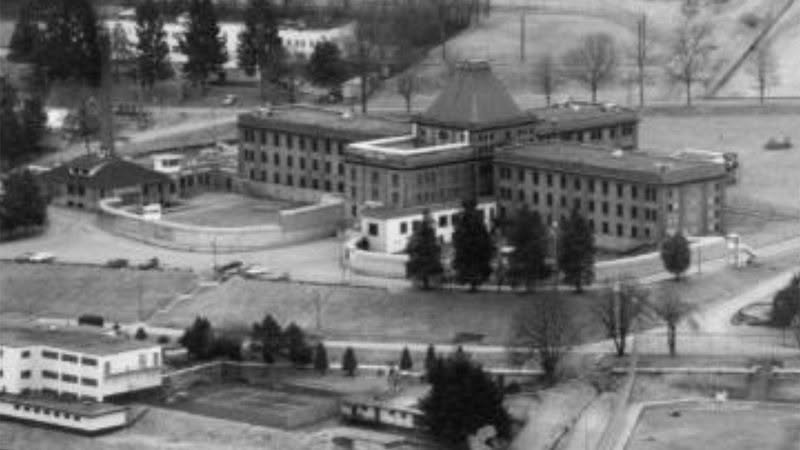
For eighty years, a 185-acre prison farm stood beside Deer Lake. Inmates grew vegetables, milked cows, and were hanged in an abandoned elevator shaft. A doctor gave them new faces. A punk bassist served time in the cells. When the last inmates left in 1991, the city tore everything down and sold townhomes on the land. The bricks from the cellblocks line the new walkways.
The Provincial Government of British Columbia opened Oakalla Prison Farm on Royal Oak Avenue in 1912, on 185 acres of cleared land beside Deer Lake. It was designed to hold 150 inmates. By the 1950s, over a thousand people were locked inside its walls on any given day. For the next four decades, the overcrowding never stopped.
The farm part was real. Inmates milked dairy cows, tended vegetable gardens, maintained the grounds, and slaughtered hogs for the prison kitchen. On warm days the smell of pig fat drifted across the fields and mixed with cut grass — pastoral in a way the warden's reports never mentioned. The prison part was real too.
Forty-four people were hanged inside Oakalla between 1919 and 1959
The gallows were installed in an abandoned elevator shaft. The first person executed there was Alex Ignace, twenty-five years old, on August 29, 1919. The last was Leo Anthony Mantha, thirty-three, on April 28, 1959.
The hangman, for most of these executions, was Camille Branchaud. He travelled from Montreal each time a sentence was carried out. Cross-country, by train or by plane, to do one thing, then home again. Branchaud remained on the Quebec government payroll throughout his career as executioner. He maintained his anonymity until he died. Few Canadians ever learned his name.
Mantha's case is the one that stayed in the legal record, because it revealed more about the country that killed him than about the man himself.
Leo Mantha was born in 1926 in Verdun, Quebec
He trained as a marine engineer. He joined the Canadian Navy in 1951 and served five years before being discharged in 1956. His service record listed the reason: "personality disorder with alcohol and sexual deviation." The Navy's language. He was gay.
In the spring of 1958, Mantha met Aaron "Bud" Jenkins through Victoria's gay community. Jenkins was twenty-three. He worked at the Naden naval base in Esquimalt. Their relationship lasted through that spring and summer. Mantha's letters to Jenkins were addressed "Budzie-Wuzie."
By September, Jenkins wanted out.
On September 5, 1958, Mantha entered the barracks where Jenkins was sleeping and stabbed him twice with a hunting knife. Jenkins screamed. His last words, heard by other men in the barracks, were: "Help me, oh God, help me." He died within minutes. When police arrived, Mantha confessed in five minutes.
The trial lasted longer than the deliberation
Justice John Ruttan presided. George Gregory, a sitting Liberal MLA, handled the defence. Lloyd McKenzie served as Crown prosecutor. The trial's central tension was never really about whether Mantha had killed Jenkins. He had. He said so himself.
Psychiatrist Douglas Alcorn testified that homosexuals experience "peculiar stresses" that can result in "outbursts of rage." The all-male jury deliberated for three hours and returned a guilty verdict with no recommendation for mercy.
The death sentence in Canada during the late 1950s was not always carried out. Commutations were common. The federal cabinet reviewed each case. Some sentences were reduced to life imprisonment.
Mantha's was not.
Shortly after midnight on April 28, 1959, the hangman arrived from Montreal. Mantha was led to the elevator shaft. He hanged for twelve minutes before the attending doctor declared him dead. The death certificate, in the official language of the province, read: "EXECUTED according to sentence imposed."
The RCMP used Jenkins's address book to identify gay men across Victoria
Officers were sent from Ottawa. They went through Jenkins's correspondence. Every name in the book became a suspect, not of murder, but of homosexuality. Stan Piontek, a friend of Jenkins, received what he later described as "the bum's rush" from the Navy.
Justice Ruttan, the judge who had presided over Mantha's trial, reflected on it years later. His assessment was plain: "Many other scoundrels deserved death far more than Mantha. But they were not homosexuals, and their sentences were all commuted."
Crown prosecutor Lloyd McKenzie confirmed it in 1999, forty years after the execution. "There's no doubt about it," he said. "That was a strong factor militating against him."
Mantha killed a man. The state killed Mantha. The reasons it did so had less to do with the knife than with the letters addressed to Budzie-Wuzie.
Before the executions, there were the potlatch prisoners
In 1922, twenty-two Kwakwaka'wakw people were sentenced to prison for the crime of dancing. They had attended a potlatch hosted by Chief Dan Cranmer. At the time, the Indian Act prohibited potlatch ceremonies. William Halliday, the Indian Agent responsible for the region, ordered the arrests and oversaw the confiscation of over 600 ceremonial masks.
The prisoners were transported to Oakalla on the CPR steamer Beatrice. A long trip for a dance.
Their offence, in the language of Canadian law, was participation in a cultural ceremony. They served their sentences in the same institution where, decades later, men would be hanged in an elevator shaft.
Six hundred masks. The Canadian Museum of Civilization held some of them for decades. Some were returned to the Kwakwaka'wakw in the 1970s and 1980s, after years of negotiation. Some were never returned.
Dr. Lewison offered inmates new faces
Starting in 1953, a plastic surgeon named Dr. Lewison began operating on inmates at Oakalla. The theory was tidy: fix a man's face, reduce his likelihood of committing future crimes. A new nose, a new life. Over twenty years, Lewison performed approximately 450 operations. Broken noses set straight. Scars smoothed. Tattoos removed.
A 1965 paper in the Canadian Medical Association Journal reported encouraging results. Among surgical patients, the recidivism rate was 42 per cent. For the general prison population, it was 75 per cent.
The methodology was flawed. The study had no randomized control group. Selection bias was obvious: inmates who volunteered for surgery may have already been more motivated to change their behaviour. Lewison acknowledged none of this publicly.
Some patients used their new faces to run scams more effectively. A fresh appearance made it easier to work confidence schemes on people who might have recognized them before. The program continued anyway. The theory was tidy. The results were not.
In 1958, Indigenous women made up 60 per cent of the female inmate population
Indigenous people accounted for two to three per cent of British Columbia's total population at the time. The disproportion was staggering, though no one used that word in 1958 because the disproportion was the system functioning as designed.
The women's section of Oakalla operated under conditions that Earl Andersen, a former guard who published a memoir called Hard Place to Do Time in 1993, described without sentimentality. In 1981, female inmates launched a hunger strike. Their demand was specific: the right to hold pipe ceremonies inside the prison. They wanted to practise their spirituality behind the same walls that had once imprisoned the Kwakwaka'wakw for practising theirs.
Sixty years apart. Same institution. Same request.
Gerry Hannah served time at Oakalla
The bassist of the Subhumans, one of Vancouver's foundational punk bands, was incarcerated at the prison following his involvement with the Vancouver Five, a group convicted of bombings and an attempted robbery of a Brinks truck in the early 1980s. Hannah's sentence was ten years. He served time in the same cellblocks that had held potlatch dancers and men awaiting execution. The building did not distinguish between its occupants. Buildings never do.
In 1988, thirteen prisoners escaped from the segregation unit
The method was absurd. Bruce Gordon McKay filled a sock with peanuts and attached it to a strip torn from a bed sheet. He used this weighted strip to unlatch his cell door. The segregation unit was located under an old cow barn, a leftover from the days when the farm was still a farm. Cow barn to solitary confinement. The architecture had come up in the world.
Thirteen inmates got out.
Heath Thompson, eighteen years old, was among them. He called a local radio station to ask why the escape wasn't being covered in the news. The station had not been aware of it.
Oakalla closed on June 30, 1991
The last inmates were transferred to other facilities. The buildings stood empty for a while after that — that specific silence a place gets when it knows what's coming.
Then the demolition crews arrived.
The city of Burnaby tore down the cellblocks, the women's section, the elevator shaft, the cow barns, the administration buildings. They tore down everything. What remained was 185 acres of cleared land beside Deer Lake, in one of the most desirable locations in the Lower Mainland.
A developer built "The Oaklands," a community of roughly 600 townhomes. When units went on sale, prospective buyers slept in their cars for thirty-six hours to secure a spot. The Oaklands became the most expensive townhome area in Burnaby.
The bricks from the demolished cellblocks were repurposed. They line the walkways of the new neighbourhood. Residents walk over them on their way to the parking garage, pushing strollers, carrying groceries. The bricks do not have plaques. They do not explain themselves.
The walkways are the archive most people encounter
There is a particular quality to a neighbourhood built on the site of a prison that operated for eighty years. The quality is material. That word covers it precisely, because what happened at Oakalla was entirely material — administrative, institutional, documented, carried out on paper and in concrete.
The townhomes start around $800,000. The location is excellent. Deer Lake is steps away.
Whether anyone looks down at the bricks is their own business.
Editor & Publisher
Artom Butenko
Founder and editor of 8 Pages Burnaby. Writes the fact-dense, archival pieces — origins, infrastructure, and the documents that explain how the city works.
More from April 2026
Full issue →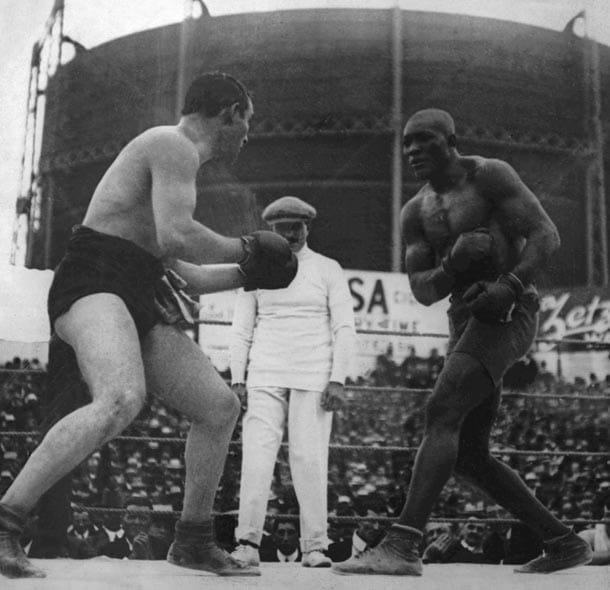
The Boxer, the Interpreter, and the Coloured Section
Ocean View Burial Park was established in 1918 as Burnaby's first non-sectarian cemetery, receiving its first interments the following year. In 1929, it created a section for "any person of colour." Buried there: the first Chinese-born Canadian, a court interpreter who fought for rights he was never granted in life. Nearby, in a pauper's grave: the only Canadian-born world heavyweight boxing champion, five-foot-seven and ordained.
Artom Butenko · 7 min read
The Secret Submarines of Barnet Beach
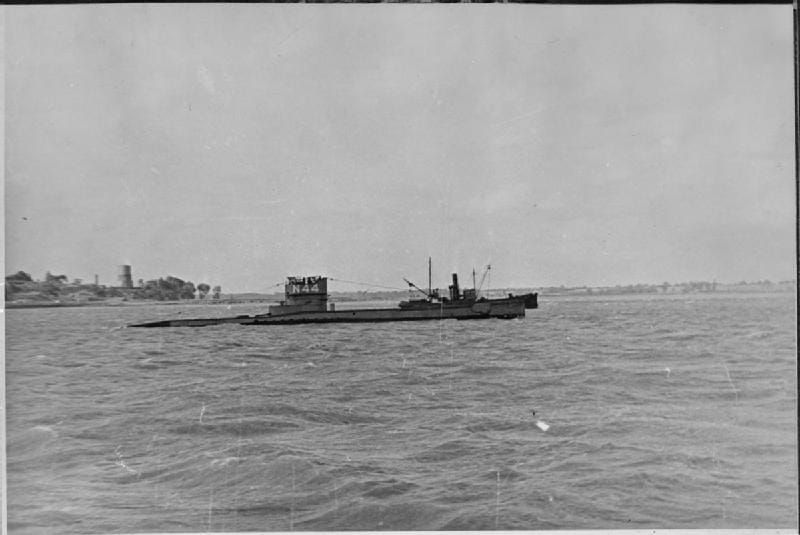
During the First World War, 460 workers assembled submarine hulls for the Russian Imperial Navy on a Burnaby beach. The official story was barges. Guards patrolled behind barbed wire. Three hulls were finished before the Revolution ended the contract in 1917.
Artom Butenko · 5 min read

A Bungalow with No Bedrooms: The Disguised Tunnel Shaft on Frances Street
3911 Frances Street has hedges, a mature tree, wrought-iron fencing, and no one living inside. Sixty-two metres below, a freight railway tunnel moves forty million tonnes of export cargo a year. The house is a ventilation fan disguised as a home.
Artom Butenko · 4 min read