The Department That Went on Strike
In the autumn of 1969 a whole department at Simon Fraser walked out on its own university. The strike lasted six weeks. The firings took two years, and the sources still disagree on how many there were.
On Monday, 22 September 1969, some 750 people at Simon Fraser University, nearly all of them students and fourteen of them professors, voted 700 to 36 to go on strike. The strike was against their own university. Their department, Political Science, Sociology and Anthropology, which everyone called PSA, had dissolved itself that day and re-formed as a "General Assembly" in which students and faculty voted as equals. That arrangement was the whole quarrel. The strike began on the Wednesday at half past twelve.
Mordecai Briemberg, the professor at the centre of it, explained forty years later what had frightened the people running SFU. "It was dangerous, the outward form of it," he told the historian Ian Milligan. "That somehow the university comes off the mountain, and actually goes to see what it can do in relation to ordinary people's working lives and their needs."
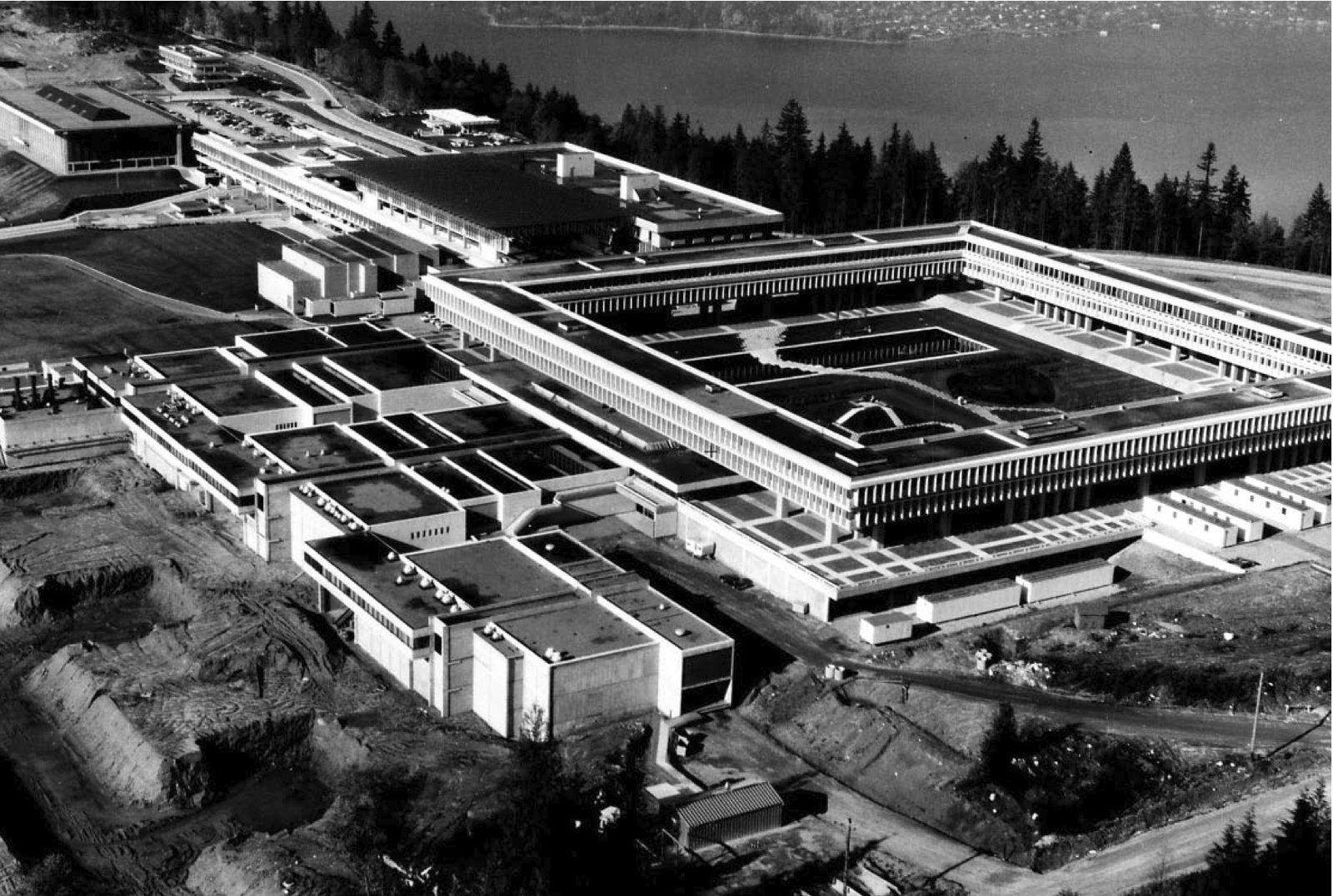
The mountain was Burnaby Mountain, and the university had been on it for four years. Six weeks after the vote the strike was over, and in the slower way of institutions, so was the department. James Turk, executive director of the Canadian Association of University Teachers, put the episode in context for the Globe and Mail in 2005: "It was an unprecedented action against what were seen to be radical faculty, and no other university in Canada has ever done anything like that, not where they'd fire a whole academic department."
The instant university
Simon Fraser began teaching on 9 September 1965 with 2,500 students, about eighteen months after Arthur Erickson and Geoffrey Massey won the competition to design it. Heritage Burnaby records the nickname it got: the "instant university." Milligan, writing in BC Studies in 2011, put it more bluntly. "SFU was an instant campus in working-class Burnaby."
Instant institutions have instant arguments. In March 1967 the Board of Governors fired five PSA teaching assistants after a visit to Templeton Secondary in Vancouver; they were reinstated after a dean resigned and the student society threatened to strike. In May 1968 the teachers' association, CAUT, placed SFU's board and president under censure, the first censure in the association's history. President Patrick McTaggart-Cowan resigned on 31 May. The job passed to Kenneth Strand, an economist from Yakima, Washington, who was thirty-seven.
On Wednesday, 20 November 1968, the university senate rejected a set of student demands on admissions and transfer credit. That evening several hundred students occupied the Administration Building. Strand called in the RCMP, and early on the morning of Saturday the 23rd (2 a.m. in one account, 3 a.m. in another) officers arrested 114 people on charges of mischief. The paperwork from that night went up the chain at the Burnaby Detachment: Milligan cites a letter from the detachment's second-in-command to its officer-in-command, dated 2 December 1968, now in the RCMP files at Library and Archives Canada. According to John Cleveland, a graduate student at the time who later wrote a history of the period, most of the 114 got off with a $250 fine.
Parity
PSA's offence, in the administration's eyes, was a principle. The department ran itself on what CAUT's investigators later summarized as "the principle of student parity at all levels of departmental decision-making," which meant students sitting and voting alongside faculty on department committees, tenure included. A department statement in the student paper The Peak in July 1969 described PSA as "grounded on the philosophy of participation and control from below and designed to serve the needs of the PEOPLE OF BRITISH COLUMBIA," capitals in the original.
The university's tenure committee rejected PSA's procedures in February, again in March, and again on 9 June 1969. That month the department acclaimed Mordecai Briemberg as chair. On 10 July the Dean of Arts, D.H. Sullivan, refused to accept him, citing a lack of "confidence in his administrative ability" and saying Briemberg was "unwilling to commit himself to abide by university policies and procedures." On 15 July Strand announced that the board had authorized a trusteeship. Five trustees were named a week later, four of them from outside the department. Kathleen Gough Aberle, one of PSA's anthropologists, later wrote that there were six, five from other fields. Over August a tenure committee picked by the dean, five of its six members from outside PSA, ruled on about eighteen renewals and promotions. CAUT called the pace "indecorous haste."
CAUT was no ally of the strikers, though. On 21 September, the day before the vote, its executive sent a telegram: "C.A.U.T. cannot support PSA in 4 demands to SFU Administration for complete autonomy, that is, complete dissociation from policies and procedures agreed upon by majority of University faculty. Therefore we will not support PSA if it adopts strike action in pursuit of those demands."
Six weeks
On Friday, 3 October 1969, Strand suspended the striking professors under section 58(1) of the provincial Universities Act. Nine were named that day: Kathleen Gough Aberle, Saghir Ahmad, Mordecai Briemberg, Louis Feldhammer, Harold Hickerson, John Leggett, Nathan Popkin, David Potter and Prudence Wheeldon. Strand said they had "abused the trust of those students who enrolled and paid for instruction." The University of Victoria student paper, The Martlet, reported that week that the president's offices were "locked and guarded by Pinkerton police."
On 14 October Strand suspended the trusteeship. A visiting CAUT team found "no hope, from either side, for attempts at mediation." Around 21 to 23 October (the sources disagree on the day) the BC Supreme Court granted the university an injunction against three faculty members and eleven students, restraining what it called non-peaceful picketing. A hunger strike began on the 23rd. Four days later the General Assembly voted against defying the injunction. On Tuesday, 4 November, a joint strike assembly voted to end the strike. The hunger strike ended three days later, after fifteen days, when Strand refused the strikers' requests.
The long tail
Most of the damage came afterward. Between 31 October and 10 December the board heard the suspension appeals one at a time and upheld every suspension. Wheeldon sued the university. On 18 June 1970 she lost: the court ruled that SFU's statement on academic freedom and tenure "formed no part of the contract of employment." A month later, on 24 July 1970, a hearing committee chaired by E.E. Palmer found "no cause for dismissal of the seven faculty members" before it. Strand declared its findings invalid.
How many people were fired depends on what is counted. SFU's own archival finding aids say seven. Milligan, the Globe, and several reviewers say eight. Michiel Horn's Academic Freedom in Canada (1999), read case by case against CAUT's reports, gives a different answer. Aberle and Potter refused new hearings and were dismissed in 1970. Leggett's charges were withdrawn and his contract lapsed on 31 August 1970. A second committee found Popkin's conduct fell short of "the type of gross misconduct that furnishes cause for dismissal," and he was reinstated in November 1970. Wheeldon was reinstated in June 1971. That same month Strand recommended that Ahmad, Briemberg and Feldhammer be dismissed, and they were. That makes five dismissals. Hickerson, the ninth name from October 1969, drops out of the record, and this magazine could not find what became of him.
Ahmad, a visiting professor, drowned in North Vancouver on 7 July 1971, two weeks after his dismissal, according to an obituary Gough wrote. He was thirty-five. Feldhammer was blacklisted for years, by the account of Ryerson's student paper, and began teaching sociology there in 1977. Leggett went to Rutgers and taught there for thirty-three years.
CAUT censured SFU in May 1971, warning that "the safeguards of academic freedom that can normally be anticipated in Canadian universities do not now exist at Simon Fraser." In November it went further and advised academics not to accept jobs there. The censure stayed until 1977, when the university dropped the original charges and adopted dismissal procedures CAUT could accept. Five of the grievors did not accept the deal. The PSA department itself was dissolved in February 1974 and split into Political Science and Sociology and Anthropology, according to SFU Archives' record of the department.
Off the mountain
The people on the losing side kept talking. Briemberg told the Vancouver and District Labour Council in December 1969 that "the same people who control the university also control the major businesses in this province." The fired faculty tried to do exactly that. That December they set up a Community Education and Research Centre, and its meeting drew about a hundred trade unionists. By the summer of 1970, Milligan found, it had largely wound down.
Strand, asked about it by the Globe in 2005, kept it short. "There wasn't much humour in that place at all . . . It was like riding on a tiger."
He served as president until 1974 and died in 2025. SFU has a building named Strand Hall. It has a Department of Political Science, and a Department of Sociology and Anthropology. The record of the six weeks sits in the university's archives on the same mountain, in a student-society file titled "PSA strike 1969," open to anyone who asks.
Editor & Publisher
Artom Butenko
Founder and editor of 8 Pages Burnaby. Writes the fact-dense, archival pieces — origins, infrastructure, and the documents that explain how the city works.
More from October 2026
Full issue →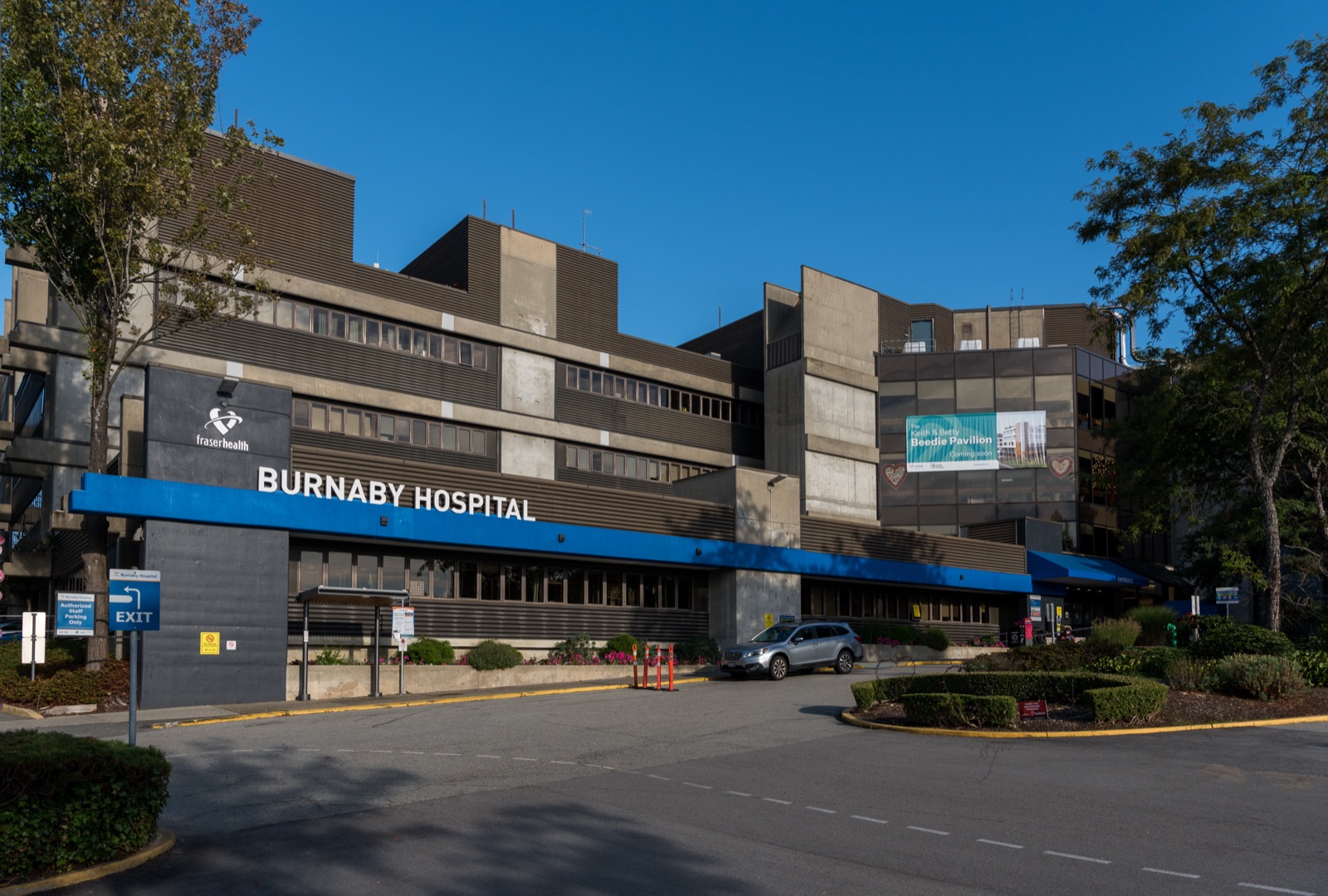
The Hospital on the Hill
Until 1952, a sick person in Burnaby went to Vancouver or New Westminster, or stayed home and waited for the doctor. Then residents raised a hospital of their own, a door-knock and a raffle ticket at a time, on a hill in Cascade Heights.
Artom Butenko · 7 min read
The Beaver Level
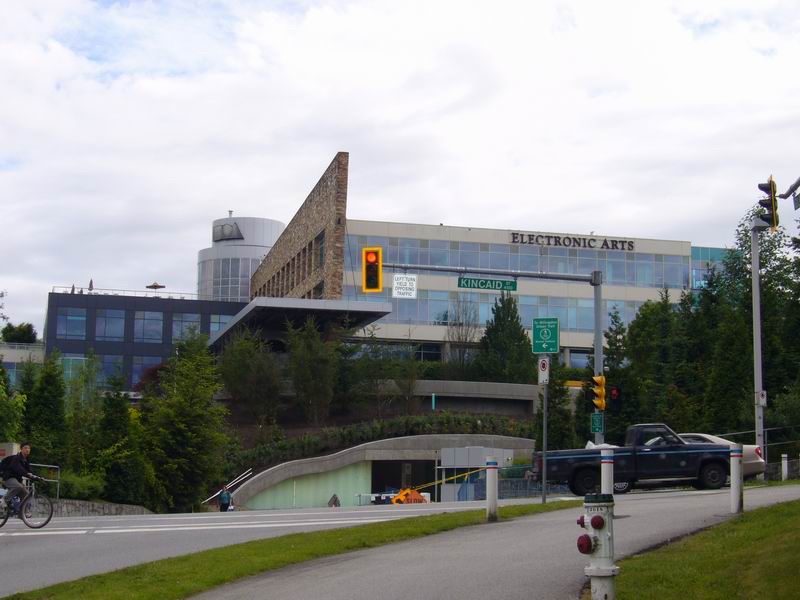
In 1982 two Burnaby teenagers wrote a computer game about evolution, and a ten-year-old tester talked them into adding a beaver. The company they built around that game became EA Canada, and the reason the FIFA series was made in Burnaby.
Ilarion Bohatyrov · 6 min read
The Storm That Ate the Surplus
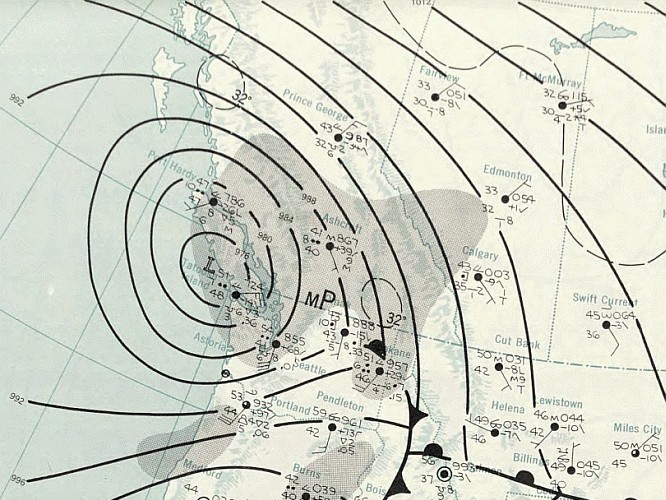
Vancouver's mayor called Typhoon Freda the worst storm in the life of his city. Burnaby wrote it down the way a municipality does: a repair list on the Monday, and two weeks later a new line in the budget.
Artom Butenko · 6 min read