The Hospital on the Hill
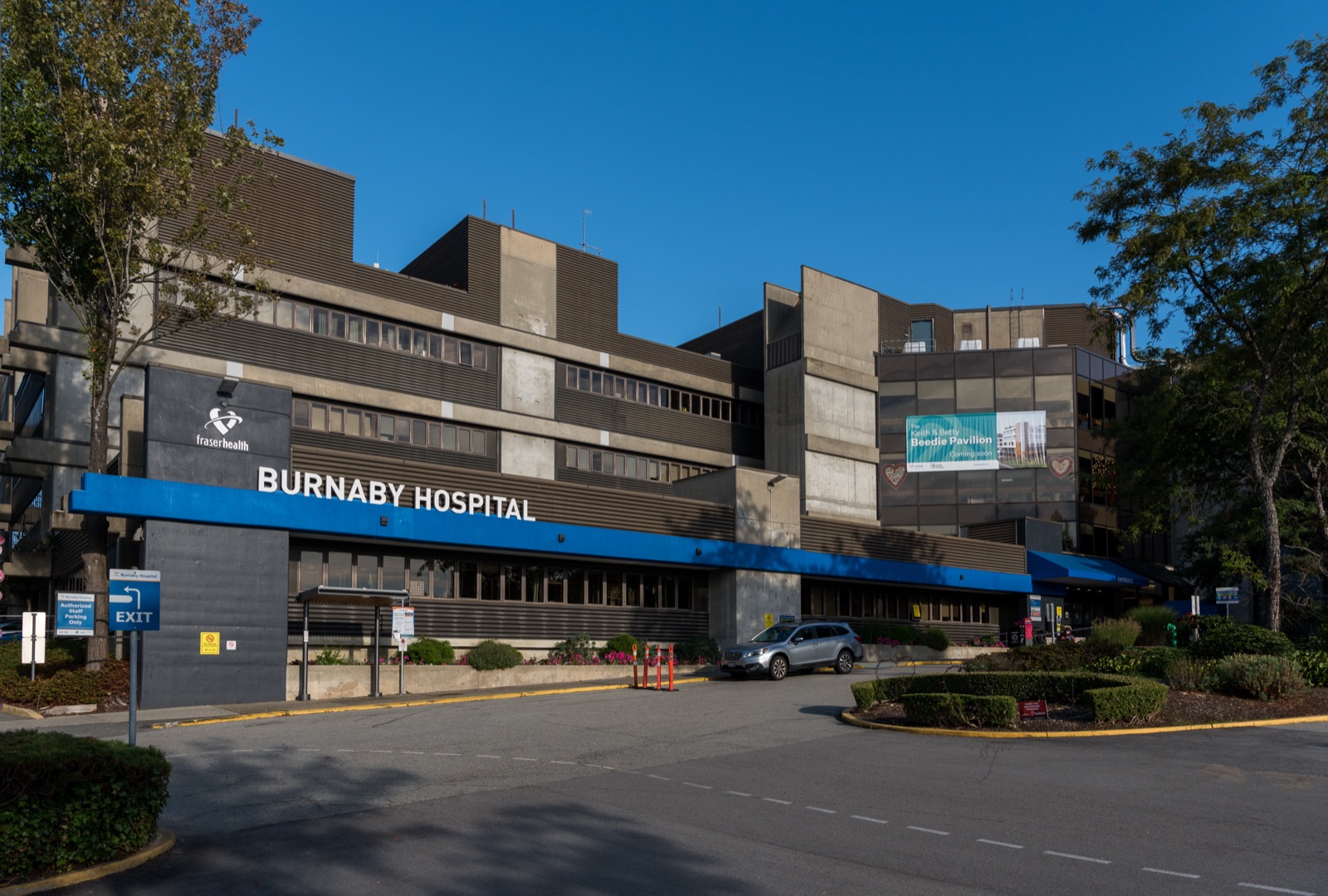
Until 1952, a sick person in Burnaby went to Vancouver or New Westminster, or stayed home and waited for the doctor. Then residents raised a hospital of their own, a door-knock and a raffle ticket at a time, on a hill in Cascade Heights.
In a bad flu season in the years after the war, a doctor in North Burnaby could have six to nine house calls to make in a single evening. Norburn Medical, a practice that opened in 1946, still keeps that memory on its history page, along with a plain description of what medicine here looked like before there was anywhere local to send people: "During 1946 – 1952, prior to the opening of the Burnaby General Hospital, hospital beds were few and may patients with Heart Failure, Pneumonia, Rheumatic Fever, and assorted medical problems were looked after at home with house calls."
It was never supposed to be that way. In October 1930 the trade magazine The Canadian Hospital printed the recommendations of a hospital survey commission for the Vancouver area led by Dr. W. H. Walsh. It proposed six new institutions. The first on the list was "Burnaby General Hospital, 100 to 125 beds." The commission even attached a timetable and a price: "1932. Burnaby General Hospital, $375,000."
In 1932 Burnaby had other troubles. That autumn its council defaulted on a bond payment, a deliberate protest against provincial inaction in the Depression, and at the end of December the council was disbanded and a provincial commissioner took over. The hospital stayed on paper.
It opened twenty years late, on 30 October 1952, at 3935 Kincaid Street, with 125 beds. The size was exactly what the 1930 experts had asked for. The way it got built was the part nobody in 1930 had planned: residents started with a meeting in a Legion hall and spent nine years raising the money.
Royal Oak and Kingsway
The campaign began on 14 July 1943, in the middle of the war, when a group of residents met at the Canadian Legion hall at Royal Oak and Kingsway. A month later, on 11 August, they set up the Burnaby Hospital Fund Raising Committee, appointed trustees and opened a trust fund, according to a timeline published by the Burnaby Hospital Medical Staff Association. Pixie McGeachie, in her 1991 history Burnaby: A Proud Century, described the start: "It seemed like an impossible dream—all the experts said so."
The money came in slowly. A door-to-door canvass of a community of about 35,000 people raised $6,000, the staff association's timeline records, at a time when the average wage was $33.81 a week. McGeachie adds a raffle that brought in $8,000 and a prize home, raffled with the help of the Burnaby Lions Club, that netted $28,000. By 1947, after four years, the fund stood at $55,000, and the society persuaded the municipal council to set aside $50,000 for the hospital.
On 12 November 1947 the province's Registrar of Companies certified the Burnaby Hospital Society under the Societies Act. Its stated purpose, as printed in the British Columbia Gazette, was plain: "To acquire buildings and equipment and to operate and maintain a general hospital in all its branches."
The hill
The council's other contribution was land. In McGeachie's words, it "came forward with 17.5 acres of park land on a small hill in the then remote area of Cascade Heights."
The rest required a vote. Provincial and federal grants for hospital construction came with a condition: the community had to put up a third of the cost. In 1949 the society got permission for a municipal bylaw to borrow $196,000, and, McGeachie writes, eighty per cent of Burnaby voters approved it. The exact date and the vote totals have not turned up in any source this magazine could read.
On 8 May 1950 a former reeve, W. T. Wilson, turned the first sod. Wilson had owned McKay Market on McKay Avenue and had been reeve in 1943 and 1944, the years the fundraising began. McGeachie records what followed the ceremony: a carpenters' strike and a shortfall in funding.
The architects were Gardiner & Thornton of Vancouver. The October 1952 issue of the Journal of the Royal Architectural Institute of Canada printed the plans and a short biography of the senior partner, Frank George Gardiner: born in Bath, England, the son of an architect, once Assistant Government Architect in Pretoria, South Africa, in practice in New Westminster and then, from 1918, Vancouver. "Work has been for the greater part Institutional and Industrial," the journal said, "with Hospital Design his specialty." The plans show five levels. The matron's and administrator's offices, the admitting desk, a board room and a library were on the ground floor; surgery and recovery were on the third; the labour rooms were on the fourth.
The general contractor was Smith Bros. & Wilson, a western builder whose earlier work included the Bessborough Hotel in Saskatoon. Its company history, published the same year, includes a photograph of the new building with the caption "Burnaby General Hospital, Vancouver, near completion in 1952." Even its builder filed it under the neighbouring city.
Opening day
The hospital opened on Thursday, 30 October 1952. More than 8,000 people toured it during the opening ceremonies, according to the staff association. The first patient was admitted four days later, on 3 November. The Burnaby Hospital Foundation describes it as "the largest suburban general hospital in Canada at the time," a claim that appears in later sources without a period citation.
One number is in dispute. Most accounts give 125 beds. McGeachie's book, in a passage this magazine read only through a scanned text, mentions "95 beds and 49 doctors." It is possible that 125 beds were built and fewer staffed in the first year, but no source says so.
The first-year figures agree across the sources. The hospital admitted 5,010 patients and delivered 944 babies in its first twelve months, in a municipality McGeachie counts at 58,000 people.
Who cut the ribbon is not recorded in any source available online. The City of Burnaby Archives holds a photograph dated 30 October 1952 that may answer the question.
Full from the start
The building filled at once. In 1953 W. T. Wilson, by then president of the hospital society, called its occupancy "alarmingly dangerous," according to the staff association's timeline. That December The Canadian Hospital announced a new director of nurses, Miss C. MacCullie, a graduate of the Glasgow Royal Infirmary who had run nursing departments in Woodstock, Medicine Hat and Kenora. By 1955 the magazine was describing the chairman of the board, George Hardy, as "one who was associated with the hospital through the planning and construction stage."
The additions came in waves after that. A 123-bed wing opened in 1959, eight months late because of labour disputes, by the staff association's account, and two years later the hospital admitted its 50,000th patient, Jimmy Miller. By 1972 it was crowded enough that four provincial cabinet ministers came to tour an emergency ward being expanded from six stretcher bays to eleven. An acute-care tower opened on Friday, 30 September 1977. The name changed in 1982, the year the hospital turned thirty: Burnaby General became Burnaby Hospital. British Columbia's three-millionth resident was born there on 10 September 1989, the staff association notes.
On 10 March 2026 the province opened the first phase of a rebuild announced in 2019: a six-storey pavilion with 83 beds, a larger emergency department and a surgery centre with six operating rooms, at a cost of $633 million. The government's release repeated two facts side by side: "Burnaby Hospital opened in 1952," and it "has not had any major upgrades in more than 40 years." The foundation's chief executive, Kristy James, said that "over 10,000 donors came together to raise $30 million for Phase 1." No source this magazine found says whether any part of the 1952 building is still standing among the newer wings.
The Walsh commission got the size right in 1930. It got the year wrong by two decades, and it had no way of knowing that the building would come from a door-to-door canvass and a raffled house. Seventy-four years after the opening, ten thousand donors are again paying for part of it.
Editor & Publisher
Artom Butenko
Founder and editor of 8 Pages Burnaby. Writes the fact-dense, archival pieces — origins, infrastructure, and the documents that explain how the city works.
More from October 2026
Full issue →
The Beaver Level
In 1982 two Burnaby teenagers wrote a computer game about evolution, and a ten-year-old tester talked them into adding a beaver. The company they built around that game became EA Canada, and the reason the FIFA series was made in Burnaby.
Ilarion Bohatyrov · 6 min read
The Department That Went on Strike
In the autumn of 1969 a whole department at Simon Fraser walked out on its own university. The strike lasted six weeks. The firings took two years, and the sources still disagree on how many there were.
Artom Butenko · 7 min read
The Storm That Ate the Surplus
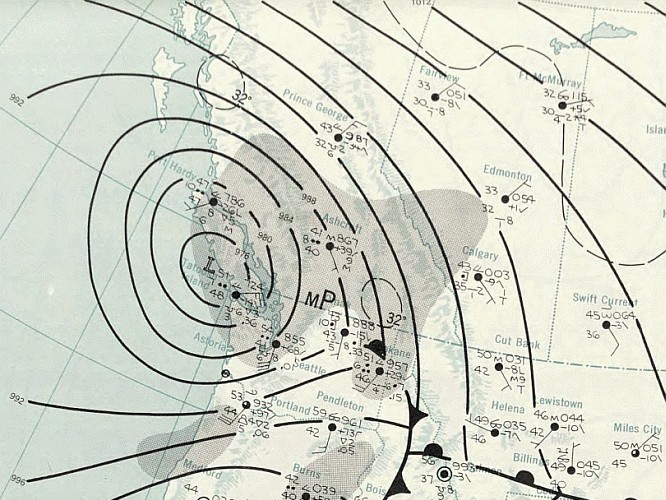
Vancouver's mayor called Typhoon Freda the worst storm in the life of his city. Burnaby wrote it down the way a municipality does: a repair list on the Monday, and two weeks later a new line in the budget.
Artom Butenko · 6 min read