The Beaver Level
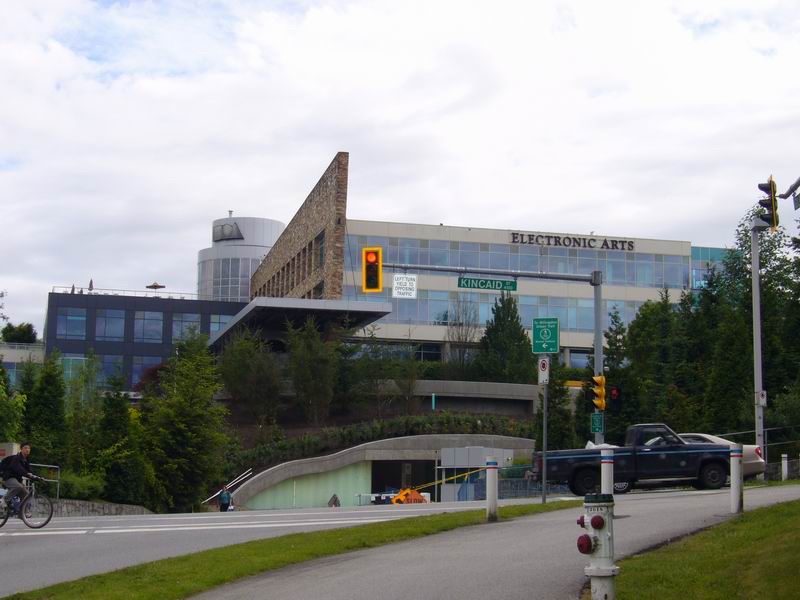
In 1982 two Burnaby teenagers wrote a computer game about evolution, and a ten-year-old tester talked them into adding a beaver. The company they built around that game became EA Canada, and the reason the FIFA series was made in Burnaby.
The playtester who changed Evolution was ten years old. His name was Tarrnie Williams Jr., his father published software in Vancouver, and he was trying out a game in which the player starts as an amoeba and works up, level by level, toward a human being. The jump from rat to monkey, he told the two programmers, was too big. So they went away and added a beaver.
The finished game runs amoeba, frog, rodent, beaver, gorilla, human. It shipped in 1982 for the Apple II, the IBM PC, the Atari, the Commodore 64 and the ColecoVision, and its authors, Don Mattrick and Jeff Sember, were teenagers. (Nobody in 1983 could agree on their exact ages; a games magazine that July gave them as seventeen and eighteen.) The beaver story comes from Williams Jr. himself, as CBC told it in 2010.
Sember described the work to a UPI reporter in January 1983. "It took about three weeks of solid work, spread out over the summer -- but not on a regular basis. I guess it's a lot like painting. Sometimes you feel like doing it and sometimes you don't. It's not like digging a ditch."
Where they wrote it depends on who is telling the story. The Globe and Mail in 2000 put it in Mattrick's bedroom "in a suburban Burnaby home." The Georgia Straight in 2005 said his garage. The Order of British Columbia, honouring him in 2024, said "his parents' basement in Burnaby." Electronic Arts, which owns what the work became, prefers the living room. "Going back to the original roots of Electronic Arts in Canada, it was back in 1982 that Don Mattrick and his friend Jeff Sember spent the summer making their very first video game in Don's parents' living room right here in Burnaby," Colin Macrae, then EA Canada's senior director of communications, told the Burnaby Now in 2014. Every account agrees on Burnaby. None agrees on the room.
The company that grew out of the game was a Burnaby company too, by the testimony of someone who walked in the door. Chris Taylor, who later founded his own studio in the United States, got his first job there: "I started in the business by answering a small ad in the newspaper as a programmer at a game developer in Burnaby, British Columbia, Canada called Distinctive Software."
The paper trail backs him up. The manual for Accolade's 1987 game Comics gives the developer's address as Sperling Plaza, Tower II, 6450 Roberts Street, Burnaby. Business directories from 1990 to 1992 list Distinctive at Suite 400, 4946 Canada Way. After the sale, EA Canada advertised for staff from 4400 Dominion Street until at least February 1998, and by February 1999 its job ads carried the address that stuck: 4330 Sanderson Way.
The reluctant publisher
The publisher, at least, is on record. Sydney Development Corporation was a Vancouver software firm founded in 1978 by Tarrnie Williams, a former IBM man. According to a 2009 history by Chris LaVigne in The Escapist, Williams was not keen on two teenagers' demo until his son played it and liked it. The boy grew up to run Relic Entertainment, a Vancouver game studio. The father, by the Georgia Straight's account, helped the boys set up their own company so they could license Evolution to him. They called it Distinctive Software.
The game made its authors briefly famous. In March 1983 they appeared on CBC's Front Page Challenge. When UPI asked whether anyone had objected to a game about evolution, Mattrick was unbothered. "We'd write a Creationist game if we thought there was a market for it. We just thought it was a good concept. We're not making a political statement."
For most of the 1980s Distinctive built games under other publishers' names. Its clients, as the Times listed them, were Konami, Brøderbund and Accolade. For Accolade it made Test Drive in 1987 and its sequel, The Duel, in 1989, along with the baseball game HardBall II. For Brøderbund it made the driving game Stunts in 1990; Kevin Pickell, its only programmer, said later that the game's on-screen opponents were company employees, "except for one (the blond) who was a hired model." 4D Sports Boxing followed in 1991. Taylor, who programmed HardBall II, remembered the place as "an amazing little company of less than 20 people, and everyone was working on a different game."
Sember was gone by then. He sold his share to Mattrick sometime in the middle or late 1980s (the Globe, CBC and other accounts disagree on the year) and, by CBC's account, chose a life in academia. Mattrick, in an interview for an internal EA Canada bulletin in 1993, said the company had led the car-racing category and then walked away from it: "we just sort of got bored with doing car products." The new kinds of games sold a fraction as many copies at the same cost.
Ten million dollars, give or take
On 18 June 1991 the New York Times ran a short item on page D4 of its business section. "Electronic Arts Inc. of San Mateo, Calif., said it had reached an agreement to acquire Distinctive Software Inc., a creator of electronic-game software, for about $10 million in stock and cash." The paper added that Distinctive "will keep its headquarters in Vancouver, British Columbia," and that analysts saw the deal as a way to keep a good contract studio away from EA's competitors. Later accounts put the price at $11 million or $13 million; the Globe said $11 million in EA stock, then trading at about four dollars a share. The deal closed in July 1991. Asked about it years later, Mattrick said the company had been working with Sega, Nintendo and Electronic Arts, "but I liked EA the best."
LaVigne counts 77 people at Distinctive at the time of the sale, and about 200 at EA, which he describes as having "no real internal development capabilities." EA was a publisher in need of a studio. Distinctive was a studio whose games had always gone out under somebody else's name. The company that came out of the merger was called EA Canada.
What got made here
Two years later a team of ten at EA's Canadian studio, working under the in-house label Extended Play Productions and led by Bruce McMillan, finished a football game in November 1993. FIFA International Soccer went on sale in December. "The FIFA franchise has always had its home here, and it's annually one of the biggest video game franchises in the world," Macrae said in 2014. When the licence with FIFA ended, EA renamed the series EA Sports FC; the first game under the new name came out in September 2023, still developed by EA Vancouver together with EA Romania.
In October 1994 the studio shipped NBA Live 95 under another in-house name, Hitmen Productions; the basketball series stayed in Burnaby until EA moved it to Florida in November 2010. In December 1994 came The Need for Speed, built by EA Canada with Pioneer Productions. On 26 October 2000, twenty-six years ago this month, EA Canada released SSX, a snowboarding game that launched alongside Sony's PlayStation 2.
Hockey has a messier record than the studio's reputation suggests. The first NHL Hockey, in 1991, was credited to Park Place Productions. The Sega Genesis version of NHL '94 was programmed by Mark Lesser, working through his own company out of Brooklin, Maine, as the Bangor Daily News reported in 2015. Burnaby's name appears on the PC versions in the mid-1990s, and EA Canada became the series' lead developer with NHL 98, released in September 1997. Most of the yearly instalments since then carry the EA Canada or EA Vancouver name. Macrae described the people who work on it now: "There are legions of guys who grew up playing NHL 94 all across Canada and their dream was always to work in video games and to work specifically on NHL."
The campus
EA Canada had about 80 employees in 1992 and about 660 by 2000, by CBC's count. The first building on Sanderson Way was completed in the spring of 1999, according to a provincial inventory of major projects, and that fall Prime Minister Jean Chrétien christened it. The Globe put the cost at $70 million; Mattrick described the place as "university campus-meets-entertainment company-meets-software company." EA's annual filings with the US Securities and Exchange Commission listed the Burnaby studio at 206,000 square feet in 2003, and at 418,000 after a second phase went up in the middle of the decade. The campus has a soccer pitch and a motion-capture stage that EA calls the largest in the world. About 1,300 people worked there in 2014, when Macrae called it "Electronic Arts' largest development studio." He also said: "We've always had the vision of creating a real landmark for the video game industry in Canada."
The people mattered more than the buildings. Statistics Canada, in a 2025 profile of the industry, put it in one sentence: "the acquisition of a large Vancouver studio in 1991 led to several employees leaving and forming spinoffs." Ian Wilkinson, who had worked at Distinctive, and Rory Armes left that year to found Radical Entertainment. Radical in turn produced the founders of Barking Dog, which became Rockstar Vancouver, and of Black Box, which EA bought in 2002 and moved into the Burnaby campus in 2009. Alex Garden, who by The Escapist's account had tested games at Distinctive at fifteen, co-founded Relic Entertainment in 1997. The Georgia Straight drew the whole thing in 2009 as a family tree with Distinctive near the root. By the industry association's latest count, British Columbia has 146 game studios employing 10,930 people.
Mattrick spent fifteen years at EA Canada and ended up as president of EA's Worldwide Studios. He retired from EA in February 2007, joined Microsoft that July to run the Xbox business, and was chief executive of Zynga from 2013 to 2015.
Storage
Asked in 2014 about SSX, which EA had stopped making, Macrae gave an answer that could stand for the whole history. "We never bury anything. We just put it into storage."
The first game made by the people who became EA Canada showed an amoeba climbing, stage by stage, toward something that could stand upright. Forty-four years on, the line of descent runs to a studio on Sanderson Way with its own soccer pitch, where the football game still gets made every year.
More from October 2026
Full issue →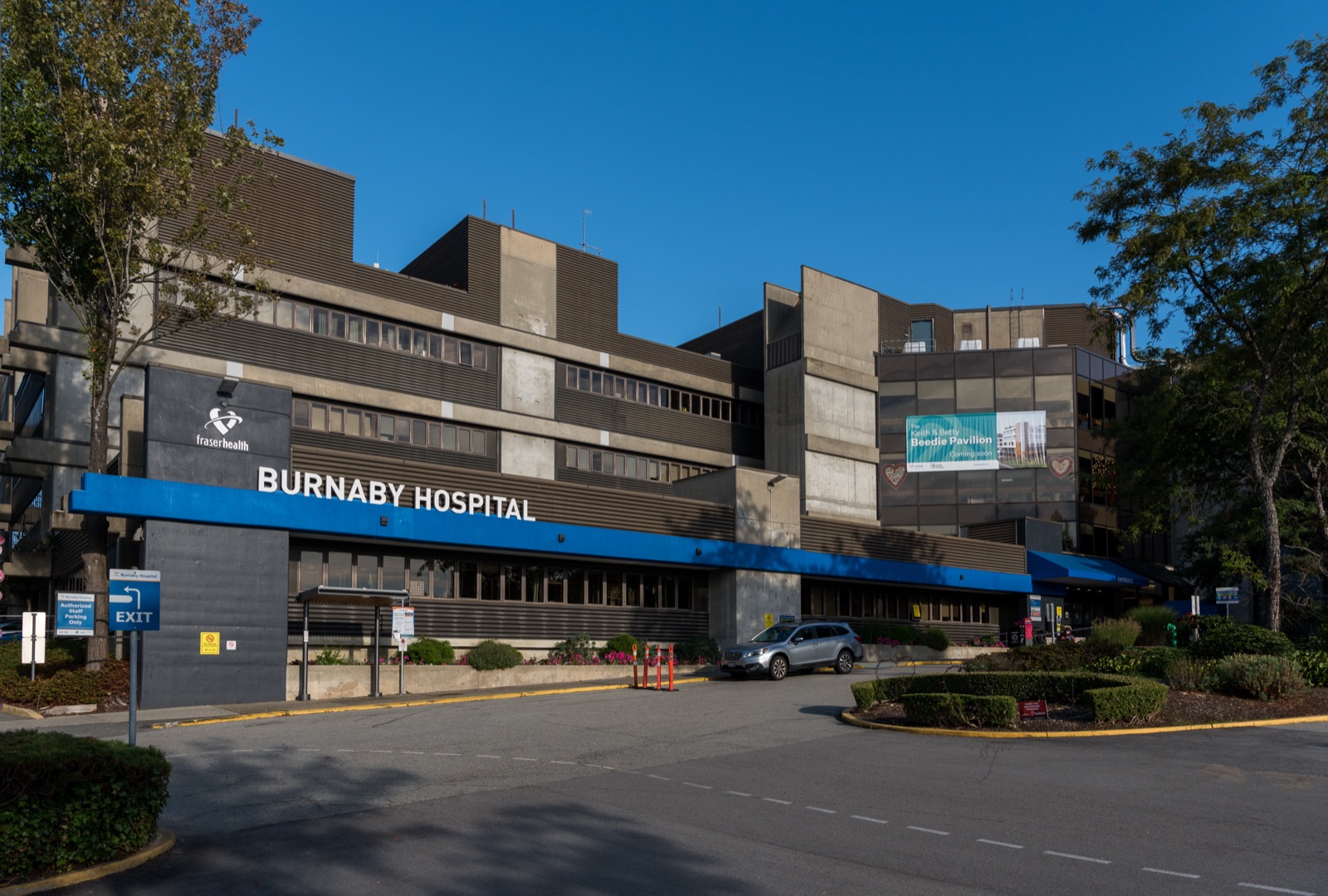
The Hospital on the Hill
Until 1952, a sick person in Burnaby went to Vancouver or New Westminster, or stayed home and waited for the doctor. Then residents raised a hospital of their own, a door-knock and a raffle ticket at a time, on a hill in Cascade Heights.
Artom Butenko · 7 min read
The Department That Went on Strike
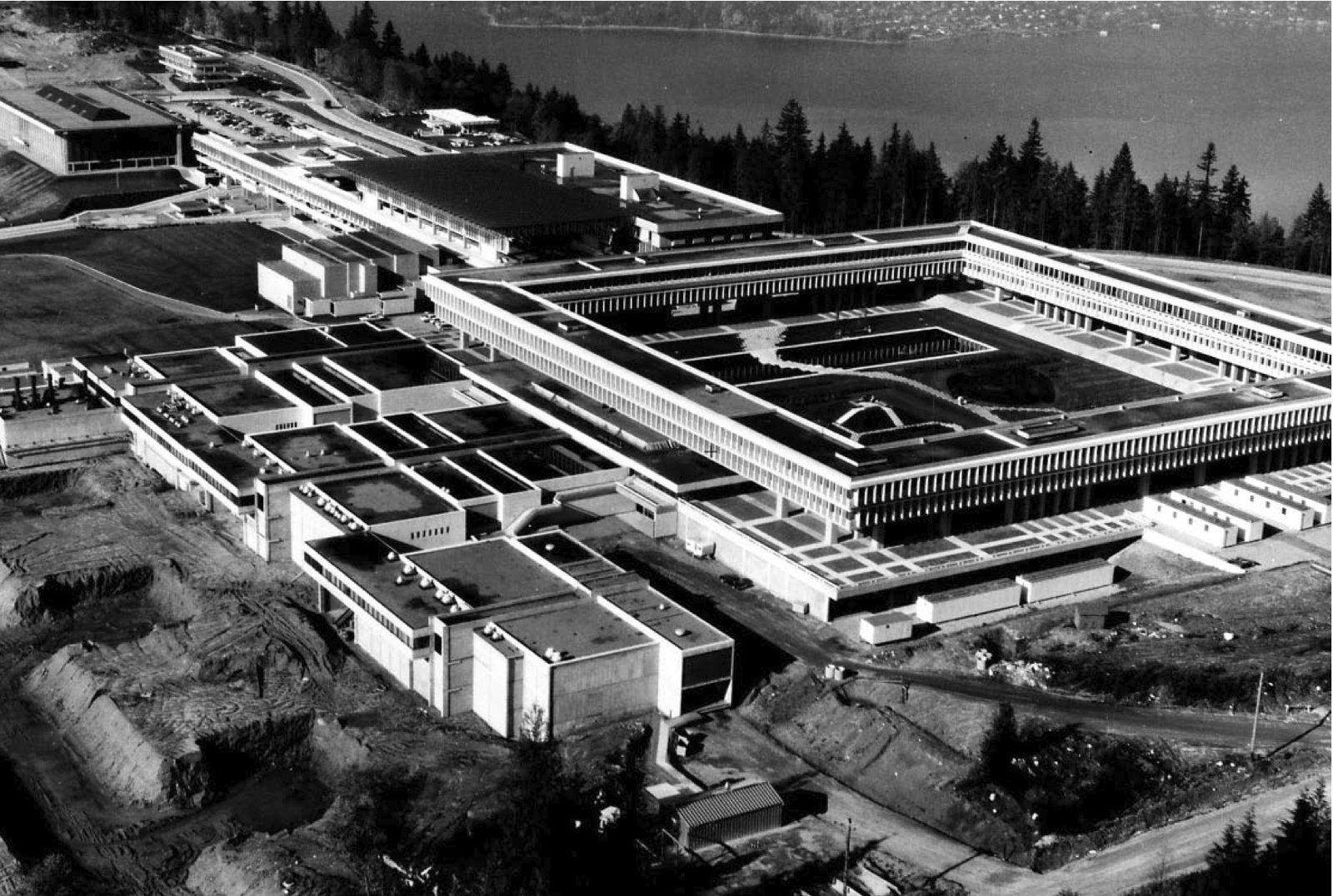
In the autumn of 1969 a whole department at Simon Fraser walked out on its own university. The strike lasted six weeks. The firings took two years, and the sources still disagree on how many there were.
Artom Butenko · 7 min read
The Storm That Ate the Surplus
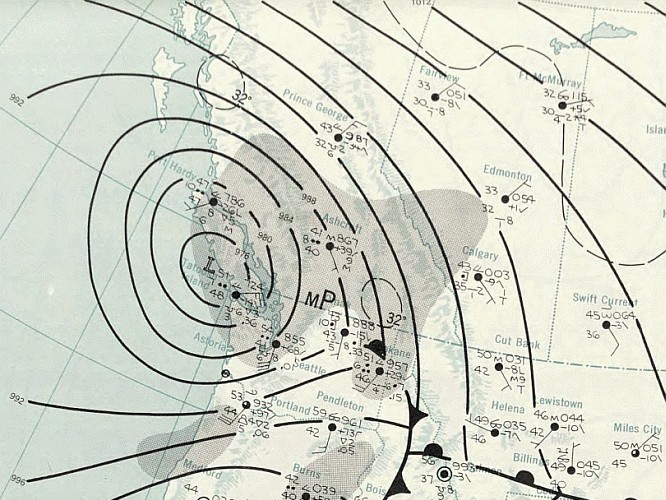
Vancouver's mayor called Typhoon Freda the worst storm in the life of his city. Burnaby wrote it down the way a municipality does: a repair list on the Monday, and two weeks later a new line in the budget.
Artom Butenko · 6 min read