Nikkei Place: The Garden Built for Healing
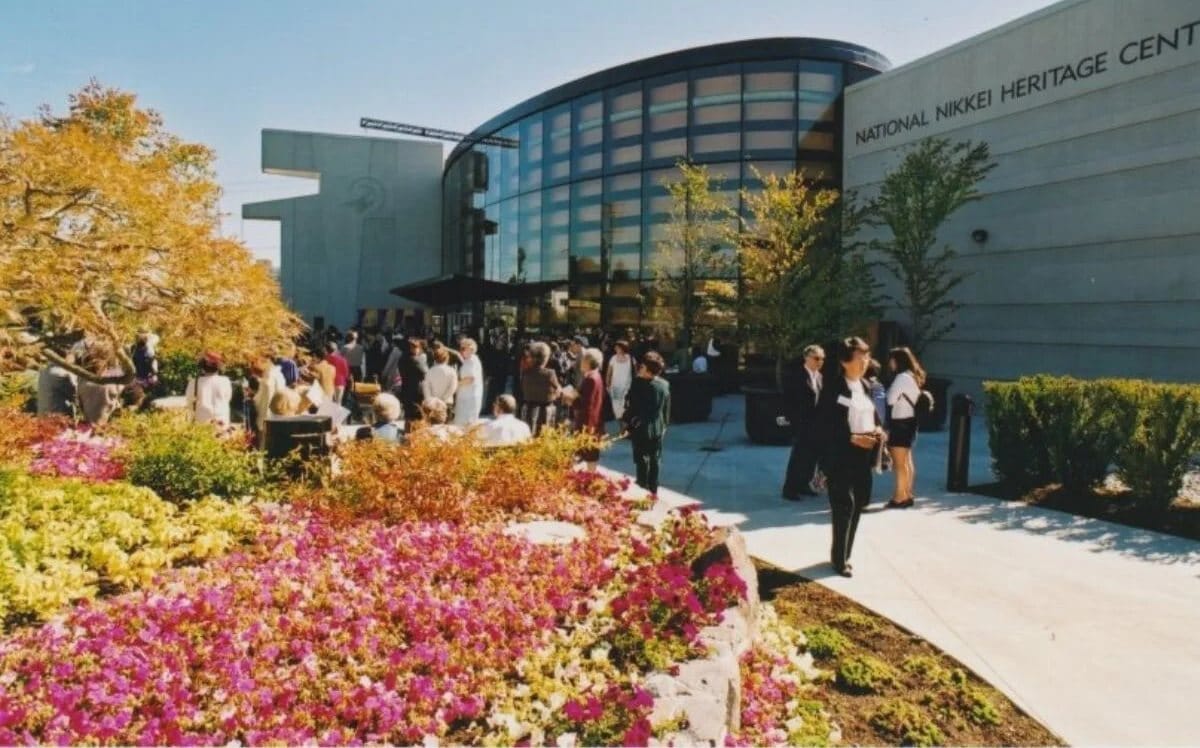
The architect who designed the building was interned as a child. The land was purchased with redress money. The opening date was chosen to mark the anniversary of an apology. Inside are 670 recorded voices and 52,500 photographs from a community that lost everything and built this anyway.
Raymond Moriyama was six years old when the Canadian government declared him an enemy alien. He was born in Vancouver in 1929. His family spoke English, paid taxes, lived ordinary West Coast lives. None of that mattered after December 7, 1941.
In 1942, 22,000 Japanese Canadians were removed from the coast of British Columbia. Their property was confiscated. Their homes, farms, fishing boats, and businesses were auctioned off starting in 1943, often to neighbours who had watched them leave. The Moriyama family was sent to Bay Farm, an internment camp in the Slocan Valley. Raymond's father was separated from them and shipped to a prisoner-of-war camp in Ontario.
The boy built a treehouse. He had an axe, an old saw, six spikes, some nails, and a piece of rope. He called it magic. Years later, writing about it, he used capitals: "MAGIC... MAGICAL IMPERFECTION!" He also wrote this: "It is a psychological hell when your own country stamps you an 'enemy alien.'"
And this: "THIS IS WHEN FOR THE FIRST TIME I LEARNED TO LISTEN TO THE EARTH."
He became one of Canada's most celebrated architects. The Ontario Science Centre. The Canadian War Museum. The Saudi Arabian National Museum. The Toronto Reference Library. A career spanning six decades across four continents. He died on September 1, 2023, at ninety-three.
But before any of that, there was Burnaby.
The money came from an apology
On September 22, 1988, Prime Minister Brian Mulroney stood in the House of Commons and said the words the Japanese Canadian community had spent forty-six years waiting to hear. The government acknowledged that the internment, the dispossession, and the forced dispersal of Japanese Canadians during and after the Second World War were wrong. Each surviving internee received $21,000. A community fund of $12 million was established.
Three million dollars from the Japanese Canadian Redress Foundation went to purchase land at 6688 Southoaks Crescent in Burnaby. The site would become the Nikkei National Museum and Cultural Centre. The date of its opening was chosen with precision: September 22, 2000 — the twelfth anniversary of Mulroney's apology. A Tuesday. The kind of detail that only matters to people who have been counting the days.
The inaugural exhibit was called "Reshaping Memory, Owning History, Through the Lens of Japanese Canadian Redress."
Moriyama designed the building with his son Jason Moriyama and architect Ken Takeuchi. He was seventy-one years old. He had spent fifty years designing buildings for other countries and other institutions. This one was for the community that had raised him and been punished for it.
What was lost
The Fujimagari family lived at 204 Alpha Avenue in the Vancouver Heights neighbourhood of Burnaby. They had one acre of land. A two-storey home they had built themselves. A chicken house. Thousands of flowers. Fruit trees. A vegetable garden that fed the family and supplied the neighbours.
In 1942, it was all taken. The family was removed. The property was disposed of by the Custodian of Enemy Property. Yukiko Joyce, the granddaughter, has kept the story alive. One acre is a small piece of land. It held an entire life.
Multiply that by thousands. Japanese Canadian families along the coast had built fishing operations, farms, businesses, homes. Eikichi Kagetsu ran a lumber empire in the Fraser Valley — property estimated at eight million dollars in today's terms. Keiko Mary Murakami's family farmed on Salt Spring Island. All of it, confiscated. None of it returned.
The Hirai family's story has a different shape. In 1946, Shig was nine and his sister Miki was two when they were exiled to Japan aboard the Marine Falcon. Canada interned its Japanese citizens during the war. When it ended, the government gave them a choice: move east of the Rockies or leave the country. The Hirais left. They came back in the 1950s.
Shig Hirai founded Fujiya, the Japanese food store and restaurant on Clark Drive in Vancouver. He named it after his mother, Fujiye. A business built by a man who had been deported from his own country as a child.
The seeds for Nikkei Place were planted in the 1970s
Nobby Fujisawa and Ken Takeuchi — the same Takeuchi who would later work with Moriyama on the museum — began organizing in the Japanese Canadian community around a simple need: housing for aging Issei and Nisei. The first generation and the second. The ones who had endured internment were getting old.
Decades of organizing produced a campus. New Sakura-so, a seniors' residence, opened in 1998. The Nikkei National Museum and Cultural Centre followed in 2000. Robert Nimi Nikkei Home, an assisted-living facility, opened in 2002. Three buildings on one site, each serving a different stage of life, all rooted in the same history.
The naming tells its own story. Sakura — cherry blossoms. Robert Nimi was a community leader. The campus exists because a generation of Japanese Canadians who had been stripped of everything decided that the generation after them would have somewhere to grow old with dignity.
Inside, 52,500 photographs
The museum's collection holds over 3,000 objects, 52,500 photographs, 670 oral histories, and 191 film reels. The numbers matter because the community they document was, for decades, actively erased from public record. Photographs of families before internment. Photographs of the camps. Photographs of the years after, when dispersed families rebuilt in cities where they knew no one.
The oral histories are the hardest material. Six hundred and seventy people sat down and told someone what happened to them. Some of them waited fifty years to do it. Some never did.
Sherri Kajiwara arrived at the museum in 2015
She came to the director and curator role from an unexpected angle. Kajiwara was adopted from Japan at the age of three. She arrived in Canada speaking no English. Her adoptive parents had made a promise to her grandmother: they would preserve the child's Japanese language and culture. Kajiwara studied nihon buyo, classical Japanese dance, from age four through her twenties.
Under her direction, the museum mounted "Broken Promises," an exhibit that became the sharpest public reckoning with Japanese Canadian internment history produced in the last decade. Seven narrators told their stories. Keiko Mary Murakami described her family's Salt Spring Island farm. The exhibit traced the full machinery of dispossession — the orders, the auctions, the bureaucratic language that turned theft into policy.
"Broken Promises" was co-curated with the Royal BC Museum and "Landscapes of Injustice," a research project based at the University of Victoria. It travelled to seven museums across the country. The word "travelled" is worth pausing on. An exhibit about people who were forcibly relocated, moving voluntarily from city to city, telling the story to anyone who would stand still long enough to hear it.
The garden holds two countries and an ocean
The Vancouver Japanese Gardeners Association designed the grounds around a central metaphor that is also a geographical fact. The eastern section of the garden contains plants from Japan. The western section evokes the Canadian mountains. In the centre, a pond represents the Pacific Ocean.
It is a small pond. The Pacific is not small. But the distance between the two countries was compressed, for the people who crossed it, into something that could fit inside a single family's memory. A grandmother in Hiroshima. A grandson in Burnaby. A body of water between them that meant decades of silence, letters that arrived too late, reunions that happened or didn't.
The garden is maintained by volunteers. It is quiet on weekday mornings. The pond has koi. A bench faces the water. Sit there long enough and you can hear traffic on Kingsway, faintly, through the trees.
Henry Wakabayashi connected Burnaby to Kushiro
In the 1960s, Wakabayashi was working in Kushiro, a port city on the eastern coast of Hokkaido, when he recognized the possibility of a sister-city relationship with Burnaby. He spent years building the connection. He received the Order of British Columbia in 2000 and was named Outstanding Citizen in 2024.
The Kushiro Lane garden on the Nikkei Place campus exists because of Wakabayashi's decades of quiet diplomacy. Quiet is the operative word. The man did not seek attention. He sought results, and the results are planted in the ground.
Masako Fukawa was interned as a child in Greenwood
She lives in Burnaby now. Her book "Spirit of the Nikkei Fleet" won the Canada-Japan Literary Award in 2010. The book documents the Japanese Canadian fishing fleet — the boats that were confiscated along with everything else in 1942. Hundreds of vessels. Entire livelihoods hauled away and sold.
Fukawa wrote the book because the fleet was disappearing from memory. The fishermen were dead or dying. Their children had been told, in many cases, not to talk about what happened. Shame had been imposed on the victims rather than the perpetrators, and some families accepted that imposition for decades before anyone pushed back.
Ten thousand people come to Nikkei Matsuri each year
The annual festival draws 10,000 attendees and over 250 volunteers. Taiko drumming. Japanese food. Cultural demonstrations. Children running between booths. In 2025, the festival marks its twenty-fifth anniversary.
A quarter-century of gathering. The festival started the same year the museum opened, in 2000, and it has run every year since — pausing, as everything did, during the pandemic, then resuming. The continuity matters. The festival is loud and messy and crowded and alive. It is, among other things, the sound of a community that was once told to be silent.
What the building holds
There is a temptation to describe places like Nikkei Place in the language of healing. To say the community processed its trauma, found closure, moved forward. That language is too clean for what happened.
Twenty-two thousand people were uprooted. Their property was stolen by their own government. They were scattered across the country. Some were sent to Japan, a country many of them had never seen. They were told, in effect, that they did not belong in the place where they had been born.
Forty-six years later, the government apologized. Twenty-one thousand dollars per survivor. Twelve million for the community. The community took three million of that and bought a piece of land in Burnaby and hired an architect who had been interned as a child to design a building where 670 people could sit down and say what had been done to them.
The treehouse Raymond Moriyama built in the Slocan Valley was made from scraps. An axe, a saw, six spikes, some nails, and a rope. He called it magical imperfection.
The building at 6688 Southoaks Crescent is made from better materials. It holds 52,500 photographs and 3,000 objects and 191 reels of film and a garden with a pond that stands for an ocean. Outside, seniors live in residences named for cherry blossoms and community leaders. A festival brings ten thousand people to the grounds each September.
Moriyama built the treehouse because a child in a camp needed something that was his. He designed Nikkei Place because a community needed the same thing — on a different scale, for a different reason, sixty years later.
The imperfection is still there. The magic might be too.
Editor & Publisher
Artom Butenko
Founder and editor of 8 Pages Burnaby. Writes the fact-dense, archival pieces — origins, infrastructure, and the documents that explain how the city works.
More from May 2026
Full issue →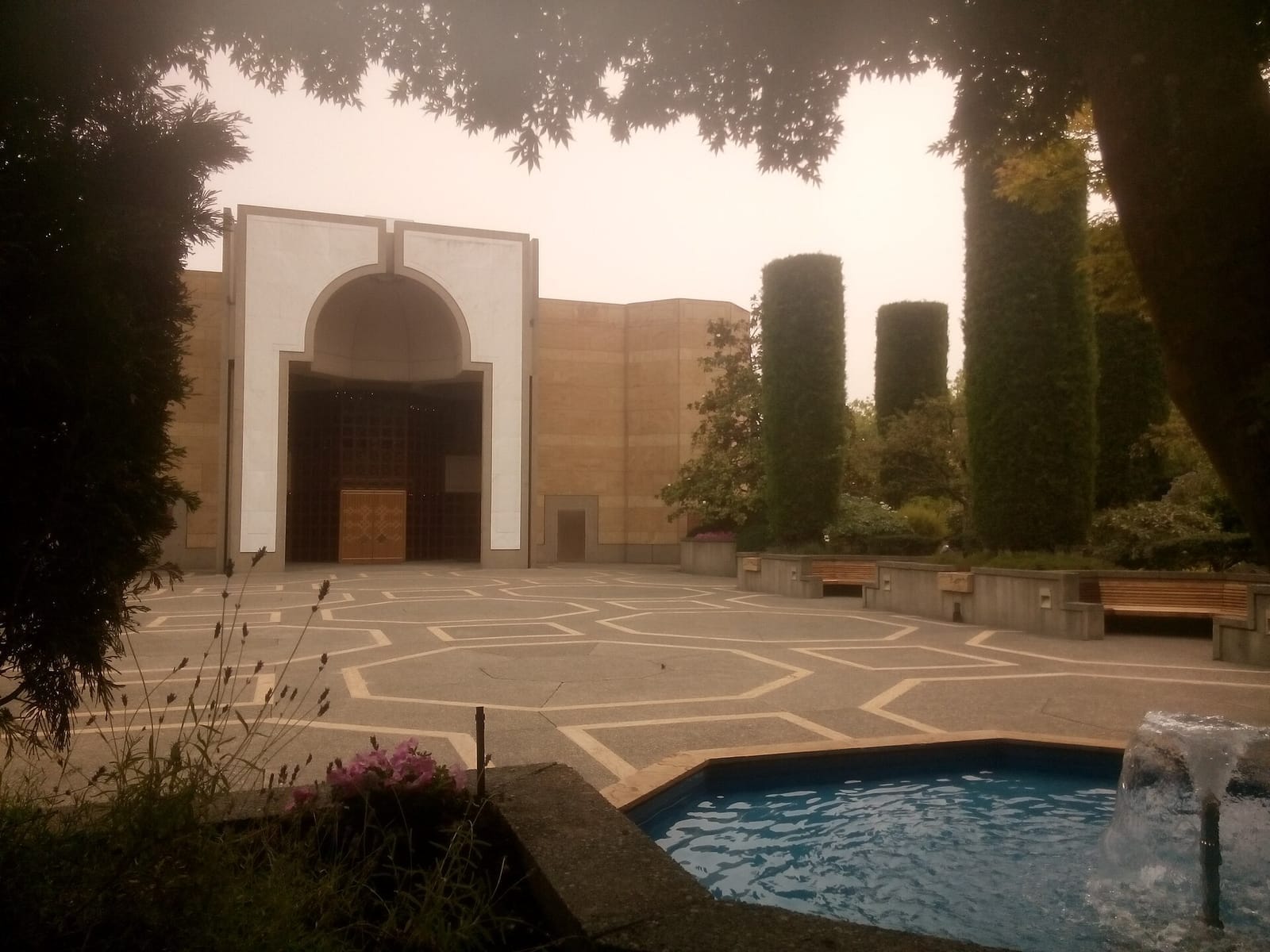
The Octagon on Canada Way: Inside Burnaby's Ismaili Centre
In 1985, the Aga Khan and the Prime Minister opened a building shaped like a prayer. Bruno Freschi designed it around a single geometric form — the octagon, "where the centre is everywhere, and everyone is in the centre." Thirteen years earlier, President Idi Amin had expelled the community that would fill it.
Artom Butenko · 6 min read
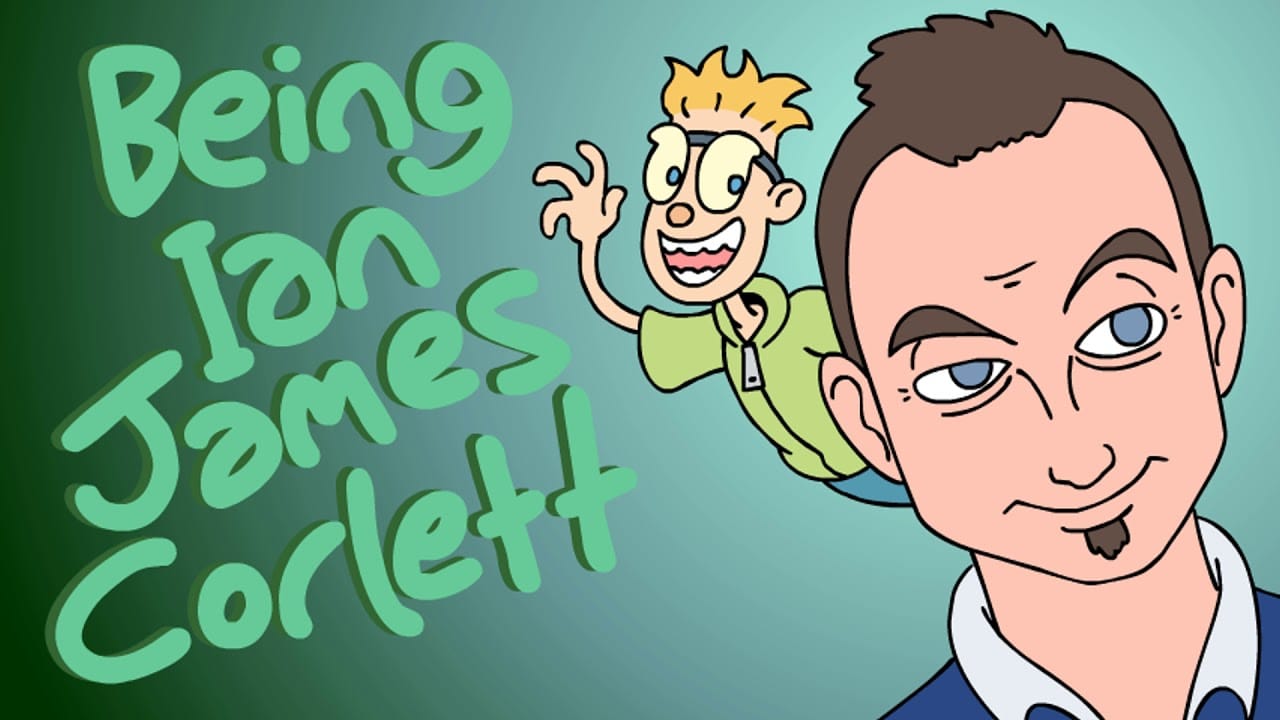
Ian James Corlett: The Man Who Made a Cartoon About His Street
He voiced Goku, left over a pay dispute, and went home to Burnaby to create a cartoon about growing up on Royal Oak Avenue. The piano store became a keyboard shop. The house became a drawing. The city became sixty-five episodes of a show that YTV aired for three years and then forgot.
Artom Butenko · 5 min read