Ian James Corlett: The Man Who Made a Cartoon About His Street
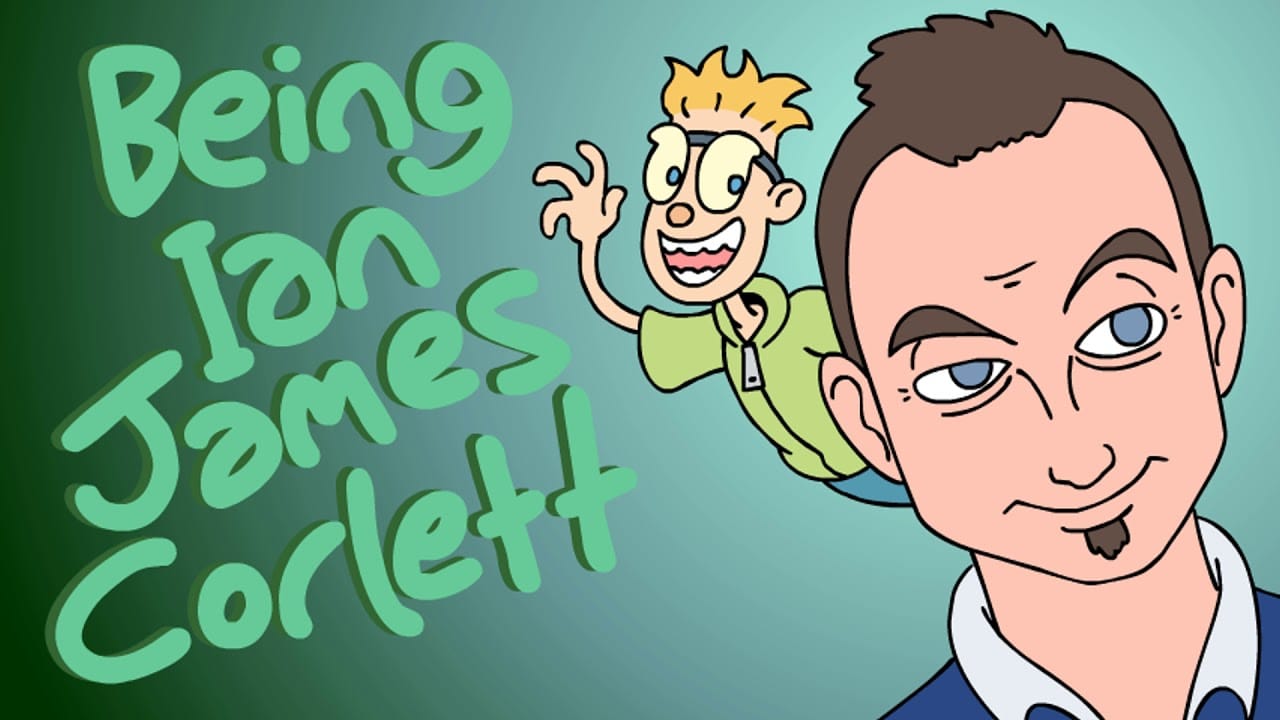
He voiced Goku, left over a pay dispute, and went home to Burnaby to create a cartoon about growing up on Royal Oak Avenue. The piano store became a keyboard shop. The house became a drawing. The city became sixty-five episodes of a show that YTV aired for three years and then forgot.
The piano store on Kingsway
Music Man Pianos sat at 4554 Kingsway in an old-west facade with a rounded front. Arthur Corlett and his wife Eva, born Lasko, ran the place. Their three sons grew up inside it — between the uprights and the sheet music bins, in the particular hush of a room full of instruments nobody is playing. "We basically grew up in a piano store and we all worked there," Ian Corlett has said. He was the youngest, born August 29, 1962, in Burnaby.
The building is still there. It is now called Male & Female Harmony. It sells adult products. The old-west facade remains, which gives the storefront the energy of a saloon in a film that cannot be shown on YTV.
A high school film, forty-three years in a box
Corlett attended Burnaby South Secondary at 6626 Kingsway — the city's first high school. In his senior year, 1980, he made a promotional film. His friend Alan McConnell starred. They shot it, presumably had a good time, and then the film sat in someone's archive for forty-three years.
In 2023, Corlett uploaded it to YouTube. Global BC reporter Jay Durant covered the story. A high school promo reel from 1980 is not, by any measure, important cinema. But it is the earliest surviving footage of a voice actor who would go on to play one of the most famous characters in anime history, and there is something in that — the distance between a teenager with a camera in Burnaby and the recording booth where he would become Goku.
Two hundred and fifty Canadian dollars
In 1996, the Ocean Group in Vancouver began dubbing Dragon Ball Z into English. Corlett voiced adult Goku and Master Roshi for the first thirty-seven episodes. Then he left.
The reason was money. In an interview with the YouTube channel Geekdom101, Corlett explained that he asked for "about $250 more per episode — and that's CANADIAN!!" The studio said no. Corlett did the math. "I could make more money washing windows."
He walked. The role of Goku passed to other actors. Dragon Ball Z became one of the most-watched anime series in North American history. Corlett went on to voice Mega Man in the Ruby-Spears cartoon, Coconuts in Adventures of Sonic the Hedgehog, Cheetor in Beast Wars: Transformers, and Glitch-Bob in ReBoot. He voiced the father in Johnny Test for six seasons. None of these roles carried the cultural weight of Goku. All of them presumably paid more than $250 Canadian per episode.
Royal Oak Avenue becomes a cartoon
In 2005, YTV began airing Being Ian. Corlett created it. Studio B Productions and Nelvana produced it. The show ran three seasons — sixty-five episodes, from 2005 to 2008.
The premise: Ian Kelley, a twelve-year-old aspiring filmmaker, lives with his family above their keyboard store. The keyboard store was Music Man Pianos. The family home was the Corlett house on Royal Oak Avenue. "Essentially the design that's in Being Ian," Corlett has confirmed. Kelley's Keyboards replaced Music Man Pianos. The street name changed. The architecture did not. The rounded front stayed. The windows stayed. The neighbourhood stayed, translated from wood and stucco into ink lines that a kid from Burnaby approved frame by frame.
Episode five of season one is called "Miss Tween-Age Burnaby." The city appears by name. This is unusual for Canadian animation, which tends to set stories in unnamed towns to make international sales easier. Corlett put Burnaby in the title card. Most creators file the serial numbers off their hometown. Corlett left them on.
The show won Leo Awards for Best Animation Program, Best Direction, and Best Screenwriting. It aired on YTV for three years. Then it ended, and the kind of quiet that follows a cancelled Canadian cartoon settled over it. You can find episodes on YouTube, uploaded by accounts with names like "CartoonArchive2019." The view counts are modest.
The other show, the books, the family business
Before Being Ian, Corlett created Yvon of the Yukon, about a frozen French explorer thawed out in a northern Canadian town. He won a Gemini Award for Best Writing for Rolie Polie Olie in 1999. He wrote two children's books for Simon & Schuster: E Is for Ethics and E Is for Environment.
His children, Philip and Claire, both became voice actors. The family trade shifted from pianos to microphones across two generations. Arthur and Eva sold instruments on Kingsway. Ian sold his voice in recording booths across Vancouver. Philip and Claire followed him in. Three generations, three storefronts — keys, then keyboards, then vocal booths. The product kept getting less visible.
What Burnaby keeps and what it loses
Corlett does not live in Burnaby anymore. He moved to Vancouver. Music Man Pianos is an adult shop. Burnaby South Secondary still stands on Kingsway. The house on Royal Oak Avenue is still a house, though whether it still looks like the drawing in Being Ian depends on what the current owners have done to the siding.
Sixty-five episodes of a Canadian animated series is a strange kind of monument. No plaque marks the spot. The City of Burnaby has not, to anyone's knowledge, acknowledged that a three-season cartoon preserved its streets in ink and digital paint. Royal Oak Avenue does not know it was on television.
But the episodes exist. Ian Kelley runs through Burnaby making films with his friends, and behind every drawn building is a real one that a kid who grew up in a piano store remembered well enough to give to an animator. The keyboard shop has a rounded front. The house has the right number of windows. The city is spelled correctly in the title of episode five.
Corlett asked for $250 more per episode and they said no. He went home and drew the place he came from. That turned out to be worth more than Goku.
Editor & Publisher
Artom Butenko
Founder and editor of 8 Pages Burnaby. Writes the fact-dense, archival pieces — origins, infrastructure, and the documents that explain how the city works.
More from May 2026
Full issue →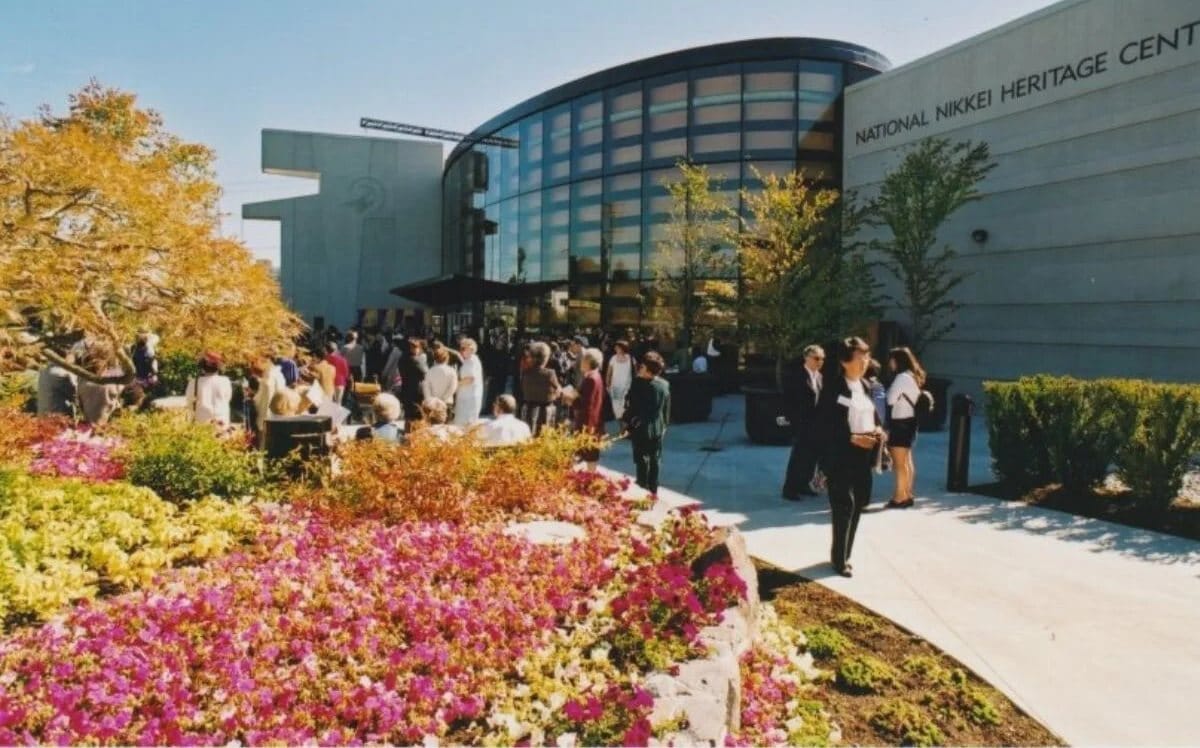
Nikkei Place: The Garden Built for Healing
The architect who designed the building was interned as a child. The land was purchased with redress money. The opening date was chosen to mark the anniversary of an apology. Inside are 670 recorded voices and 52,500 photographs from a community that lost everything and built this anyway.
Artom Butenko · 9 min read
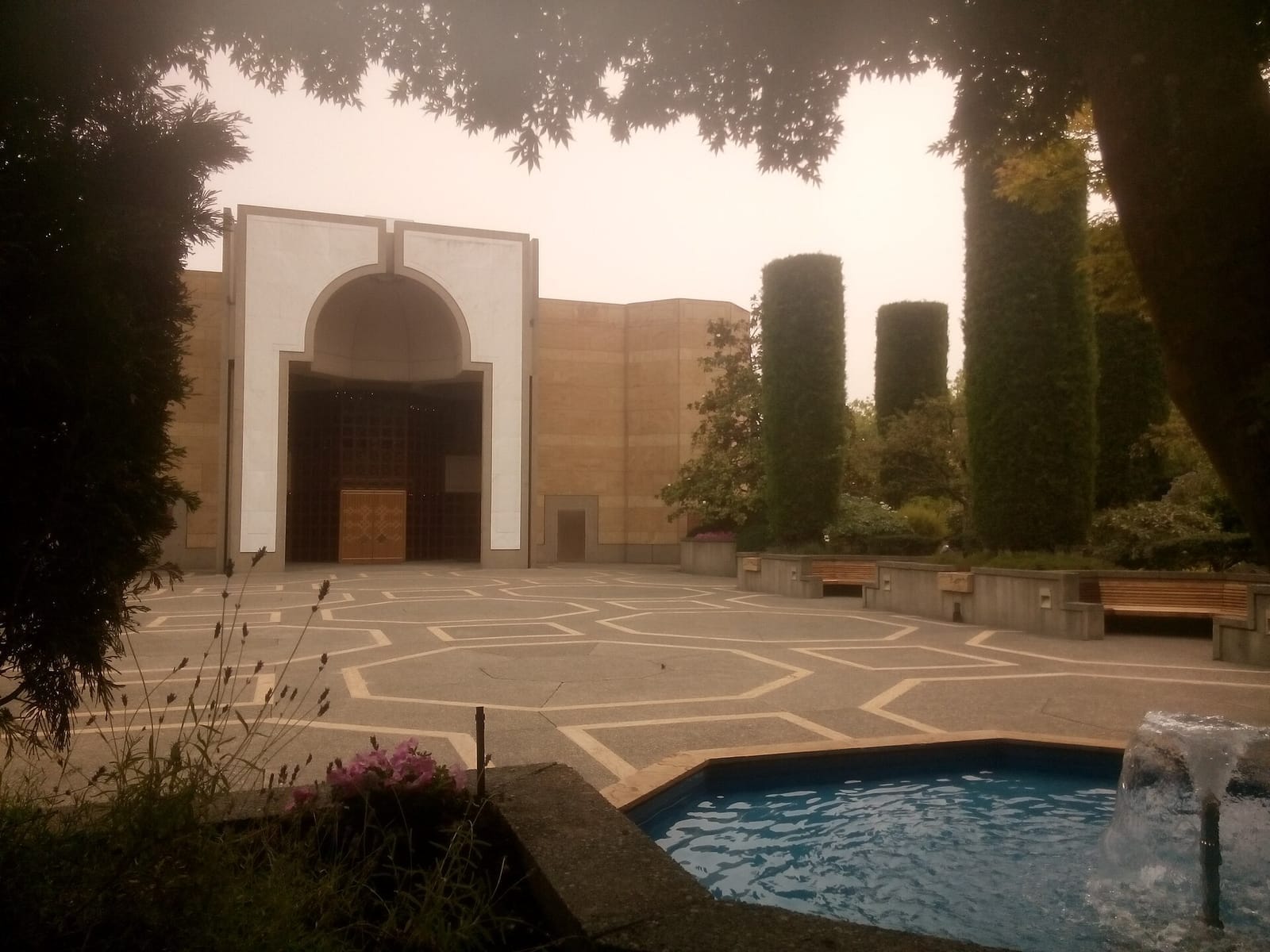
The Octagon on Canada Way: Inside Burnaby's Ismaili Centre
In 1985, the Aga Khan and the Prime Minister opened a building shaped like a prayer. Bruno Freschi designed it around a single geometric form — the octagon, "where the centre is everywhere, and everyone is in the centre." Thirteen years earlier, President Idi Amin had expelled the community that would fill it.
Artom Butenko · 6 min read