The Disappearing Burnaby Project
**
Deck: Nakita Cheung photographs front doors. Cursive fonts on lobby signs. Lobby tiles from 1957. She has documented over a hundred buildings in the months before they were torn down. In 2022, she gave the photos to the city archive. The buildings are gone. The photos are the only proof they stood.
The El Ray Apartments at 6663 Sussex Avenue had blood-red paint and a hand-lettered name in cursive above the entrance. Ten units. Built in 1957. Nakita Cheung compared the sign to something from The Shining — the font had that quality, decorative and slightly unhinged, the kind of lettering a person did by hand because vinyl decals hadn't been invented yet.
Cheung photographed the El Ray before it was demolished. She photographed the Norlaine at 6649 Burlington Avenue, where the cursive capital "N" looped up and over the word "the." She photographed the Sussex Villa at 6620 Sussex, which was slated for demolition to make way for the O2 Metrotown Towers. The Imperial Manor. The Irving Apartments. The Silverwood. The Silverbelle Court.
She photographed over a hundred buildings. Most of them are gone.
The missing internet
Cheung grew up in the Metrotown area. She lives in Vancouver now, works as a Senior Business Expertise Consultant at Service Canada, and shoots with a Sony A7 III — occasionally switching to a Kodak Ektralite 10, a pocket camera that takes 110 film, a format Kodak discontinued in 2009.
The project started with an absence. She went looking online for photographs of Station Square's history — the mall, the towers, the transit hub — and found almost nothing. "It just doesn't exist on the internet," she told The Tyee in 2023. "And I thought, 'Well, it's the internet, you would think that there's something out there, right?'"
There wasn't. So she started making the record herself.
Her blog, disappearingburnaby.wordpress.com, carries the tagline "exploring neighbourhoods." Posts are sorted by area: Metrotown, Maywood, Highgate-Edmonds, Brentwood, Nelson and South Slope. Each entry documents a building or a small cluster of buildings. The photos favour moody lighting, long shadows, close-ups of signage and entryway tile. A door handle. A balcony railing. The particular green of a 1960s apartment hallway.
"It was purely just an appreciation of these older buildings that are disappearing," Cheung said.
Method
She walks. That's most of it. She walks through Burnaby neighbourhoods with a camera and photographs buildings that look like they won't be there in two years. Some of them are already half-empty — curtains gone from the upper floors, a dumpster in the parking lot, that specific silence a building gets when it knows what's coming.
Her instinct for which ones are next comes partly from observation — a building that's been emptied of tenants, a fence going up — and partly from research. She trawls rental listings to see which addresses have gone dark. She checks BC Assessment records for recent sales at prices that suggest the land is worth more than the structure. She reads Heritage Burnaby records for historical context.
One person, one camera, one neighbourhood at a time. She has been at it since roughly 2020. The blog has over a hundred posts.
In early 2022, she donated a collection of her photographs to Heritage Burnaby — the city's community heritage organization. "To give back to the source of much of her research," as she described it. The archive now holds images of buildings that no longer exist, taken by someone who understood they were about to stop existing.
She has since expanded the work to an Instagram account, @vanishing.yvr, which documents buildings across Metro Vancouver. The geography widened. The subject stayed the same.
The numbers behind the disappearance
Between 2017 and 2022, Burnaby lost 690 rental units to demolition. The losses stretch back further — roughly 1,350 units gone since 2012. Projections at the time suggested a 35 percent increase in demolition rates going forward.
These are rental apartments. Low-rises, mostly. Three storeys, maybe four. Wood frame, flat roof, outdoor corridors. Built in the 1950s and 1960s, when Burnaby was filling in its postwar grid and landlords built cheap and expected the buildings to last thirty years. The buildings lasted sixty. Now they're coming down, replaced by towers that hold more people at higher rents.
Nobody planned for the low-rises to become heritage. They were ordinary when they were built and ordinary when they stood. Their disappearance is what made them interesting — the recognition, arriving late, that a city's texture lives in its three-storey walk-ups as much as in its civic buildings. The lobbies with the terrazzo tile. The apartment numbers in brass. The laundry rooms that smelled like warm lint.
A parallel obsession
Christopher Cheung — no relation to Nakita — had spent seven years as a staff reporter at The Tyee, and somewhere along the way the neighbourhood got under his camera too. He'd been photographing Metrotown's changes since 2015. "Photographing the change here is something of a mild obsession for me because of how dramatic it is," he wrote.
The two Cheungs, unrelated, both drawn to the same square kilometres of Burnaby, both pointing cameras at buildings in the last months of their existence. Christopher from a journalist's angle — context, policy, displacement. Nakita from a visual one — the letter "N" looping over "the," the particular red of a lobby door.
Between them, they assembled a record that the city itself did not think to keep. Burnaby's planning department tracks what gets built. It does not systematically photograph what gets torn down.
What a photograph holds
A photograph of a demolished building is an unusual document. It proves something stood in a specific place at a specific time. It records the colour of the paint, the style of the signage, the shape of the windows. It does not record the sound of the hallway or the smell of the laundry room or the way the elevator took forty-five seconds between floors. It does not record who lived there or how long they stayed or where they went after.
Cheung's photographs are precise about surfaces. The texture of stucco. The wear pattern on a front step. The way sun hits a west-facing balcony at four in the afternoon. What they cannot hold is everything that happened behind the doors.
The El Ray had ten units. Call it ten households, ten sets of keys, ten mailboxes. Over sixty-five years, hundreds of people entered through that door with the hand-painted cursive sign. None of them, as far as the record shows, photographed it on their way out.
Cheung did. Then the El Ray came down. The Norlaine came down. The Sussex Villa came down. The buildings are gone. The photographs sit in a WordPress blog and a city archive, proof of what Burnaby looked like when it was shorter and quieter and, by current standards, uneconomical.
The blog is still updating. Somewhere in Burnaby, a fence is going up around a building Cheung hasn't photographed yet.
Editor & Publisher
Artom Butenko
Founder and editor of 8 Pages Burnaby. Writes the fact-dense, archival pieces — origins, infrastructure, and the documents that explain how the city works.
More from May 2026
Full issue →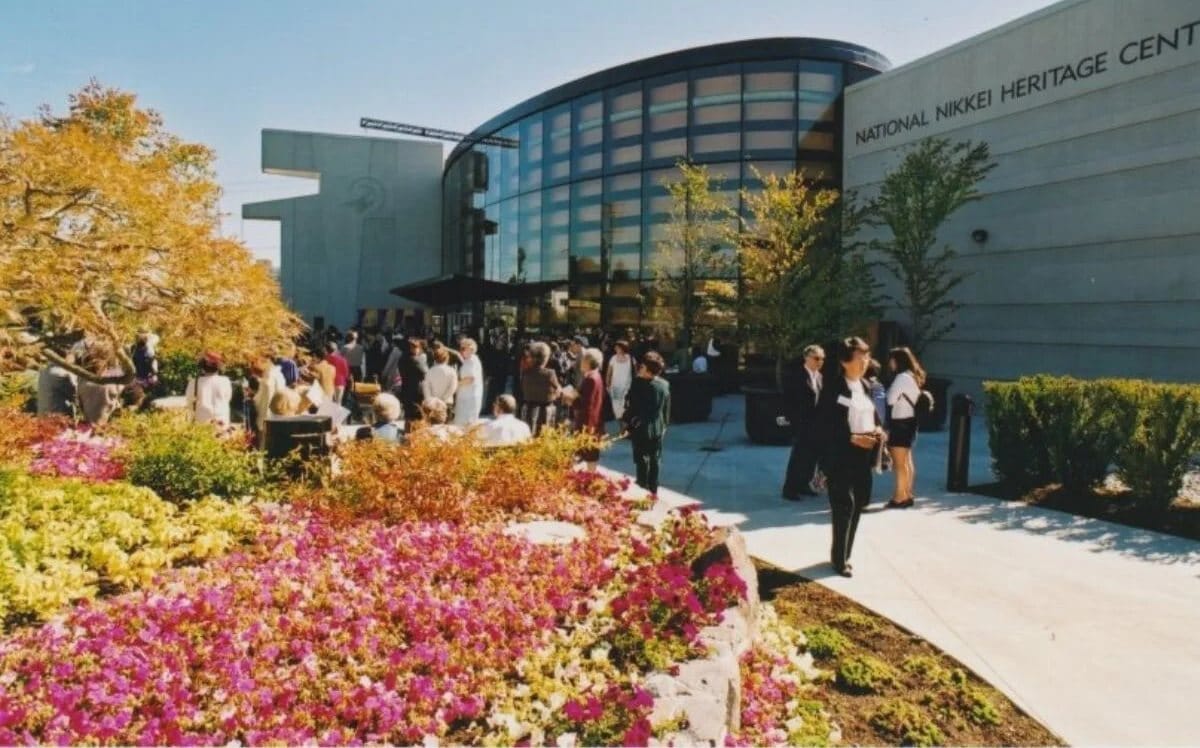
Nikkei Place: The Garden Built for Healing
The architect who designed the building was interned as a child. The land was purchased with redress money. The opening date was chosen to mark the anniversary of an apology. Inside are 670 recorded voices and 52,500 photographs from a community that lost everything and built this anyway.
Artom Butenko · 9 min read
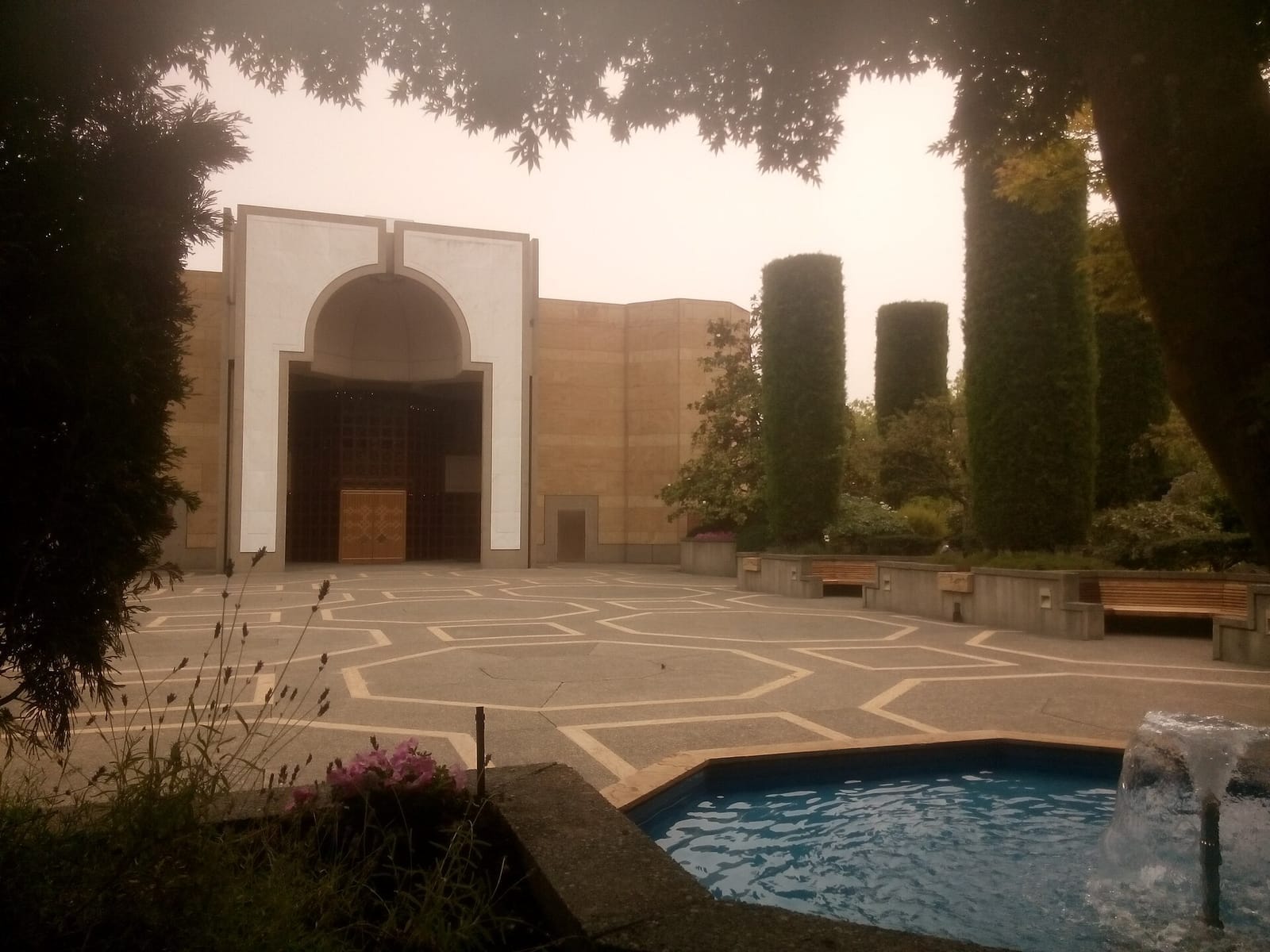
The Octagon on Canada Way: Inside Burnaby's Ismaili Centre
In 1985, the Aga Khan and the Prime Minister opened a building shaped like a prayer. Bruno Freschi designed it around a single geometric form — the octagon, "where the centre is everywhere, and everyone is in the centre." Thirteen years earlier, President Idi Amin had expelled the community that would fill it.
Artom Butenko · 6 min read

Ian James Corlett: The Man Who Made a Cartoon About His Street
He voiced Goku, left over a pay dispute, and went home to Burnaby to create a cartoon about growing up on Royal Oak Avenue. The piano store became a keyboard shop. The house became a drawing. The city became sixty-five episodes of a show that YTV aired for three years and then forgot.
Artom Butenko · 5 min read