The Chinese Market Gardens of Big Bend
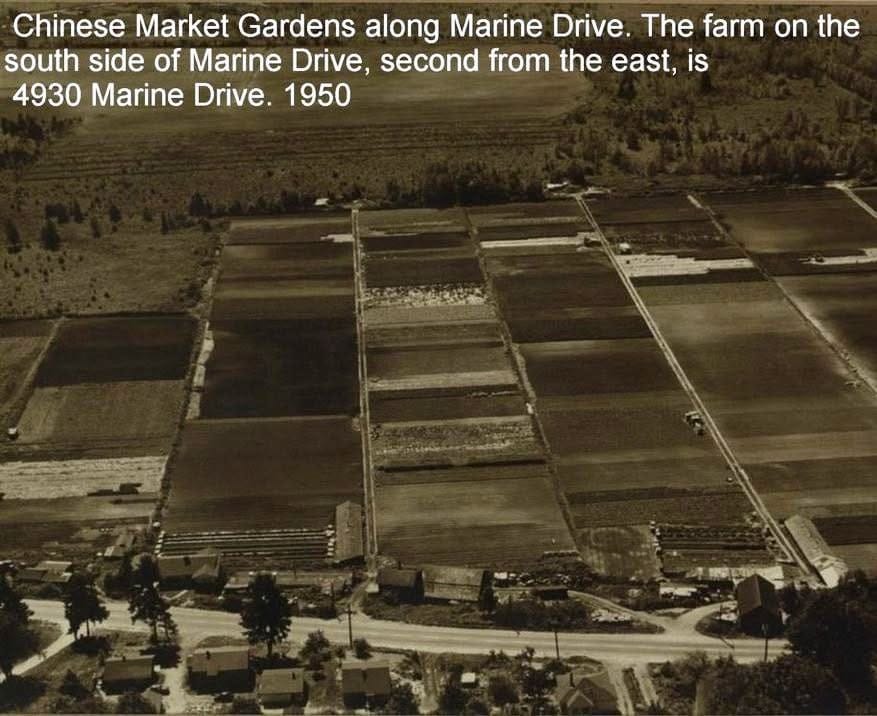
In the 1890s, Chinese farmers leased land nobody else wanted and turned cranberry marshes into the most productive vegetable farms in the region. By 1921, they supplied ninety per cent of British Columbia's vegetables. They were barred from voting, owning property, and holding municipal jobs. Twenty-seven of their farms may still be operating.
The land along the Fraser River's north arm in south Burnaby was, in the 1890s, considered worthless. Cranberry marsh. Waterlogged ground. Seasonal flooding. White settlers had passed it over.
Chinese farmers from southern Guangdong province — primarily the Kaiping area — looked at that same land and saw something else. They came from the Pearl River Delta, a region where farmers had been diking and draining wetlands for centuries. A marsh was not a problem. It was a job description.
They leased the land from white owners. They could not buy it. They dug a network of drainage ditches, lowered the water table, and turned bog into soil. A 1912 article in the British Columbian newspaper described the result: "The Chinese farmers have been for years developing and reaping the benefits of the rich soil. By draining the land with a series of ditches, the [growers] have reduced what was once little better than a cranberry marsh into a richly productive farming area."
By 1921, Chinese farmers produced ninety per cent of British Columbia's vegetables and fifty-five per cent of the province's potatoes. Those figures come from a 2013 study by researchers Gibb and Wittman at Simon Fraser University. Ninety per cent. From people who could not vote.
The farms had names and families
Jung Chong and his wife Jung Gee Shee ran a farm at 5460 Douglas Road. Chan Kow Hong and Sui Ha Hong operated Hop On Farms on Marine Drive. D.T. "George" Yip and his wife Yip Chow Won Tai worked Tong Yip Farm on Byrne Road.
They grew spinach, kale, tomatoes, zucchini, bok choy, gai choy. They sold door-to-door and from roadside stands along Marine Drive — trucks parked at the shoulder, tailgates down, produce stacked in wooden crates. In north Burnaby, along East Hastings Street, Chinese-owned green grocery stores served the surrounding neighbourhoods. Yow Lee Ko and his wife Say Jan Chan ran Lee Kee grocery at 3824 East Hastings. Chin Yin Wong operated Burnaby Market at 3942 East Hastings.
The geography of Big Bend — Marine Drive to the north, Fenwick to the east, the Fraser River to the south, Boundary Road to the west — held the densest concentration of these farms. The soil was rich because the farmers had made it rich. The work was year-round, physical, and unrelenting. Families worked together. Children weeded before school and sorted produce after it.
The law was written against them
The federal head tax on Chinese immigrants began in 1885 at fifty dollars. By 1903, it had risen to five hundred — roughly two years' wages for a labourer. The tax was designed to be prohibitive. It worked as intended.
In Burnaby specifically, the hostility was codified. An 1892 bylaw barred Chinese and Japanese residents from municipal employment. In 1921, Burnaby council passed a resolution to prohibit Asian land ownership. In 1922, a second resolution targeted "Oriental traders." Through the 1910s and 1920s, council repeatedly rejected trade licence applications from Chinese greengrocers — the same people feeding the municipality's residents.
The Chinese Exclusion Act of 1923 nearly sealed the border entirely. Between 1923 and its repeal in 1947, fewer than fifty Chinese immigrants were admitted to Canada. Families were separated for decades. Men who had come to work could not bring their wives. Children grew up without fathers. The Act restricted immigration, and it froze an entire community in place, cut off from its source.
Through all of this, the farms kept producing. Ninety per cent of the province's vegetables. The math of exclusion contained its own absurdity: British Columbia depended on the labour of people it refused to recognize as full citizens.
In the 1950s, ownership became possible
The families who had leased land for decades — in some cases, forty or fifty years — began purchasing it outright. Parcels of up to ten acres. The shift from tenant to owner changed the economics. Families could invest in the land they worked. They could pass it to their children. After half a century of making someone else's property productive, the land was finally theirs.
By 1972, 620 acres in Big Bend were placed in the Agricultural Land Reserve, protecting the farmland from development. The protection was not guaranteed to last forever. Pressure from developers has been constant. It still is.
A survey conducted around 2010 by City Farmer, a Vancouver urban agriculture organization, found approximately twenty-seven farms still operating in the Big Bend area. The organization called them "possibly the longest running commercial urban farms in North America" — over a hundred years of continuous operation. That claim is difficult to verify. What is verifiable: families have been farming the same plots since the 1890s. Five generations, in some cases, working the same drained marshland.
The apology came 133 years late
On November 15, 2025, Burnaby Mayor Mike Hurley issued a formal apology. Council repealed three discriminatory bylaws — the ones that had barred Chinese and Japanese residents from municipal employment and targeted Asian landowners and traders. The bylaws had been unenforceable for decades. The words had stayed on the books anyway.
A Chinese Canadian Reconciliation Advisory Group had guided the process. Community engagement was conducted in English, Cantonese, and Mandarin. The three languages matter. The community that was wronged is not monolithic. It includes recent immigrants who arrived speaking Mandarin and families whose Cantonese-speaking ancestors drained the marshes a century ago.
Repealing a bylaw that has been unenforceable for decades is a symbolic act. The people who wrote those bylaws are dead. The people who were harmed by them are mostly dead too. Their grandchildren and great-grandchildren stood in council chambers and heard the words. Whether the words were adequate is not for an outsider to judge.
The history was recorded before it disappeared
In 2020 and 2021, the Nikkei National Museum and Cultural Centre — located less than four kilometres from the Big Bend farms — mounted "Across the Pacific," an exhibit about Chinese Canadian farming history in Burnaby. The exhibit was presented in three languages. Denise Fong co-curated. It won the Larry Wong Prize.
In October 2023, UBC's Initiative for Student Teaching and Research in Chinese Canadian Studies published "Rooted," a book marking the hundredth anniversary of the Chinese Exclusion Act. The project was five years in the making. A companion podcast, "Back to the Roots," recorded oral histories from farming families.
The pattern is consistent: a community does the work of preserving its own story because the institutions that should have done so failed to. The farms fed the province. The province responded with head taxes, exclusion acts, and rejected trade licences. A century later, researchers and curators assembled the record. Some of the sources were photographs found in family drawers. Some were municipal documents that recorded, with bureaucratic precision, exactly how the discrimination was administered.
The ditches are still there
Drive along Marine Drive in south Burnaby and the farms are visible from the road. Low-slung greenhouses. Rows of vegetables. Drainage ditches running between plots. The land is flat — made flat, over a hundred years, by the people who worked it. On a spring morning the air smells like turned earth and irrigation water. It smells like a farm, which in the middle of a city is its own kind of statement.
Twenty-seven farms, possibly. The number is approximate. Some operations are small. Some families have reduced their acreage. Development continues to press against the boundaries of the Agricultural Land Reserve.
What the Chinese farmers of Big Bend built, starting in the 1890s, was work. Drainage, planting, harvesting, selling, repeating. Done under conditions that were engineered to make it fail. The head tax, the bylaws, the rejected licences, the Exclusion Act — each was a weight placed on the enterprise. The enterprise continued.
The marsh is gone. The farms remain. The ditches still carry water to the river.
Editor & Publisher
Artom Butenko
Founder and editor of 8 Pages Burnaby. Writes the fact-dense, archival pieces — origins, infrastructure, and the documents that explain how the city works.
More from May 2026
Full issue →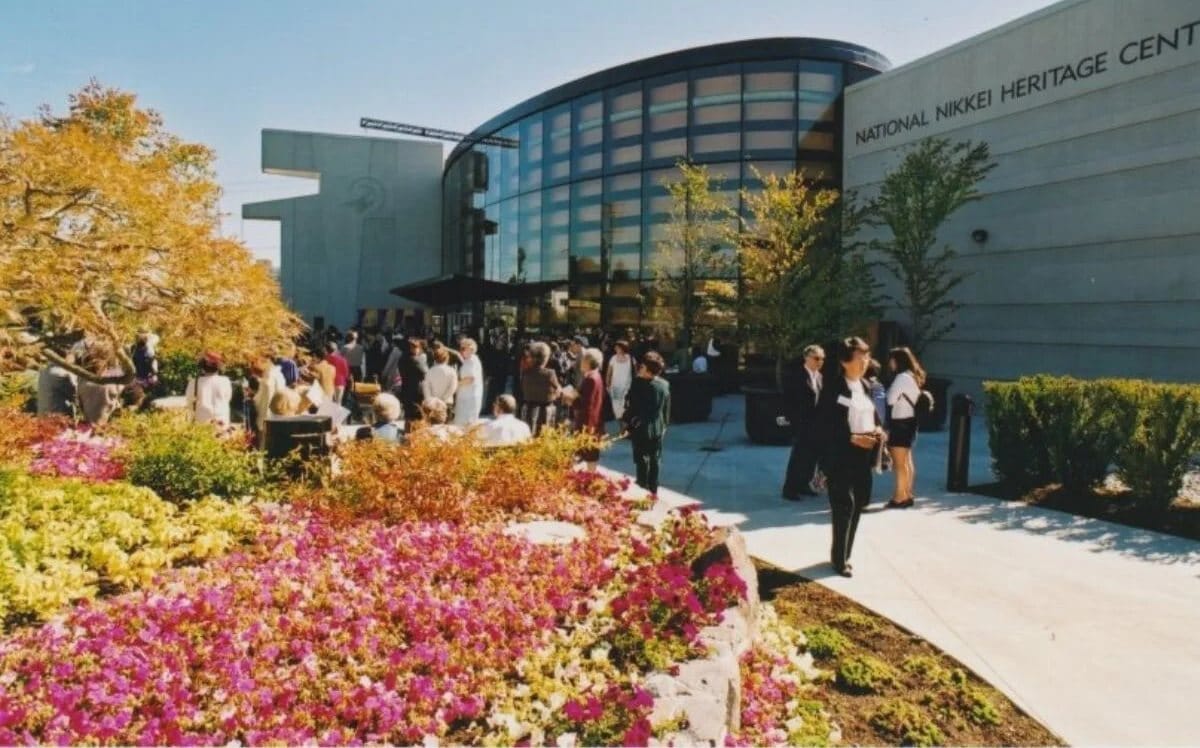
Nikkei Place: The Garden Built for Healing
The architect who designed the building was interned as a child. The land was purchased with redress money. The opening date was chosen to mark the anniversary of an apology. Inside are 670 recorded voices and 52,500 photographs from a community that lost everything and built this anyway.
Artom Butenko · 9 min read
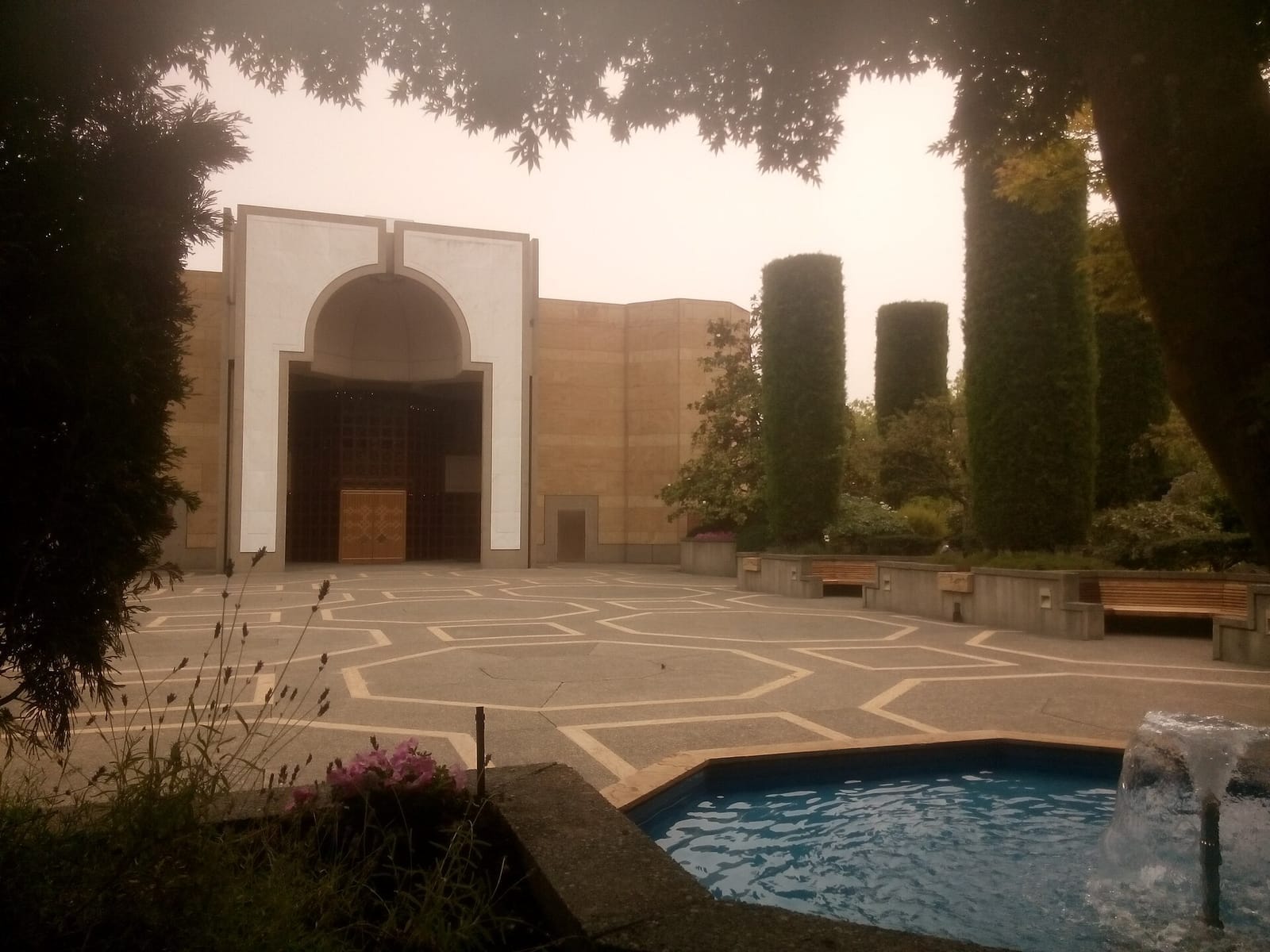
The Octagon on Canada Way: Inside Burnaby's Ismaili Centre
In 1985, the Aga Khan and the Prime Minister opened a building shaped like a prayer. Bruno Freschi designed it around a single geometric form — the octagon, "where the centre is everywhere, and everyone is in the centre." Thirteen years earlier, President Idi Amin had expelled the community that would fill it.
Artom Butenko · 6 min read

Ian James Corlett: The Man Who Made a Cartoon About His Street
He voiced Goku, left over a pay dispute, and went home to Burnaby to create a cartoon about growing up on Royal Oak Avenue. The piano store became a keyboard shop. The house became a drawing. The city became sixty-five episodes of a show that YTV aired for three years and then forgot.
Artom Butenko · 5 min read