Kapoor Singh Siddoo and the Forty-Five Acres He Wasn't Allowed to Buy

In 1938, a South Asian lumberman needed a white agent to purchase land on his behalf. He built a sawmill on Burrard Inlet, employed hundreds, survived a catastrophic fire, and spent years fighting for the right to vote. His property is now Barnet Marine Park.
The deed was registered under "Modern Sawmills Limited." Kapoor Singh Siddoo's name appeared nowhere on it. In 1938, a South Asian man could work the lumber trade in British Columbia for decades, employ hundreds, build a company from raw timber and raw will, but he could not walk into a land registry office and buy forty-five acres in his own name. He needed a Caucasian agent to do it for him. The identity of that agent has never been established in public records.
Siddoo was fifty-three years old when he acquired the eastern section of the dismantled Barnet Lumber Company property on Burrard Inlet. He had been working with wood for more than half his life. He had been denied the right to vote for all of it.
From Kharaudi to San Francisco to Vancouver Island
He was born in 1885 in Kharaudi, a village in Punjab, India. In April 1906, he arrived in San Francisco with twenty other men, serving as their interpreter, manager, and accountant. His education set him apart. The group went to work on the Southern Pacific Railway line, one of dozens of South Asian labour crews scattered across the American West in those years. Hard work on someone else's rail, a long way from Punjab.
By 1912, Siddoo had crossed the border into Canada. He tried homesteading in northern Ontario first. It did not take. Word came from British Columbia that a sawmill needed an accountant and manager, and he went west. He spent the next twenty years as a lumberman on Vancouver Island, learning the trade from the inside of the operation rather than from above it.
In 1923, his wife Besant Kaur emigrated from India to join him. A change in immigration law made it possible. The couple had two daughters, both born in Duncan, BC: Jagdis Kaur Siddoo in 1925 and Sarjit Kaur Siddoo in 1926. By 1935, Siddoo had established the Kapoor Lumber Company at Shawnigan Lake.
Three years later, he moved to Burrard Inlet.
The Waterfront at Barnet
The forty-five acres Siddoo purchased had been worked for decades. The North Pacific Lumber Company had operated a mill there since 1889, along with a company town that included a store, a school, a post office, Japanese and Sikh temples, and bunkhouses. The housing had been segregated. Workers were sorted by race into separate quarters. The Nichols Chemical Company ran an acid plant nearby. This was a working waterfront, industrial and unapologetic about it.
Siddoo renamed the company Kapoor Sawmills Limited and began operations. His younger brother Tara joined as a shareholder. From 1943 to 1945, Tara and his wife Beant lived on site at Barnet with their children: sons Lakhbeer, Gurdeb, Gurcharn, Baldev, and Hardev, and daughters Harjeet, Runjeet, and Buckshish. Children growing up between the mill and the inlet. The sawmill was a family enterprise in the most literal sense.
The workforce was mixed. South Asian, Chinese, Japanese, and European employees worked the same mill. Siddoo was known for maintaining positive labour relations, which in the lumber industry of that era meant something concrete: men stayed and disputes were handled.
The Fire of January 1947
On January 14, 1947, fire swept through the mill. The damage exceeded $500,000 — a figure that, adjusted for inflation, translates to roughly $7 million today. Equipment and timber stock. Gone in hours.
Siddoo rebuilt. A smaller mill went up on the same grounds. Kapoor Sawmills continued to operate for another twelve years.
A man who could not legally have purchased the land under his own name nine years earlier chose to rebuild on it after losing everything to fire. This happened in the same year South Asian Canadians regained the provincial franchise. Draw what conclusions you like from the timing.
Forty Years Without a Vote
South Asian Canadians were stripped of their voting rights in British Columbia in 1907. They did not get them back until 1947 at the provincial level and 1948 federally. Forty years. An entire working life.
The mechanisms of exclusion were stacked. The Continuous Journey regulation of 1908 required immigrants to arrive on a direct, uninterrupted passage from their country of origin — a condition designed to be impossible, since no steamship line offered direct service from India to Canada. The Komagata Maru incident of 1914 proved the point: 376 passengers from Punjab sailed to Vancouver harbour and were turned away after two months anchored in the inlet. The Chinese Exclusion Act of 1923 barred Chinese immigration entirely. In the 1920s, a Burnaby municipal motion endorsed by the Ku Klux Klan called for the deportation of all Asians.
Siddoo operated within this system. He employed workers. He paid taxes. He built an industry. He could not cast a ballot.
He was one of many Sikh activists who fought for full citizenship, and in 1947, the franchise was restored. The timing — the same year as the fire, the same year the mill burned and was rebuilt — is coincidental.
The Daughters, the Foundation, the Hospital
Jagdis and Sarjit Siddoo both became doctors, among the first Indo-Canadian women to do so. Jagdis practised medicine in Vancouver for decades. The family's ambitions extended well beyond the sawmill and beyond Canada.
In 1959, Siddoo retired from the lumber business and established the Kapoor Singh Siddoo Foundation. The foundation built and continues to operate the Kapoor Singh Canadian Hospital, an outpatient facility in the village of Aur, Punjab. The University of British Columbia's Faculty of Forestry offers scholarships through the foundation to this day.
Siddoo died in India in 1964, at seventy-nine. He went back to Punjab. He did not go back empty.
From Sawmill to Marine Park
After the mill closed in 1959, the Siddoo family considered developing the property as a marina. The plan did not materialize. In 1972, lawyer Arnold Hean negotiated the sale alongside Jagdis and Sarjit Siddoo and E.R. Smith. The Municipality of Burnaby paid $3,550,000 for the land. It became Barnet Marine Park.
Heritage Burnaby holds fifty-eight archival records related to Kapoor Sawmills. The Siddoo family photographs are in the collection. The South Asian Canadian Digital Archive maintains additional materials in its "In the Shadow by the Sea" collection. Hugh Johnston, a historian at Simon Fraser University, documented the family story in Jewels of the Qila: The Remarkable Story of an Indo-Canadian Family, published by UBC Press.
The Beach Where the Mill Stood
Walk Barnet Marine Park on a Saturday in April and the tide is low, the railway tracks catch the light, and families spread out across the grass with coolers and folding chairs. The picnic shelters sit where the mill buildings stood. The railway tracks that run along the waterfront carried his lumber. The land carries no plaque with his name. The sawmill, the fire, the workers, the company town with its segregated bunkhouses and its temples — all of it is under the grass and the gravel and the view of the inlet.
Siddoo spent thirty-three years building a business on land he was not allowed to buy. The city that would not let him vote paid his daughters $3.55 million for the property eight years after he died. It is a park now. Families bring their children on weekends. The archive holds the photographs. The record is thin in places, as records of people kept out of registries tend to be.
His name was on the company. It was never on the deed.
Editor & Publisher
Artom Butenko
Founder and editor of 8 Pages Burnaby. Writes the fact-dense, archival pieces — origins, infrastructure, and the documents that explain how the city works.
More from April 2026
Full issue →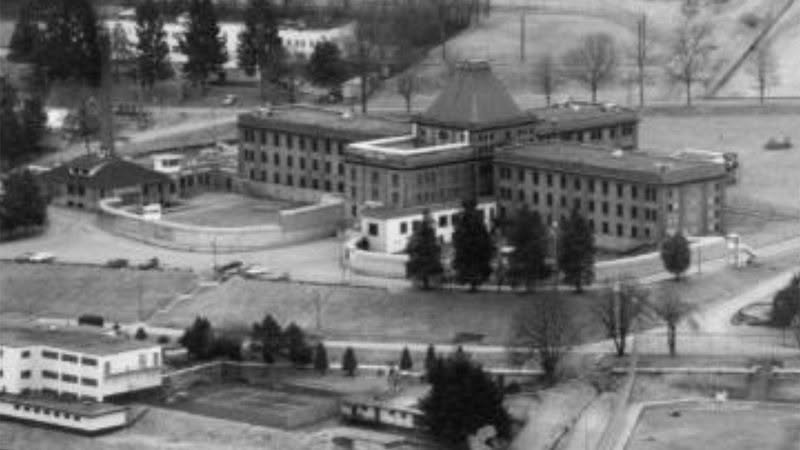
Oakalla: The Prison That Became a Neighbourhood
For eighty years, a 185-acre prison farm stood beside Deer Lake. Inmates grew vegetables, milked cows, and were hanged in an abandoned elevator shaft. A doctor gave them new faces. A punk bassist served time in the cells. When the last inmates left in 1991, the city tore everything down and sold townhomes on the land. The bricks from the cellblocks line the new walkways.
Artom Butenko · 8 min read
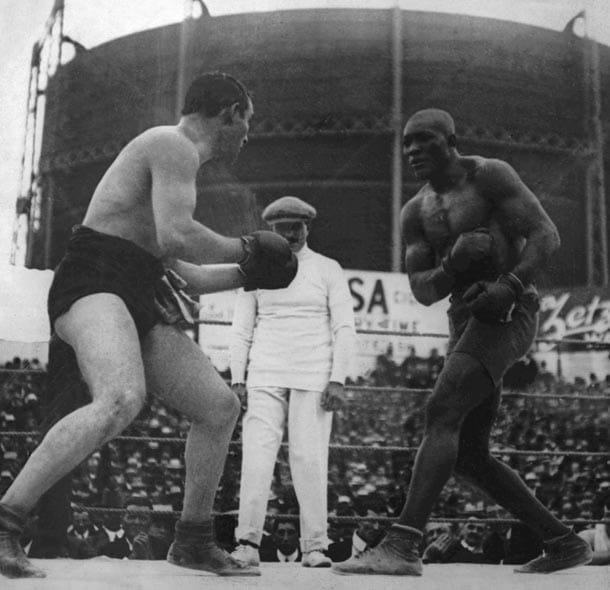
The Boxer, the Interpreter, and the Coloured Section
Ocean View Burial Park was established in 1918 as Burnaby's first non-sectarian cemetery, receiving its first interments the following year. In 1929, it created a section for "any person of colour." Buried there: the first Chinese-born Canadian, a court interpreter who fought for rights he was never granted in life. Nearby, in a pauper's grave: the only Canadian-born world heavyweight boxing champion, five-foot-seven and ordained.
Artom Butenko · 7 min read
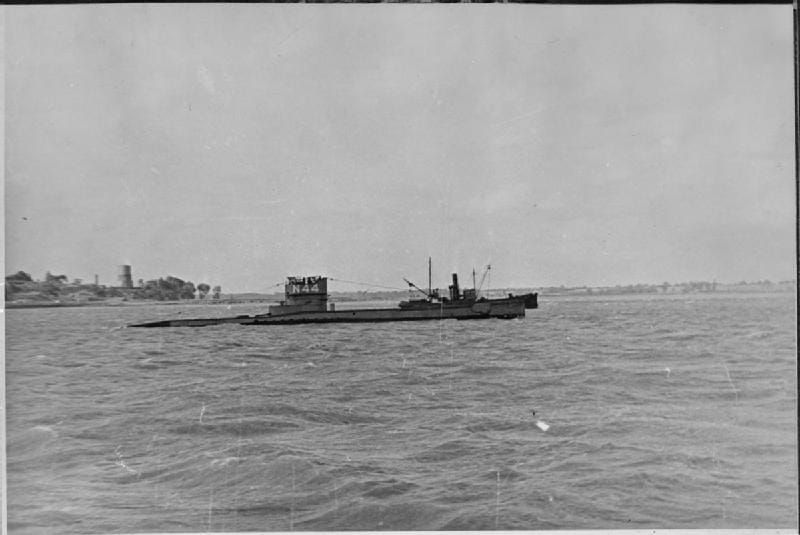
The Secret Submarines of Barnet Beach
During the First World War, 460 workers assembled submarine hulls for the Russian Imperial Navy on a Burnaby beach. The official story was barges. Guards patrolled behind barbed wire. Three hulls were finished before the Revolution ended the contract in 1917.
Artom Butenko · 5 min read