The Company Town on the Inlet
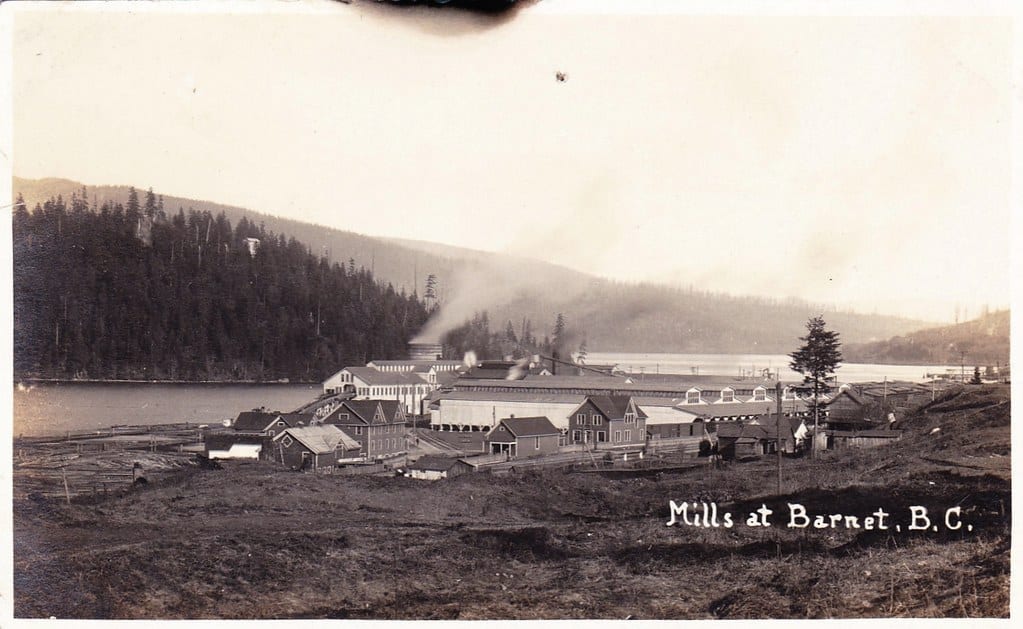
On the shore off Barnet Road, a few poured-concrete piers are all that is left of a mill town that had its own school, post office and telephone exchange — a settlement of some 350 workers that voted to strike in 1931 and never reopened.
Walk east from Barnet Marine Park along the Burrard Inlet shore and the ground begins to argue with the trees. Blocks of poured concrete sit half in the salt grass, squared off in a way nothing in a forest is ever squared off. These are piers — footings for the smokestack burner and the boiler plant of the North Pacific Lumber Company, and they are close to the only pieces of it left. A town stood behind them once. It had a store where you could buy your flour, a school for the children, a post office with its own stamp cancellation, a hall for Saturday nights, and a telephone exchange to connect it all. All of that is gone. The concrete stayed because concrete is hard to move.
A town built to run a mill
David MacLaren knew how to build a mill. A lumberman from Buckingham, Quebec, he had already founded Fraser Mills in 1889 before he turned to the Barnet peninsula in north Burnaby, on the shore off what is now Barnet Road. By 1900 the North Pacific Lumber Company was operational, and around it grew the kind of settlement the British Columbia coast produced by the dozen: a company town, where the company owned the mill and the houses and very nearly the ground you slept on.
The population lived in two kinds of quarters. Families had homes. Single men had bachelor bunkhouses. And the housing was drawn along a colour line, with separate quarters for Caucasian workers and separate quarters for the Chinese and Sikh men who did the same work for the same mill. That division was built into the town itself, into where people were allowed to live.
The town began teaching its children almost as soon as it began cutting lumber. In 1899 a small school opened in a remodelled harness-room beside the mill, and the first teacher, Miss Phoebe Spragge, earned $40 a month. A harness-room is a hard place to picture as a classroom — a shed for leather and buckles and the smell of horses — and it says something about how fast the town went up that the schoolroom was borrowed from the animals.
Fire, then a strike
In 1909 the mill burned. The fire started in the boiler room and took the plant with it. A boiler room is where the heat lived, so it is a plausible place for a fire to begin and a hard place for one to stay contained. What went back up was built to refuse the next fire: reinforced concrete and steel, described in the record as "absolutely fireproof." The piers on the shore today are the descendants of that rebuild, the parts poured too heavy to burn.
The plant closed during the First World War. It reopened in 1925 as the Barnet Lumber Company, and under that name it became one of the largest sawmills in the province, employing roughly 350 men. That was the last good stretch. In 1931, with the Great Depression pressing down on wages everywhere, the workforce voted on a strike, and the vote was not close: 196 of 200 workers were for it. Management answered by locking them out. The mill never opened its gates again.
What happened after is where the record thins. By local accounts, with no mill running the company fell behind on its taxes, and the City of Burnaby ended up with the whole site — the plant, the land, the houses — before the mill was dismantled and the land sold off in pieces. The primary heritage record does not carry that final chapter; what it confirms is the 1931 lockout and that the gates stayed shut. Either way, a town that had run on shift bells and sawdust was closed out by arithmetic rather than catastrophe.
The surviving record is missing the numbers that would round out the story: how many people lived on the peninsula at its peak, how many workers' houses stood among the bunkhouses, exactly when and how the site changed hands after 1931. Those details are gone. What is certain is the shape of the ending: a strike, a lockout, and a mill that never reopened, on a shore the city eventually cleared.
What the shore keeps
You cannot tour the town, because there is no town. You can stand near Barnet Marine Park and read the concrete. The burner piers and the footings of the old boiler plant are among the only remains, and they do the one thing the store and the school and the post office could not: they stay put. Wood rots, families move, a company folds, a city clears the lot. Poured concrete waits.
There is a plainness to that ending worth sitting with. No disaster carried this place off. It voted, it was locked out, and the mill never opened again; whatever the exact paperwork of the end, the place was wound up the way a delinquent account is wound up, on paper. Miss Spragge's harness-room school, the segregated bunkhouses, the telephone exchange that once tied 350 men to the rest of the coast — all of it came down to squared grey blocks in the grass, and to the inlet lapping at footings that were built to outlast a fire and ended up outlasting everything.
Editor & Publisher
Artom Butenko
Founder and editor of 8 Pages Burnaby. Writes the fact-dense, archival pieces — origins, infrastructure, and the documents that explain how the city works.
More from July 2026
Full issue →
The Rebel Who Built Houses
For twenty-four years the same fierce socialist represented Burnaby in the provincial legislature. He is remembered, if at all, as the father of a man who nearly became premier. His own monument is quieter: a fourteen-storey tower in Edmonds, still full of people who need a cheap place to grow old.
Artom Butenko · 6 min read
The Pioneer on the Station Sign
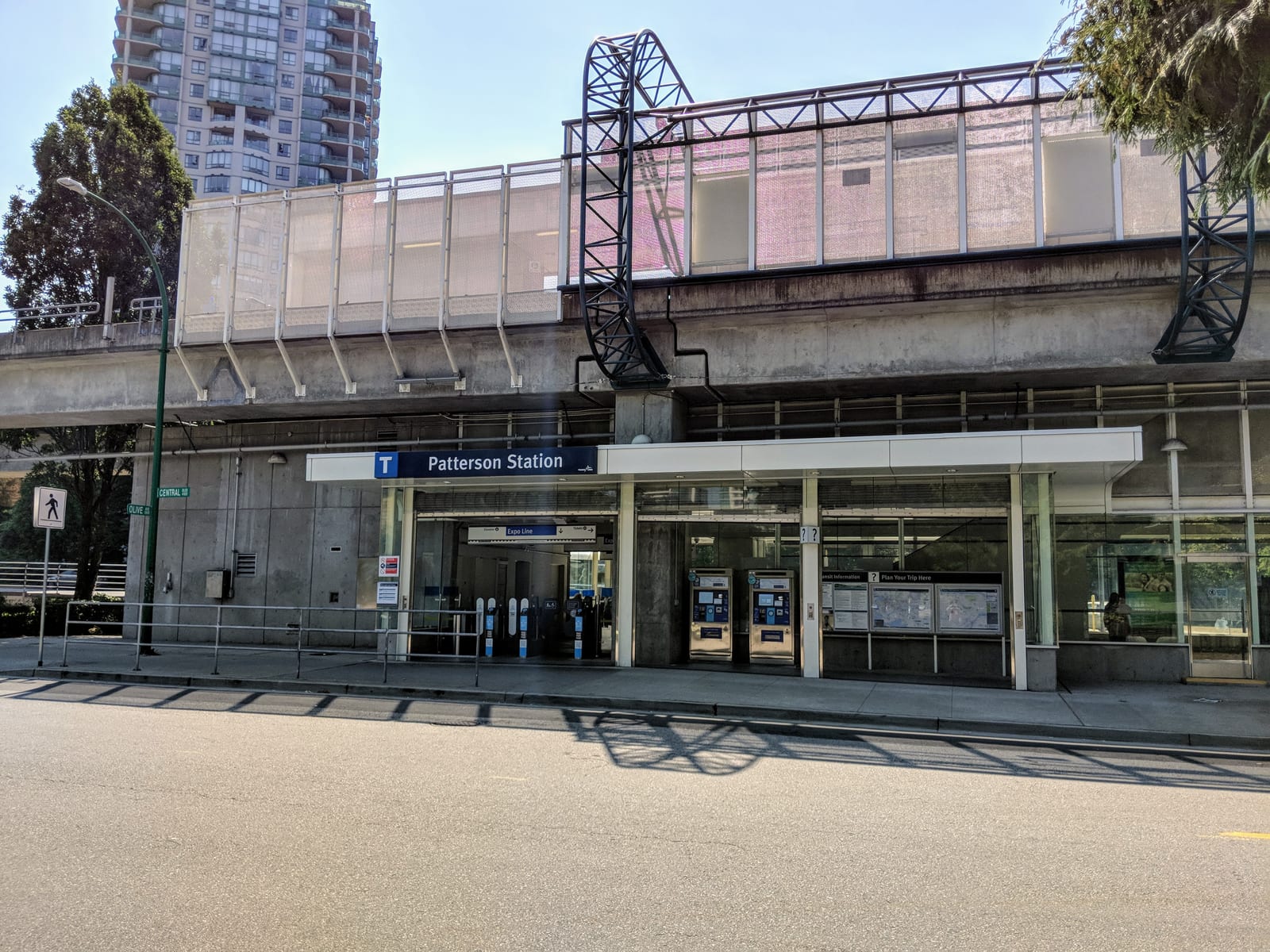
The trail Dugald Patterson cleared across his homestead became an avenue; the wooden tram platform he built became a SkyTrain station. The man himself left far less behind than the places that carry his name.
Artom Butenko · 5 min read
Twenty-Five Minutes on Inlet Drive
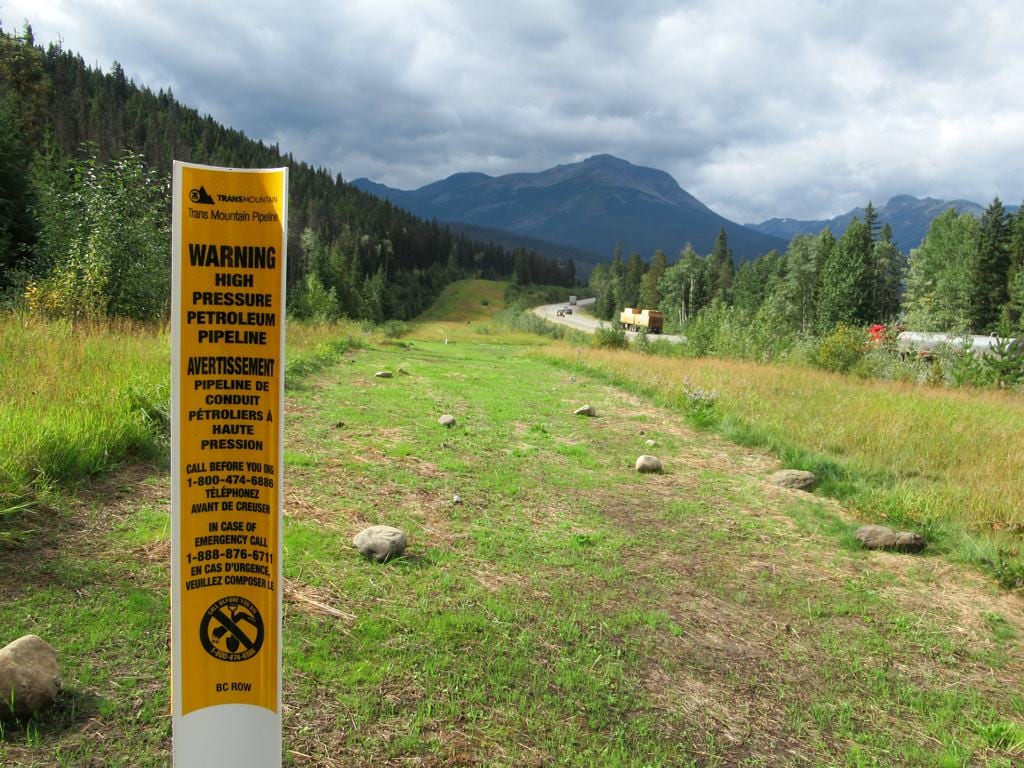
On 24 July 2007, an excavator bucket on Inlet Drive punctured a crude-oil pipeline that had been in the ground since 1953. The cause traced back to a drawing made in 1957.
Artom Butenko · 6 min read