From Stony Mountain to City Hall
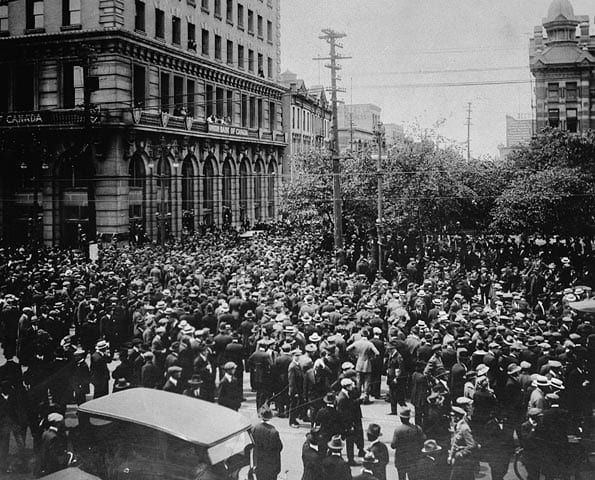
Convicted of seditious conspiracy after the 1919 Winnipeg General Strike, William Pritchard served a year in Stony Mountain Penitentiary, settled on Capitol Hill in 1922, and was elected Reeve of Burnaby in time to watch the municipality go bankrupt and lose its elected council to a provincial commissioner.
William Arthur Pritchard stood up in a Winnipeg courtroom and talked for about two days, without notes. "Did you ever consider, gentlemen of the jury, that you cannot kill ideas with a club?" he asked the twelve men holding his sentence. "You cannot drive theories into oblivion by machine guns. If an idea be healthy, sunshine will help it grow. If it is not healthy, sunshine will help to kill it." The Winnipeg Evening Tribune called the delivery gripping. He finished close to collapse. Set down in print by the defence committee, the address to the jury ran to roughly 215 pages.
He was one of eight leaders of the 1919 Winnipeg General Strike charged with seditious conspiracy, in a city that had stopped that spring. Streetcars idle in the barns. Bread and milk moving only with the strike committee's permission. Forty thousand workers off the job, and a state that decided the stoppage was a plot against itself. Seven of the eight men were convicted. A.A. Heaps was acquitted. Pritchard was found guilty, sentenced to one year, and served it at Stony Mountain Penitentiary on the flat prairie north of Winnipeg.
He was thirty-one. He had been born in Salford, England, on 3 April 1888, and had crossed an ocean to a country where a general strike could be read by a court as conspiracy. That penitentiary year is the hinge. Few men walk out of a sedition sentence and into the chair at the head of a municipality. Pritchard did exactly that.
From the penitentiary to Capitol Hill
In 1922 Pritchard settled in the Capitol Hill district of North Burnaby. The record keeps no street number, so the district is as close as it lets us stand. Capitol Hill is high ground in the city's northeast corner, a slope of houses turned toward Burrard Inlet and the working water beyond it. A man who had spent a year behind prairie walls came to a place where, on a clear day, he could see ships and salt water and the whole sweep of the inlet from his own doorstep.
His first years there are thinly documented. The offices come later, and they come firm. In 1928 he was elected to Burnaby council. In 1930 he became Reeve of Burnaby, the title the municipality then gave the head of its council, and he held it through 1932.
So the man who had argued for two days in his own defence at a sedition trial now gavelled to order the council meetings of a Vancouver-area suburb. The Manitoba Historical Society lists him among its Memorable Manitobans for the strike and the trial. Heritage Burnaby keeps the council years. Two archives, on opposite sides of the country, holding two halves of one life.
The chair when the money ran out
Pritchard took the reeve's chair in 1930, the first full year of the Depression in Canada. Burnaby was a growing municipality carrying debt, much of it borrowed to build roads, schools and services as families kept arriving. Then the floor gave way. Tax revenue fell. Relief costs climbed as men lost work up and down the streetcar lines. The debt could no longer be carried, and a municipality cannot simply wait out the weather the way a farm can.
Burnaby defaulted. At the end of 1932 the Province of British Columbia placed it under an appointed commissioner, and the elected council, Pritchard among them, stepped down. The municipality went bankrupt in everything but the word, and lost its elected self-government for years, run by a provincial appointee in place of the reeve and councillors residents had chosen at the ballot box.
The irony is exact, and it is in the record. A man convicted of conspiring against the constituted order had been elected to govern Burnaby, and the constituted order he now served took that government out of his hands. The Province made the call. Pritchard was the head of council when it came down. We know the year, the outcome, and that he was in the chair; what was said in the chamber as the default closed in stays in the room. Municipal arguments of the period rarely survive the way office dates do.
What the record keeps
Pritchard lived another half-century. He died on 23 October 1981, at ninety-three. Six years before that, in 1975, Burnaby named him a Freeman of the municipality, its highest civic honour, given to a man who had once chaired the council the Province took out of residents' hands.
Two years earlier still, in 1973, someone sat down with him and switched on a recorder. He was eighty-five. He had been a strike leader, a convict, a councillor and a reeve, and he had outlived the bankruptcy, the commissioner, and most of the people who remembered the strike with their own eyes. Heritage Burnaby holds the tape.
The shape of the life is firmer than its grain. Salford in 1888. Winnipeg and the trial in 1919. Stony Mountain. Capitol Hill in 1922. Council in 1928, the reeve's chair from 1930 to 1932, the commissioner at the end of it. The Freeman's title in 1975. The honour came late, and the archive leans toward the offices and away from the man. Somewhere in the Heritage Burnaby collection a reel turns when someone plays it: an eighty-five-year-old voice, prairie and inlet behind it, describing a century it had lived all the way through.
Editor & Publisher
Artom Butenko
Founder and editor of 8 Pages Burnaby. Writes the fact-dense, archival pieces — origins, infrastructure, and the documents that explain how the city works.
More from June 2026
Full issue →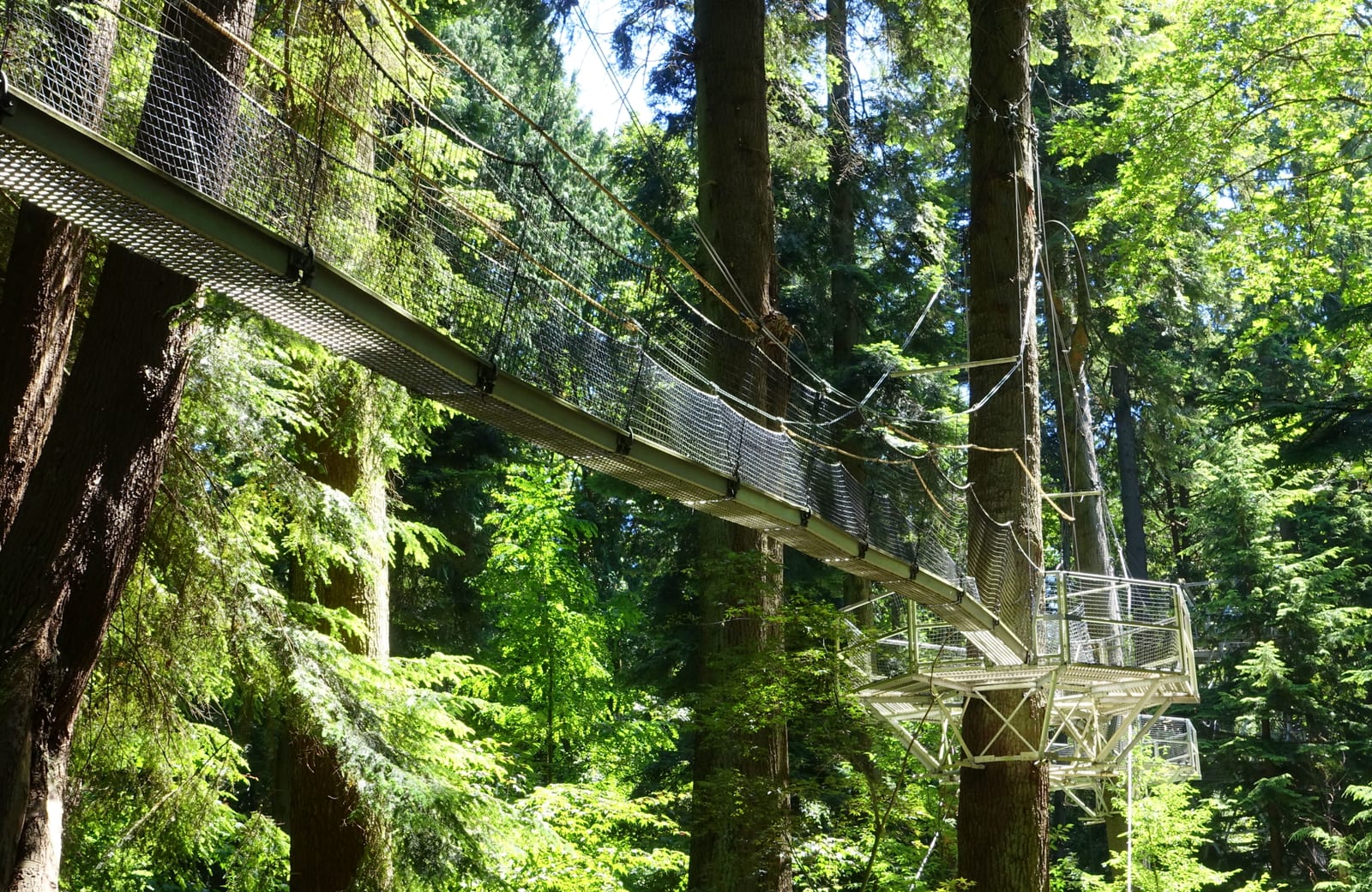
Frank E. Buck and the Eagles Estate Garden
The man who laid out the University of British Columbia's grounds also drew the plan for a small terraced garden on the Deer Lake slopes. Thousands walk his larger work without learning his name; in Burnaby, the smaller work survives as roughly 0.6 hectares of plantings above the water.
Brenda · 5 min read
The Station That Wandered
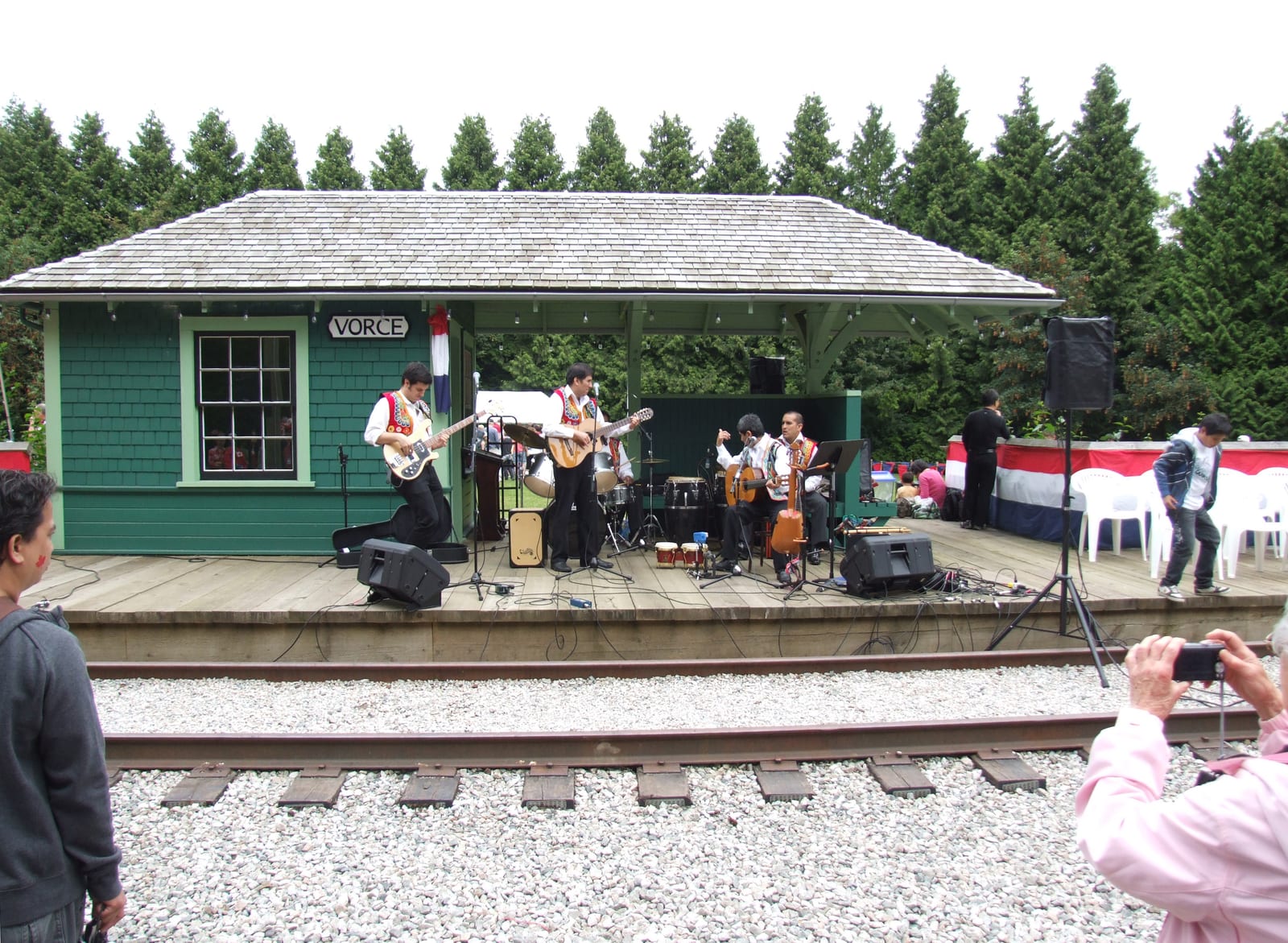
A small wooden tram shelter built in 1911 is the only piece of Burnaby's interurban railway still standing. It has moved twice by truck, and the engineer it was named for has all but vanished from the record.
Artom Butenko · 4 min read
Keys to the Centre
On 22 June 1956, a contractor handed Reeve Charles MacSorley the keys to a new municipal hall at 4949 Canada Way, near Deer Lake. The site had been chosen two years earlier by a simple rule: put the seat of government where neither half of Burnaby could complain it favoured the other.
Artom Butenko · 5 min read