Frank E. Buck and the Eagles Estate Garden
The man who laid out the University of British Columbia's grounds also drew the plan for a small terraced garden on the Deer Lake slopes. Thousands walk his larger work without learning his name; in Burnaby, the smaller work survives as roughly 0.6 hectares of plantings above the water.
Walk across the University of British Columbia on a grey morning and the ground does its work without announcing itself. The lawns open at the right moment. The path bends toward the building a person is already heading for. The sightlines settle, the way good sightlines do, into something that feels less like design than like weather. Frank Ebenezer Buck arranged a great deal of that. His name is on almost none of it.
Buck was born on 17 March 1884 in Colchester, England, and died in 1970. He came to Ottawa as Assistant Dominion Horticulturist in 1912, then moved west, and by 1920 he held two posts at UBC at once: head of the Horticulture Department and the campus Landscape Architect. He laid out the grounds and placed the Botanical Garden. A man from an old English market town spent his working life deciding where things would grow on the wet edge of the Pacific, and where a person would walk while they grew. Some heritage records put his birth in 1875; UBC and The Land Conservancy give 1884, and 1884 is the date that holds.
The garden at 5655 Sperling
The smaller work sits on a slope above Deer Lake, at 5655 Sperling Avenue, on a property known as the Eagles Estate. Buck drew the garden plan. The house was the work of Drs. Blythe and Violet Eagles, who designed it themselves and chose many of the plantings on their own. The credit divides along a clean line: the layout was Buck's, the building and the plants were the owners'. The records keep that division, and so does this account.
The Canadian Register of Historic Places lists the property as id 2358. The City of Burnaby maintains it as a heritage garden of roughly 0.6 hectares. It is active, which means it is tended rather than merely preserved. Volunteers and city hands work the beds; things are cut back and put in and watered through a dry August.
A terraced garden on a slope is a series of decisions about water and sightlines. Where the ground falls, a designer either lets it fall and plants to suit the fall, or holds it back in levels. The Eagles Estate garden holds it in levels. The slope runs down toward the lake the way the Deer Lake land tends to, in steps that follow the grade rather than fight it. Below all of it the water sits in a basin scooped out by ice a very long time before any of this, indifferent to the difference between a campus and a half-hectare plot.
Two scales of green
Buck is responsible for two very different sizes of green space in the Lower Mainland, and the difference is the whole point. One is a university campus, crossed by thousands of people a day, where the design vanishes into the ordinary act of getting to class on time. The other is a garden of about half a hectare, visited by a far smaller number, most of them there for the quiet. At UBC the work is invisible because it is everywhere. At Deer Lake the work is the reason to come, and his name is still not the thing people arrive knowing.
The published record is generous about the career and thin about the days. The Land Conservancy's Explore150 page and Heritage Burnaby carry the shape of the story, but not which beds he set where, or which of his lines the Eagles kept and which they quietly redrew. After a century the join between Buck's layout and the Eagles' planting is not always easy to read on the ground. That much the sources will not tell, and guessing it would not honour the man who measured everything.
What stays is the slope itself. The terraces hold. The plantings come up each year on the levels a horticulturist from Colchester ruled into the hillside before most of the present city existed. The lake sits below, the same as it did, and the garden steps down toward it one level at a time.
Contributing Writer
Brenda
Writes the literary, character-driven stories — the people and scenes that give the city its texture.
More from June 2026
Full issue →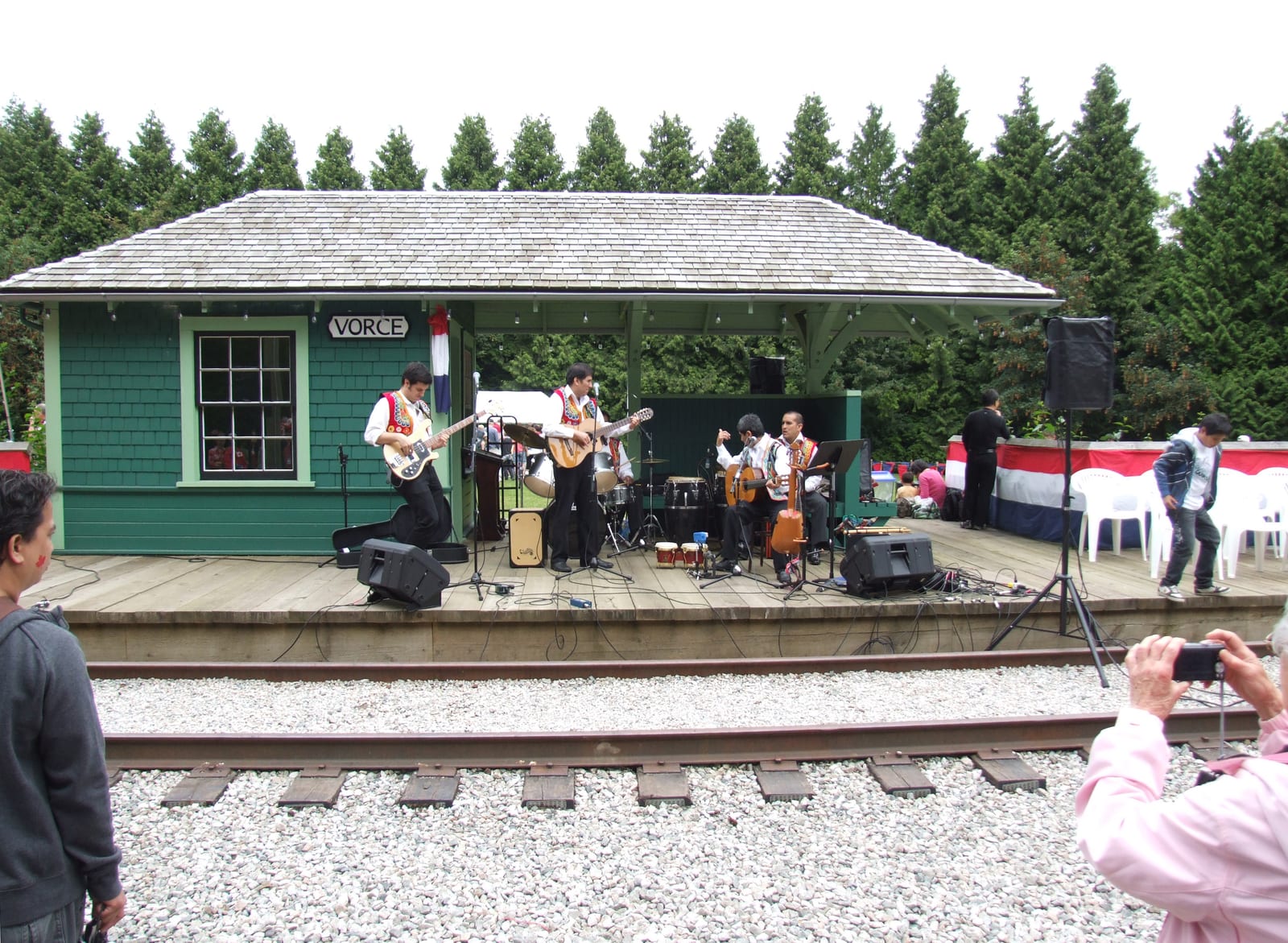
The Station That Wandered
A small wooden tram shelter built in 1911 is the only piece of Burnaby's interurban railway still standing. It has moved twice by truck, and the engineer it was named for has all but vanished from the record.
Artom Butenko · 4 min read
Keys to the Centre
On 22 June 1956, a contractor handed Reeve Charles MacSorley the keys to a new municipal hall at 4949 Canada Way, near Deer Lake. The site had been chosen two years earlier by a simple rule: put the seat of government where neither half of Burnaby could complain it favoured the other.
Artom Butenko · 5 min read
The Loves of Cumberland Road
In 1893, an English dairy worker who had crossed the country on the first transcontinental train bought fourteen acres of logged-over land in East Burnaby and planted an orchard. He raised eleven children in the house he built by hand, sold strawberries to Vancouver hotels, and sat on the council of a municipality barely older than his youngest child. The house still stands.
Artom Butenko · 6 min read