The Architect Everyone Forgot
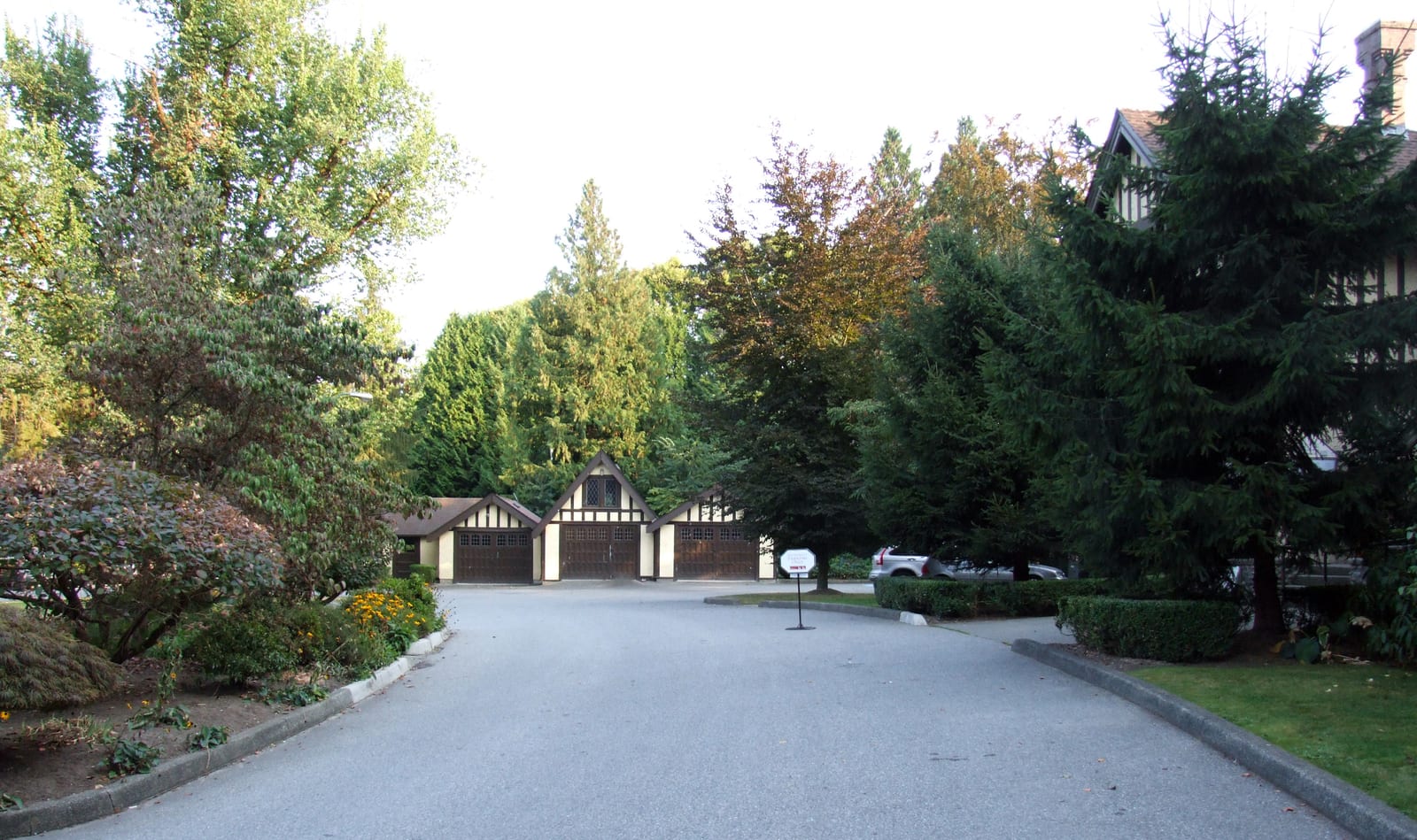
He was the first architect to live and work in Burnaby, and he wrote two books that trained the profession in England. His finest houses still stand around Deer Lake, one of them serving dinner most nights of the week. His own name has slipped almost entirely off them.
On a good evening the dining room at 6664 Deer Lake Avenue fills with the low clatter of a restaurant doing its work: chairs pulled out, wine poured, plates carried across floors that have held a hundred years of weight. The house is called Hart House now, and most people who eat there are eating there for the view of the lake and the food, which is the point of a restaurant. Very few of them ask who drew the mock battlements over their heads, or laid out the cross gables, or specified the rough-cast stucco that still holds the walls together. The man who did all of that was named Frank W. Macey, and he was the first architect ever to make his home in Burnaby.
He is easy to confuse with another Frank of the same era, Frank E. Buck, the horticulturist who laid out gardens at UBC and a terraced plot on the Deer Lake slopes. They are not the same man and never worked together. Buck arranged plants. Macey built houses, and the houses are still standing.
The man who wrote the rules
Macey was born in England in 1863 and died in 1935. Beyond those two years the record thins quickly. The heritage files agree he was born and trained in England and practised as an architect in the City of London before he came to Canada, but no source names the town he was born in, the school he trained at, or a single building he put up in London. Where he learned his trade, and from whom, the record does not say.
What survives from his English years is on paper, and it is substantial. In 1898 the London firm E. & F. N. Spon published his Specifications in Detail, a working manual for how to write the exacting documents that tell builders precisely what a drawing means. It was the kind of book a profession leans on rather than admires, and the profession leaned hard. A revised and enlarged second edition ran to more than six hundred pages in 1904. A third followed in 1922, a fourth in 1930, a fifth in 1955, each brought up to date by later hands, some of them faculty at the University of Liverpool, long after Macey himself was gone. The book is still reprinted today. A companion volume on the conditions of building contracts came out in 1902. Two standard texts that steered how buildings got specified for half a century, written by a man almost nobody in Burnaby has heard of.
He arrived on the west coast in the first decade of the century and settled in Burnaby, the first resident architect the place had. By 1904 the wealthy men buying up land around Deer Lake were coming to him for their houses. His signature was the rough-cast stucco he pressed onto exteriors, wrapped around Tudor lines, half-timbering, cobblestone facings, the vocabulary of the British Arts and Crafts movement carried across an ocean and set down beside a lake in Burnaby.
The houses you can still walk into
Three of them stand around Deer Lake, and all three earned heritage protection on the same day, 23 November 1992.
The grandest was Avalon, built in 1912 for Frederick John Hart, a developer, and his wife Alice. Hart had bought the property in 1904 and spent an estimated fifty thousand dollars on the house, a fortune for its day. It set the tone, as the Burnaby Beacon put it, for "many of the grand mansions in the adjacent residential development." The estate passed through other lives, spending decades from 1917 as a place called Rosedale Gardens, and since 1988 it has been Hart House Restaurant, open Tuesday through Sunday. Macey's battlements and corbelled brick chimneys are still up there over the diners.
A few hundred metres away, at 6450 Deer Lake Avenue, stands Altnadene, built in 1911 and 1912 for William John Mathers of New Westminster and his wife Mary at a cost of thirteen thousand dollars. The Mathers family lived in it until the mid-1930s, and then the house did the sort of work old houses get handed. It sheltered wounded soldiers as a convalescent home during the First World War. From 1939 to 1953 it was the Seminary of Christ the King, run by Benedictine monks, who added a classroom wing. Today it belongs to the Shadbolt Centre for the Arts, which opened around it in 1995 and is midway through a renovation running to 2027.
The third, the Anderson Residence, went up in 1912 for Robert Fenwick Anderson, a New Westminster hardware merchant and justice of the peace. It is a big two-and-a-half-storey wood-frame house of cedar shingles, half-timbering and leaded glass, with Douglas fir woodwork and tiled fireplaces inside. It now holds government offices, still standing in Deer Lake Park.
Not everything Macey touched lasted. In Vancouver he designed a Mission Revival building at 300 Alexander Street in 1922 for a stevedoring company, complete with oval portholes and a ship's-wheel motif; it stands boarded up and undesignated. His 1913 conversion of the Vermilyea Block at 869 Granville Street into a hotel was torn down in the 1980s, its facade folded into a cinema. And 1913 brought him a personal loss the records do mention plainly: a fire destroyed his own new house while it was still being built, a total loss.
Why the name faded
The buildings are protected. The man is not remembered, and the record does not explain why. No available source sets out the reason his name slipped off his own work, so what follows is inference rather than fact.
Some of it is simply the way credit settles. A house takes the name of the family who paid for it, and then the name of whatever it becomes, so people say Hart House and Shadbolt and Rosedale Gardens, and the architect drops out of the sentence. Some of it is the thinness of the personal record. We do not know where in England he was born or where in British Columbia he died. His brief mentions in local lore place him living on Douglas Road, but that address could not be confirmed in any source, so it is left out here.
What is left is the work, and it is generous enough. Two books that taught a profession how to write down exactly what it meant. Three houses around one lake, standing more than a century on, one of them still setting places for dinner most nights of the week under a roofline drawn by a man whose name the guests almost never learn.
More from July 2026
Full issue →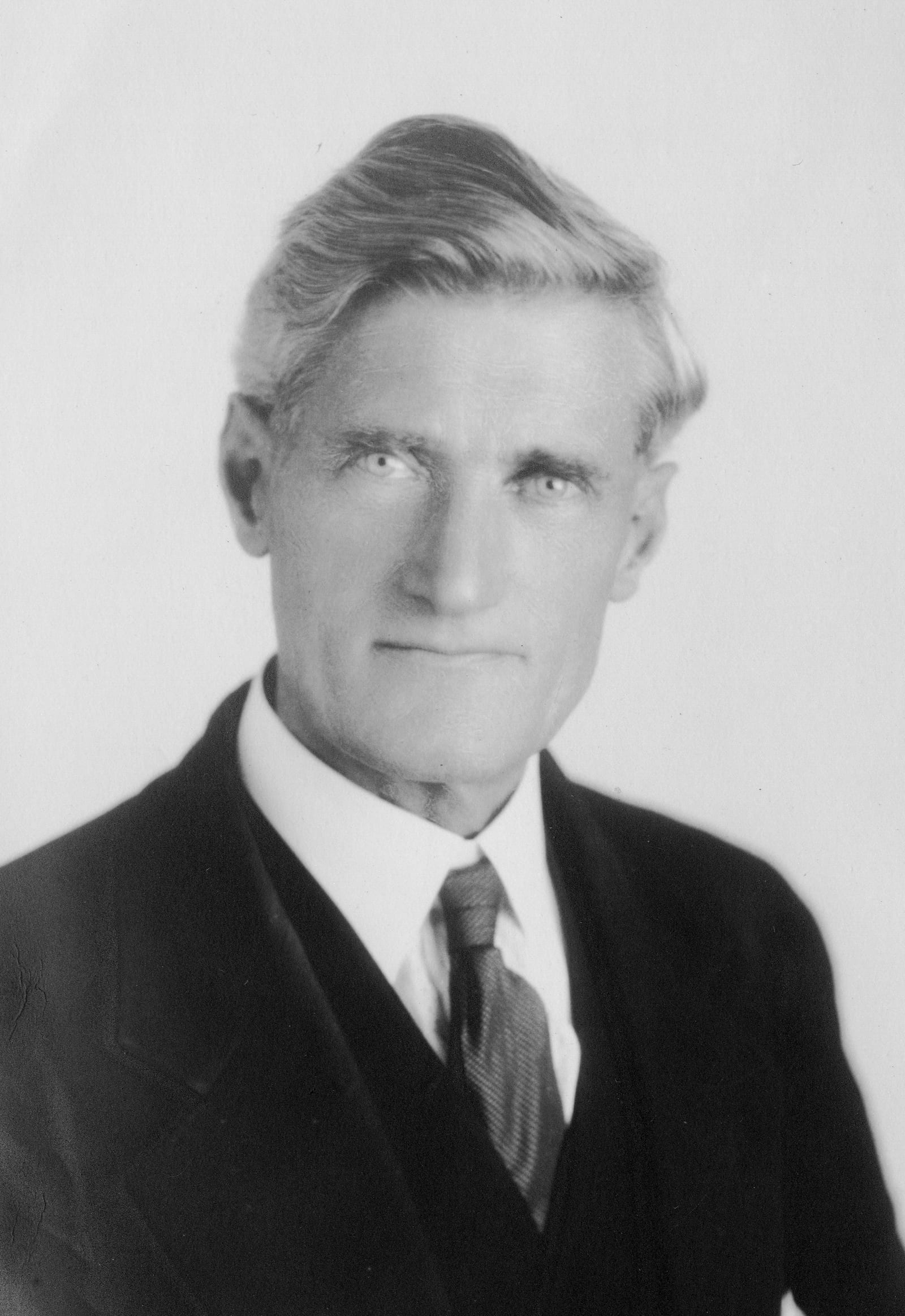
The Rebel Who Built Houses
For twenty-four years the same fierce socialist represented Burnaby in the provincial legislature. He is remembered, if at all, as the father of a man who nearly became premier. His own monument is quieter: a fourteen-storey tower in Edmonds, still full of people who need a cheap place to grow old.
Artom Butenko · 6 min read
The Pioneer on the Station Sign
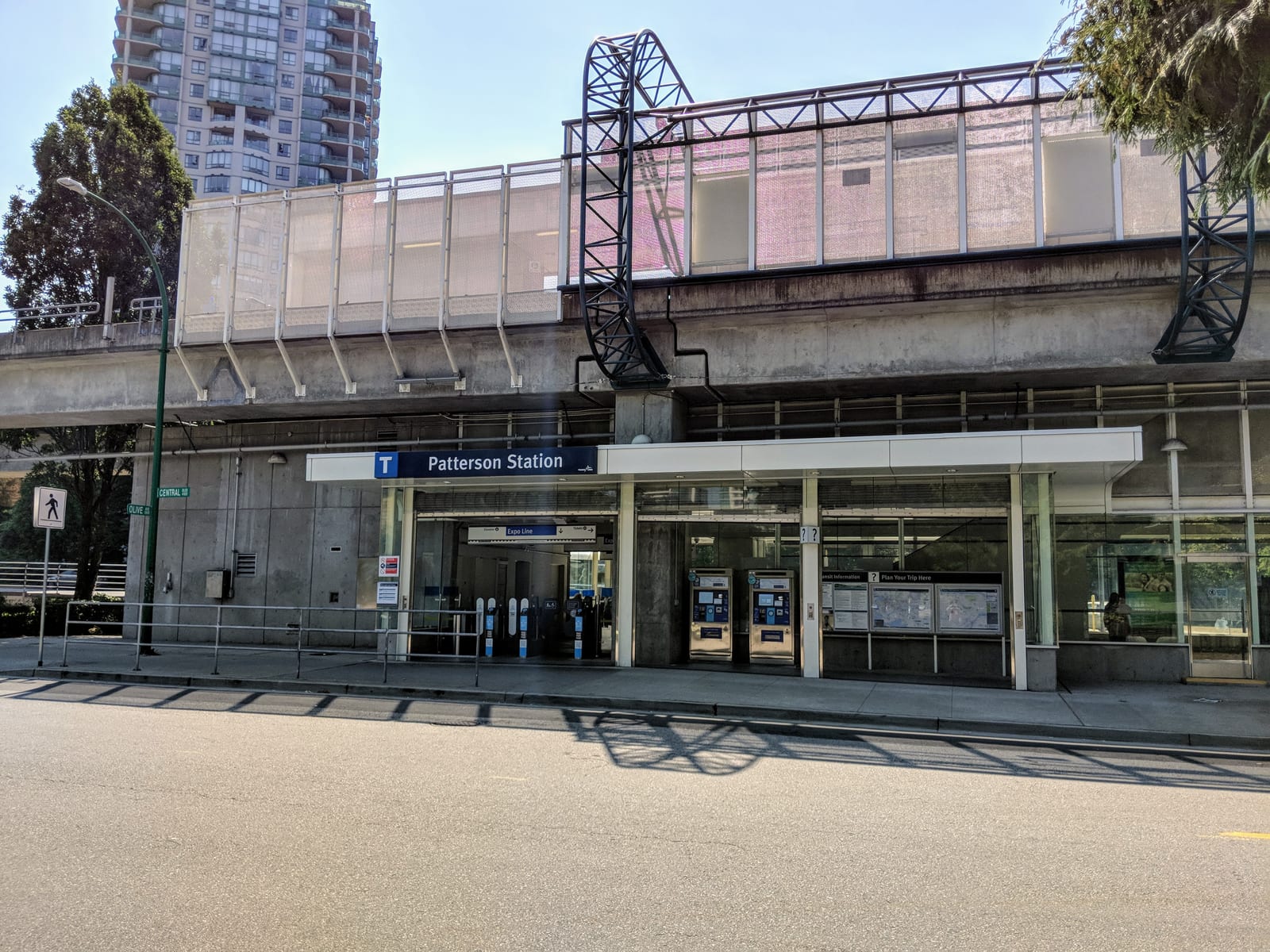
The trail Dugald Patterson cleared across his homestead became an avenue; the wooden tram platform he built became a SkyTrain station. The man himself left far less behind than the places that carry his name.
Artom Butenko · 5 min read
Twenty-Five Minutes on Inlet Drive
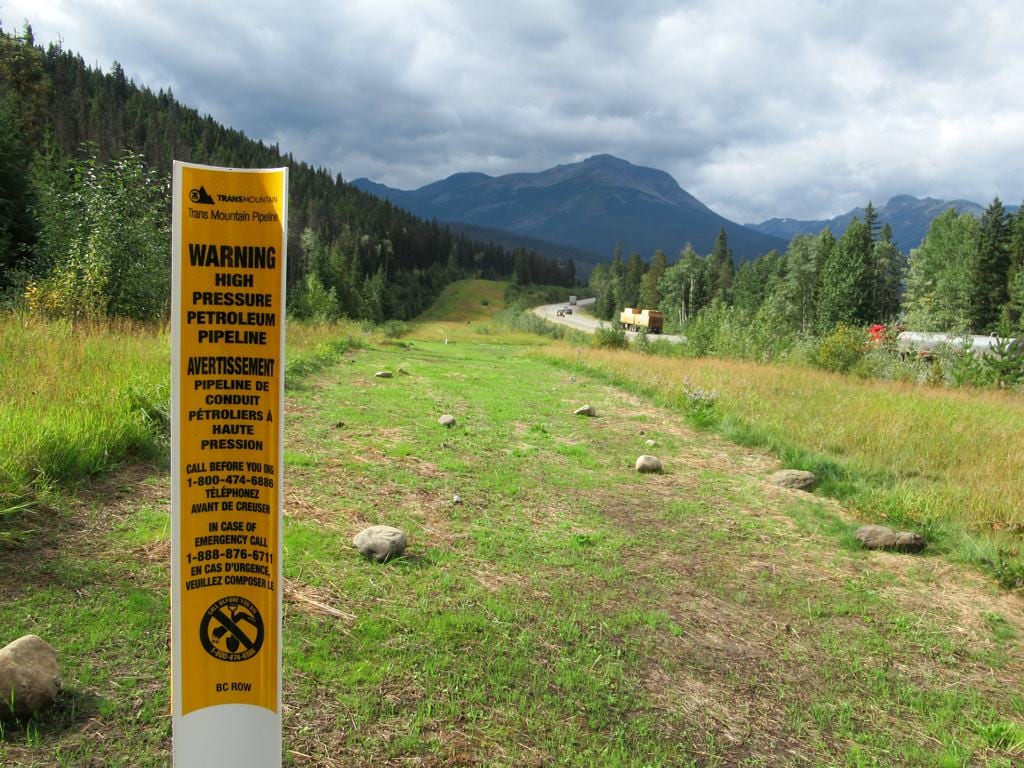
On 24 July 2007, an excavator bucket on Inlet Drive punctured a crude-oil pipeline that had been in the ground since 1953. The cause traced back to a drawing made in 1957.
Artom Butenko · 6 min read