Where Burnaby Learned to Read: The History of Public Libraries in Burnaby
Before the glass towers and the regional library system, there were small rooms, donated books, and volunteers who believed a city needs more than roads and schools—it needs stories.
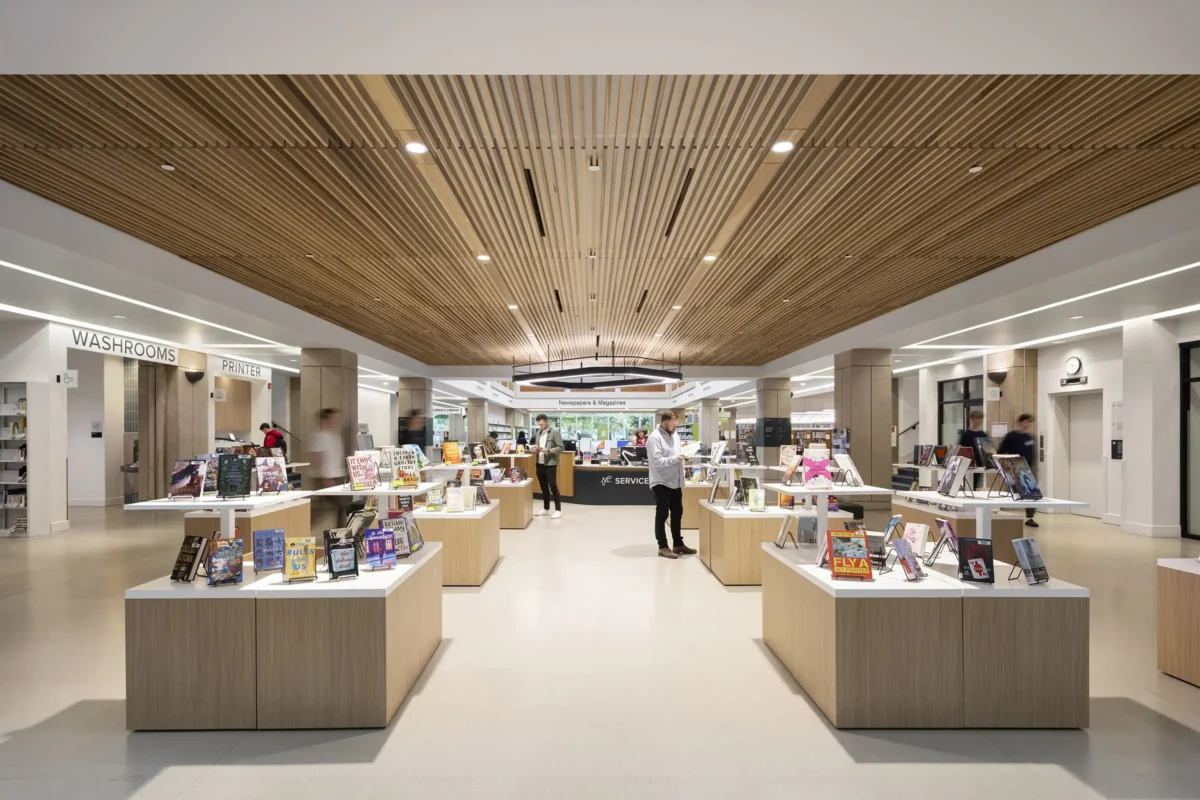
Before Burnaby had a regional library system or the Bob Prittie Metrotown Branch, there were small rooms, donated books, and volunteers who believed a community needed more than roads and schools.
The first public library service in Burnaby began in 1926 in a rented room above a store on Kingsway. The collection consisted of approximately 800 books, donated by residents and purchased with funds raised through community events. The library was open two afternoons a week. A volunteer managed the lending system using handwritten cards.
This approach was typical. Most municipalities in British Columbia established libraries through volunteers, donated space, and community fundraising. Provincial funding for public libraries did not exist until 1928, and municipal budgets rarely allocated money for libraries before then. If a community wanted library service, residents had to organize it themselves.
Burnaby’s first library resulted from lobbying by women’s groups, particularly the Burnaby Women’s Institute. They circulated a petition in 1925 calling for library service. The petition gathered enough signatures to prompt the municipal council to consider the idea, though not enough to secure funding.
The compromise was typical for the era: the council allowed a library to be established but provided no money. The Women’s Institute had to raise funds, find space, collect books, and manage operations. The municipality offered nominal support—official recognition and, if funds allowed, a small annual grant.
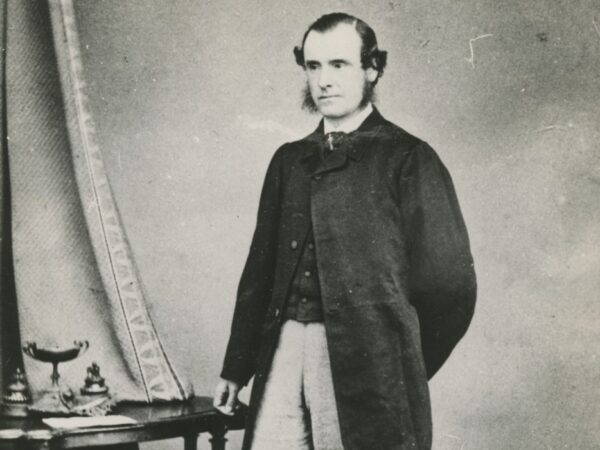
The library opened in January 1926. The room above the store on Kingsway was small, heated by a wood stove, and furnished with donated shelves and a borrowed desk. Margaret Morrison, a schoolteacher, volunteered as librarian, managing the collection in her spare time.
Books circulated, and the collection grew slowly through donations. After two years, the library held approximately 1,200 books and served around 300 registered borrowers.
The Push for Municipal Funding
In 1928, the British Columbia government created the Library Development Commission and established provincial grants for public libraries. Municipalities operating libraries could apply for matching funds—provincial contributions contingent on municipal funding.
The Burnaby Women’s Institute saw an opportunity. If the municipality formally established a library and allocated funds, provincial grants would double the budget. The library could expand, hire staff, acquire more books, and potentially open additional branches.
The campaign for municipal funding took three years. The Women’s Institute lobbied the council, presented usage statistics, gathered petitions, and argued that library service was not a luxury but a public good comparable to schools and parks.
Council members were divided. Some supported the library in principle but questioned whether Burnaby could afford it. The municipality’s late-1920s budget was tight: roads needed repair, and water infrastructure required expansion. A library, however desirable, competed with these urgent needs.
The debate was resolved partly by external pressure and partly by financial pragmatism. Provincial grants meant municipal spending would be matched dollar-for-dollar. Other municipalities—Vancouver, New Westminster, North Vancouver—were establishing funded libraries, and Burnaby risked falling behind.
In 1931, the municipal council voted to allocate $2,000 (about CAD 40,000 today) annually for library service and apply for provincial matching funds. The Burnaby Public Library was formally established as a municipal institution, and Margaret Morrison became the first paid librarian.
The First Municipal Library
The library remained in the rented room on Kingsway until 1936, when the municipality leased a larger space in the Municipal Hall building on Edmonds Street. The new space included a reading room, shelving for approximately 3,000 books, and a small office.
The collection grew through purchases and continued donations. By 1940, the library held about 5,000 volumes. Borrowers numbered around 1,200 — a small fraction of Burnaby’s population of approximately 30,000. Library use was concentrated among families with children and residents living near the Edmonds branch.
Access was limited by geography. Burnaby in the 1930s and 1940s was not a cohesive city but a collection of separate communities—Edmonds, Burnaby Lake, Deer Lake, Capitol Hill, South Burnaby. Residents distant from the Edmonds library had no practical access unless they could arrange transportation.
The solution was branch libraries. But branches required funding, space, and staff. During the Depression and World War II, municipal budgets were constrained, so library expansion was repeatedly deferred.
The first branch library opened in 1949 in a rented storefront on Hastings Street, serving North Burnaby. A second branch opened in 1952 near Deer Lake. Both were small, staffed part-time, and operated with limited hours.
By 1955, Burnaby had three library locations serving a population of approximately 70,000. The system remained underfunded, understaffed, and unable to meet full demand.
The Regional Library Debate
In the 1950s, librarians and municipal officials across British Columbia began exploring regional library systems. Multiple municipalities could pool resources to provide better service at lower per-capita cost than individual municipal libraries.
The Greater Vancouver Library Federation was formed in 1965 to explore regional cooperation. Burnaby participated in initial discussions but did not commit immediately. Some council members questioned whether Burnaby would benefit or if the municipality would end up subsidizing smaller communities.
Debate continued through the 1960s. Library advocates, including Burnaby’s chief librarian and library board members, argued regional cooperation would improve service, expand collections, and allow more branches. Skeptics worried about loss of local control and unclear cost-sharing formulas.
Burnaby joined the Fraser Valley Regional Library system in 1971. The decision was pragmatic—provincial funding increasingly required regional participation—and reflected recognition that Burnaby’s system was inadequate for a growing city.
Regional membership changed funding and service delivery. Collections were shared across municipalities, inter-branch loans became possible, professional development for librarians improved, and capital costs for new buildings could be shared.
Transition was not seamless. Some residents complained about books being shipped to other communities. Municipal staff had to coordinate with regional administrators. Still, the system worked: library use increased, collections grew, and new branches opened.
Building the Modern System
The Bob Prittie Metrotown Branch opened in 1995, replacing an older branch from the 1960s. The new 50,000-square-foot building included seating for 500, computer labs, meeting rooms, and a collection of approximately 200,000 items.
The Metrotown Branch was funded through municipal, regional, and provincial capital grants. Construction cost roughly $12 million. The scale marked a significant shift—libraries had historically been small, utilitarian structures. Metrotown was designed as a civic institution comparable to city hall or a community centre.
Other branches were upgraded or rebuilt in the 1990s and 2000s: McGill Branch in 1998, Tommy Douglas Branch (formerly Kingsway Branch) in 2001, Cameron Branch in 2011.
By 2020, Burnaby had four branches serving a population of about 240,000. Total collection exceeded 500,000 items, with annual circulation around 3 million. Programs included digital collections, language learning, meeting spaces, makerspace equipment, and technology training.
The system had evolved from a volunteer-run room above a store to a professionally managed regional network over 90 years.
What It Took
Library development in Burnaby followed the pattern seen across British Columbia: volunteer initiative, slow municipal acceptance, gradual expansion as budgets allowed, eventual regional coordination.
The system exists because specific people acted at specific moments: the Women’s Institute in the 1920s, Margaret Morrison managing books in a cold room for two years before pay, municipal librarians in the 1950s advocating for branches, and council members in 1971 voting to join a regional system.
These were incremental, administrative decisions: allocate a budget, lease space, hire one staff member, approve regional participation, fund a new building.
The result is library service that residents now take for granted: books are available, branches are distributed, digital resources accessible from home. But it started with 800 donated books in a rented room and a volunteer who tracked loans with handwritten cards.
Burnaby’s library history mirrors the story of many communities across the province: volunteers first, municipal funding later, regional coordination eventually, and incremental growth over decades.
The extraordinary part is that it worked. From Margaret Morrison’s handwritten cards to a regional system circulating millions of items annually, the city learned to read one borrowed book at a time.

Comments
Join the conversation! Please log in or register to comment.
Log In to Comment