Where the Bark Gets Peeled
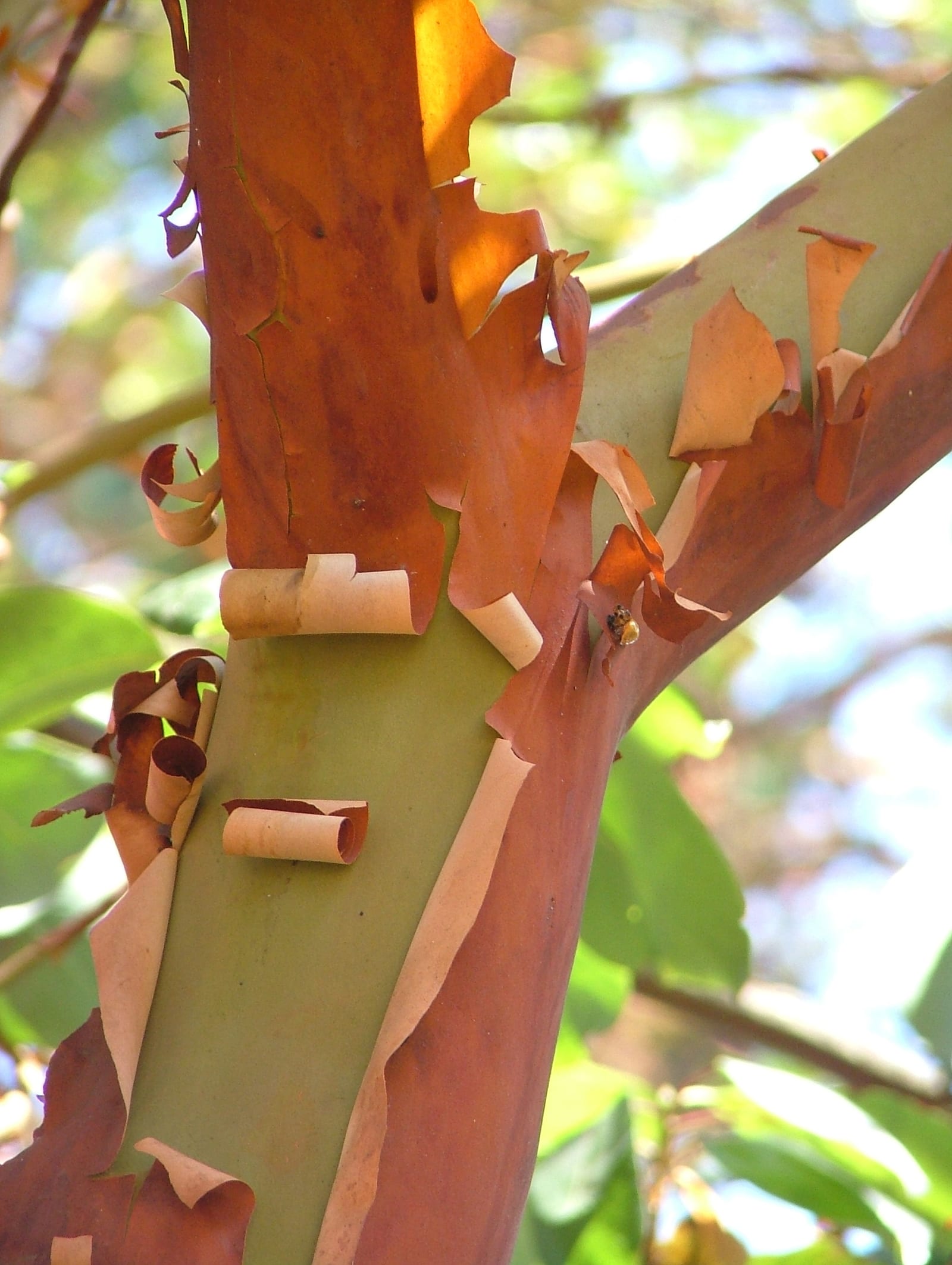
A single English industrial name, Barnet Mill, sits over an older Squamish name that describes a yearly act of the living world: the arbutus shedding its bark on the rocky shore of Burrard Inlet.
On the rocky shore at the base of Burnaby Mountain, where the land drops into Burrard Inlet, an arbutus leans out over the water and lets its bark go. The outer skin loosens in late spring, curls at the edges, lifts in thin papery sheets, and falls. Underneath, the new bark comes up pale green before it darkens to red-brown. The tree does this every year, on its own schedule, and it was doing it long before anyone built anything here.
The maps call this stretch Barnet Marine Park. Before that it was Barnet Mill. Before either, it had a name in the language of the Squamish people, and that name was about the tree.
The always-peeling tree
The Squamish (Sḵwx̱wú7mesh) place-name is Lhuḵw'lhuḵw'áyten, and it belongs to this shoreline at the foot of the mountain. The SFU Bill Reid Centre's Coast Salish Place Names project, the work behind the imésh app, records its meaning as, roughly, "where the bark gets peeled in spring." The Squamish councillor and language advocate Khelsilem, who has written about the word, breaks it down more plainly: it means "place of arbutus trees." Either way the tree is the root of it.
The name comes straight from the arbutus. In Squamish the tree is lhulhuḵw'ay, the "always-peeling tree," built on the root lhuḵw', "to peel." The place-name is the tree's name turned into a place, the spot where the peeling happens. It marks an action that returns. The bark peels in spring; the name says when and what.
Khelsilem has also explained why a stretch of shore like this one carried a name at all. Squamish names, he has said, were "based off sightlines from the water," and "not every landmark had a name if it wasn't part of the regular canoeing travel routes." A name marked a place people passed and saw and used from a canoe. This shoreline, low on the water at the base of the mountain, was one of them.
Arbutus are the leaning, copper-limbed trees that hold to bluffs and bare stone above the inlet, broad evergreen leaves catching the light, the trunk smooth as muscle. Year after year they shed and renew in the open, which is the one thing they are known for, and the thing the name reaches for and keeps.
A mill, then a park
For most of the twentieth century the English name pointed somewhere else entirely. From around 1899 a lumber-mill townsite stood here on the inlet's edge, a company settlement of the kind that grew up around sawmills all along the British Columbia coast. Such places ran on timber coming down off the slopes and out across the water, on the whine of saws and the smell of cut fir, on wages and shift bells and the steady removal of forest. Then the timber thinned, the work moved on, and the townsite emptied. The mill is gone now. In its place is a Burnaby waterfront park, lawn and shoreline laid over reclaimed industrial ground.
The two names rest on the same earth and face opposite directions. One marks an industry that arrived, worked the timber, and left. The other marks something the shore was already doing before the mill came, and went on doing after it left.
There is a question of reach worth naming. In current usage Lhuḵw'lhuḵw'áyten is sometimes stretched to cover all of Burnaby Mountain. The Bill Reid Centre's work attaches it to the Barnet shoreline in particular, the former mill site, now the park, the rocks where the arbutus actually grow. That narrower place is where the documentation points, and where the name sits closest to the tree.
At the water's edge
June is Indigenous History Month, and the timing lands where the name lives. Late spring into early summer is when the arbutus along the inlet begin to shed, which is, in plain terms, the season the Squamish word was built around.
The park name is recent. The industrial name is older. The Squamish name is older still, and it is tied to nothing that human hands made. It belongs to the tree. In the weeks around midsummer, an arbutus on the shore below the mountain lifts its bark and drops it strip by strip, the new surface rising smooth and pale beneath, and Lhuḵw'lhuḵw'áyten goes on doing exactly what it has always described.
Contributing Writer
Brenda
Writes the literary, character-driven stories — the people and scenes that give the city its texture.
More from June 2026
Full issue →
Frank E. Buck and the Eagles Estate Garden
The man who laid out the University of British Columbia's grounds also drew the plan for a small terraced garden on the Deer Lake slopes. Thousands walk his larger work without learning his name; in Burnaby, the smaller work survives as roughly 0.6 hectares of plantings above the water.
Brenda · 5 min read
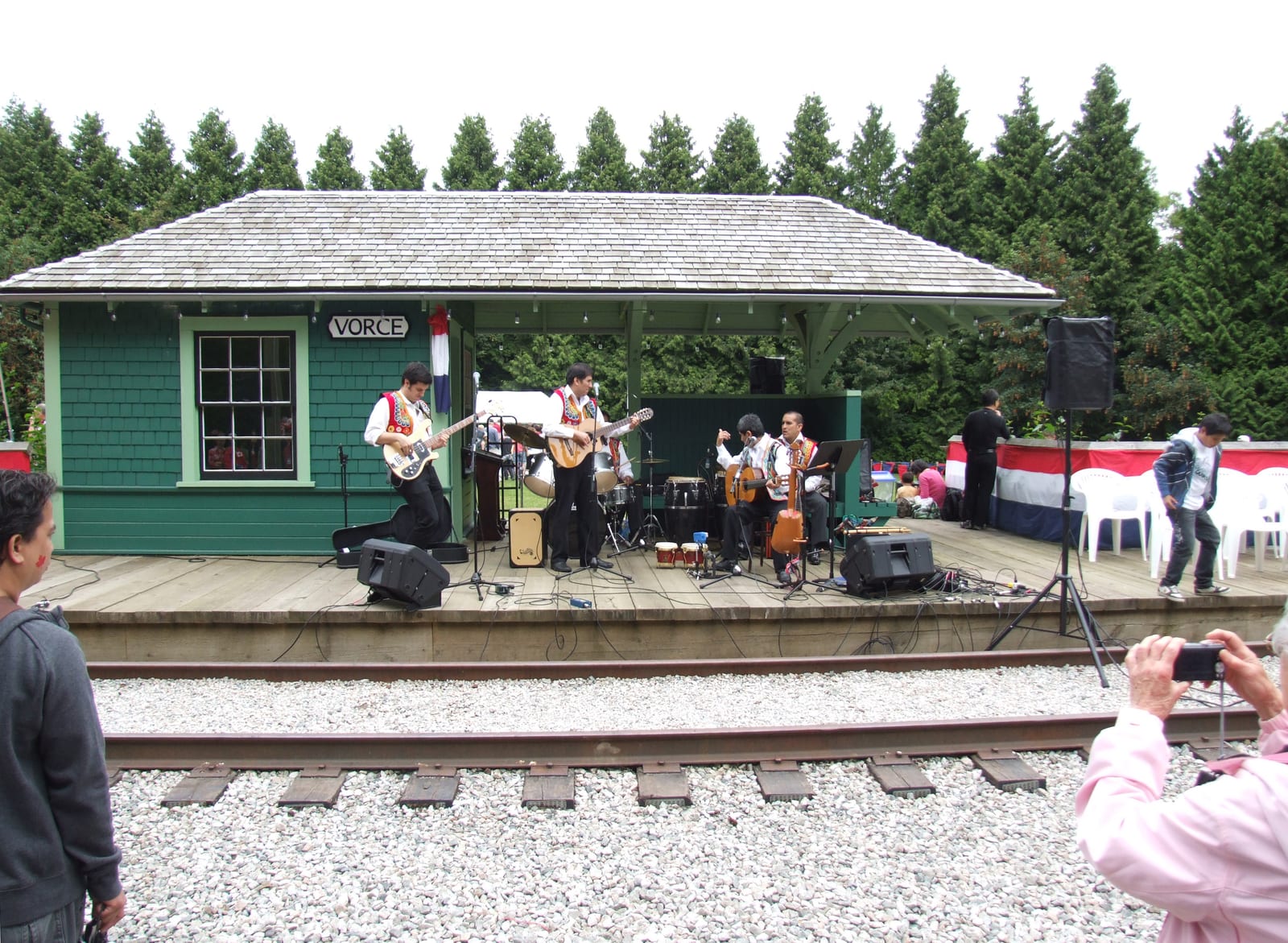
The Station That Wandered
A small wooden tram shelter built in 1911 is the only piece of Burnaby's interurban railway still standing. It has moved twice by truck, and the engineer it was named for has all but vanished from the record.
Artom Butenko · 4 min read
Keys to the Centre
On 22 June 1956, a contractor handed Reeve Charles MacSorley the keys to a new municipal hall at 4949 Canada Way, near Deer Lake. The site had been chosen two years earlier by a simple rule: put the seat of government where neither half of Burnaby could complain it favoured the other.
Artom Butenko · 5 min read