What the Lake Holds: Winter Birds at Burnaby Lake
In December, the lake gathers what the rest of the region displaces. The count begins at dawn.
In December, Burnaby Lake does not feel seasonal in the usual sense. There are no decorations, no programmed events, no clear markers of celebration. The trails are quiet. The water is dark. From a distance, the lake can seem almost empty.
But winter is when Burnaby Lake becomes most alive — particularly for birds.
Each December, small groups of volunteers walk the same routes around the lake that have been surveyed for decades. They carry binoculars, field guides, tally sheets. The work is quiet and methodical: birds counted by sight and sound, numbers cross-checked, unusual sightings flagged for verification. The rules are strict — fixed areas, fixed times, standardised methods. There is little room for interpretation.
This is the Christmas Bird Count, one of the longest-running citizen science surveys in the world. It began in 1900, when an American ornithologist named Frank Chapman proposed counting birds on Christmas Day instead of hunting them. Twenty-seven observers took part in the first count, tallying 18,500 birds across 90 species. Today, more than 80,000 participants count birds each winter across the Western Hemisphere.
At Burnaby Lake, the count is part of the larger Vancouver circle — one of the most species-rich in Canada. Over 200 species have been recorded at Burnaby Lake throughout the year. In winter, counts typically register between 60 and 80 species in a single day. The ten-year average hovers around 59 species. In good years, when cold pushes birds down from the mountains and inland lakes freeze, the count can exceed 70.
These numbers may seem modest compared to coastal sites like Boundary Bay, where tidal cycles bring massive concentrations of shorebirds. But Burnaby Lake is not about spectacle. It is about consistency — a place where birds arrive, stay, and can be found again year after year.
A Lake Built for Staying
Burnaby Lake sits beneath the Pacific Flyway, a migration corridor stretching from Alaska to Patagonia. In theory, this makes it a place of passage. In practice, it has become a place of return.
The lake offers shallow freshwater, stable water levels, and relatively mild winter conditions. It rarely freezes. Even during colder snaps, pockets of open water remain, allowing birds to feed when other inland lakes lock up under ice. The surrounding marsh — cattails, sedges, bulrushes — provides cover and food. Highway 1 and the SkyTrain press close on the south; residential development fills in from all sides. But the lake itself persists, protected as a regional park since 1977.
This is why winter bird counts here are not about rare surprises. They are about numbers and reliability. Birds that might otherwise push farther south often stop here instead. Others that normally remain inland are displaced by freezing conditions and move toward the coast, concentrating in places where open water persists. Burnaby Lake acts as a pressure valve within the regional ecosystem — absorbing what the weather displaces, holding it long enough to be counted.
What Winter Reveals
Some birds have become almost emblematic of Burnaby Lake in winter.
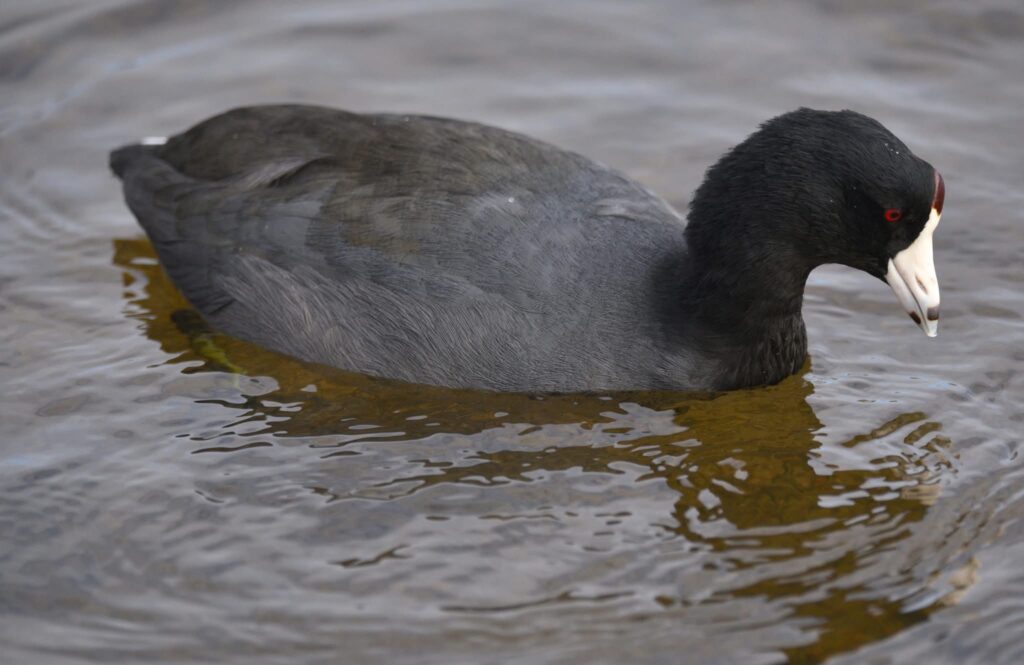
American Coots dominate the open water, arriving in large numbers each fall. Their presence signals food availability and stable conditions. They are often dismissed as ordinary, but their abundance is precisely the point — a baseline against which change can be measured.
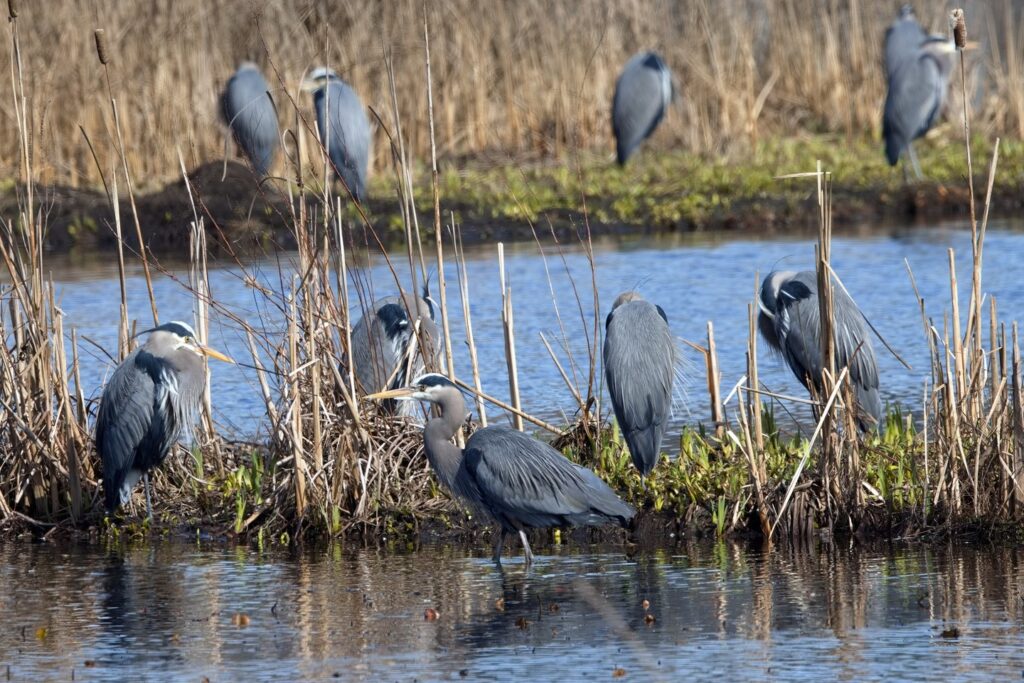
Great Blue Herons remain year-round, relying on the lake’s shallows even in colder months. The Pacific subspecies (Ardea herodias fannini) does not migrate and is listed as a Species of Special Concern due to loss of wetland habitat in the Georgia Basin. A large heronry at nearby Deer Lake — over 160 nests in recent counts — depends on foraging habitat at Burnaby Lake. The herons’ continued presence suggests that the wetland’s basic structure remains intact.
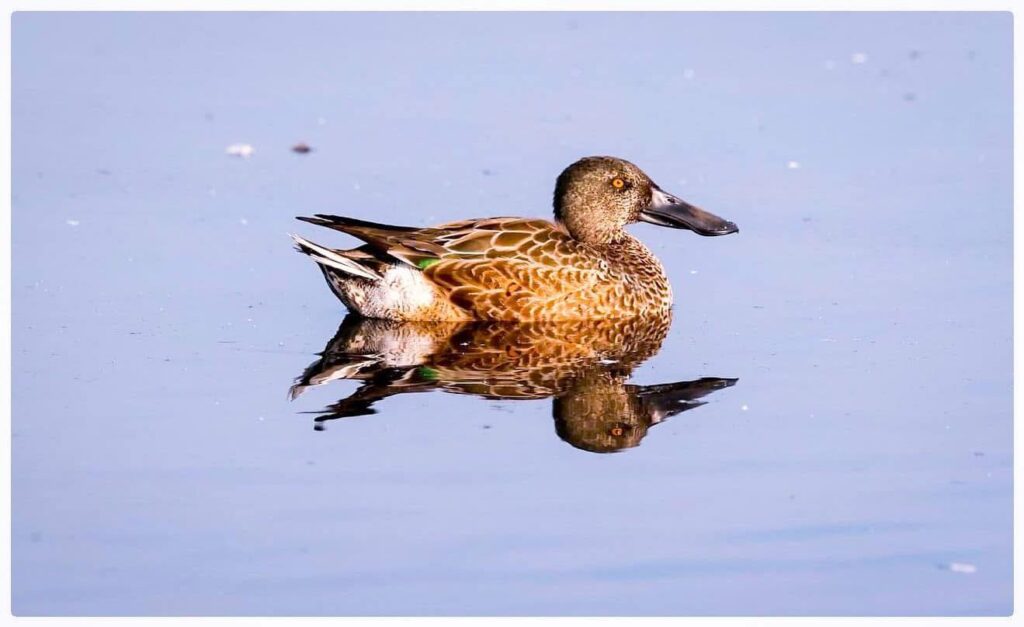
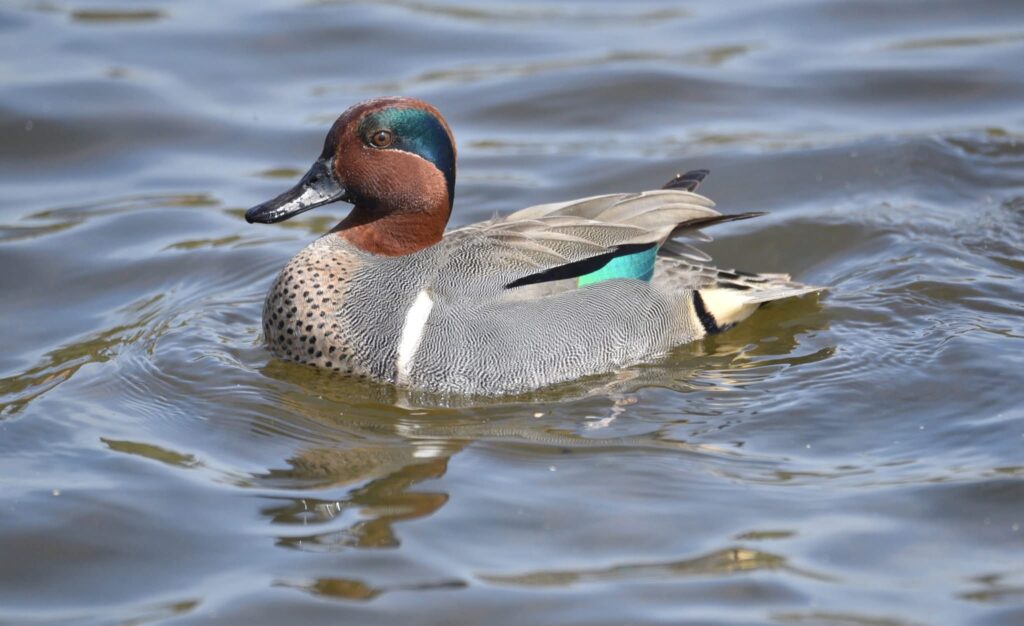
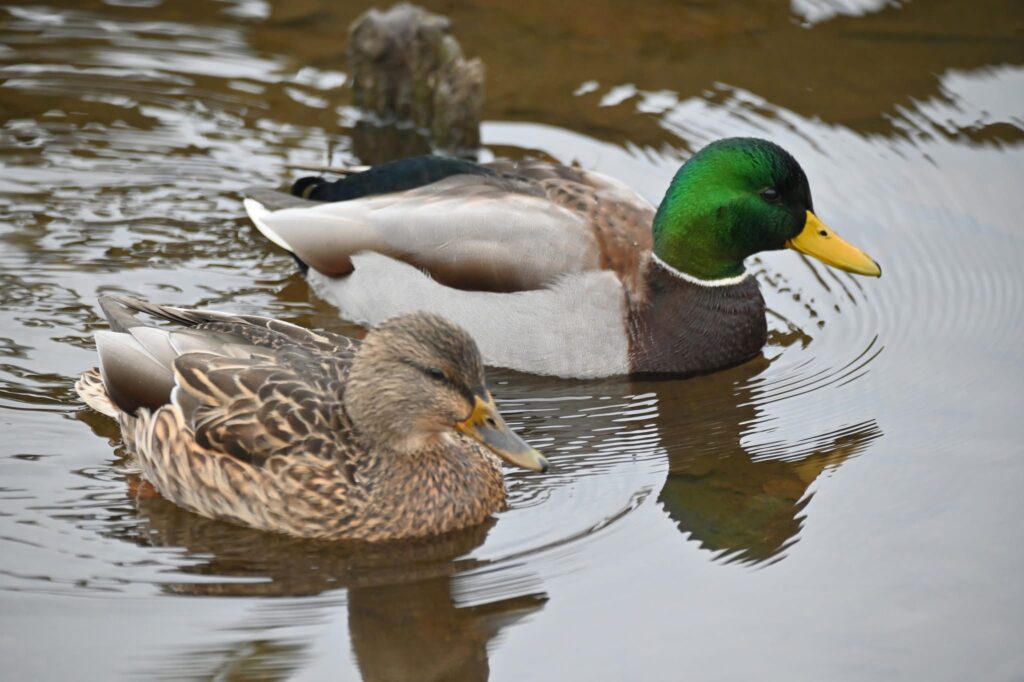
Dabbling ducks — Northern Shovelers, Green-winged Teal, Mallards — peak in winter, feeding along the lake’s edges where plant matter and invertebrates collect. Ring-necked Ducks, once absent from the count, have increased steadily since 2005, reflecting a continent-wide population rise. Common Mergansers, benefiting from recent dredging that deepened parts of the lake, now form large winter flocks.
Perhaps the most telling shift has been the Anna’s Hummingbird. Once a rarity in British Columbia — its native range was coastal California — it has expanded steadily northward since the 1960s. The first sighting in Burnaby was in 2008. Since then, numbers have climbed from single digits to consistent double figures. Volunteers now spot them in the field rather than relying on reports from backyard feeders.
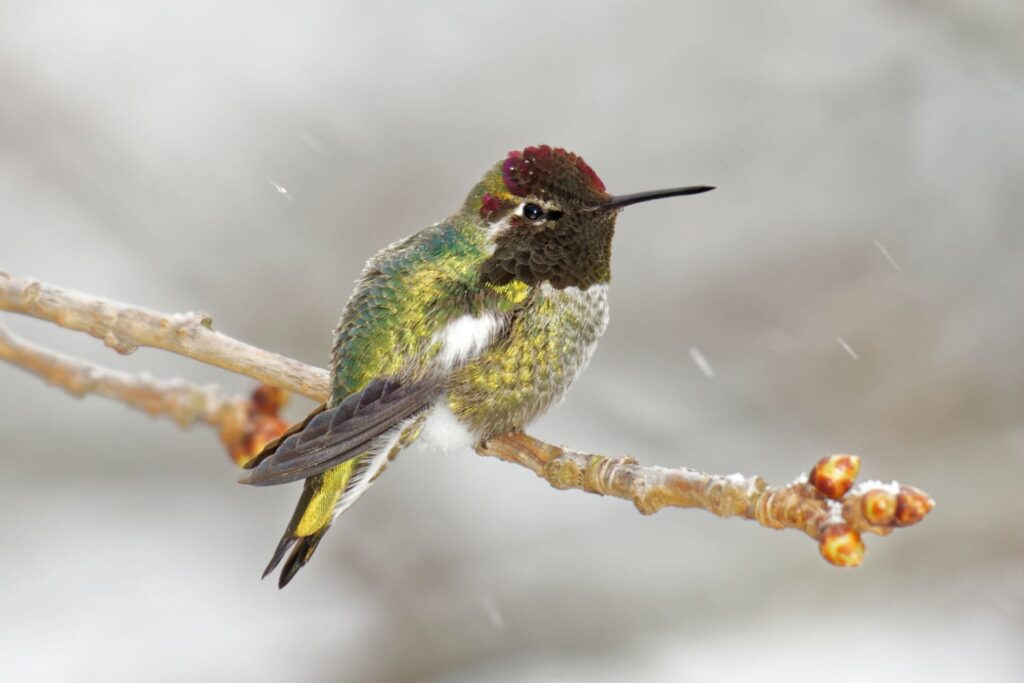
The Anna’s Hummingbird is a small bird carrying large implications. Its year-round presence in the Lower Mainland is an example of ecological release — made possible by introduced flowering plants, backyard feeders, and milder winters. When temperatures drop sharply, the birds enter torpor, lowering their heart rate from 1,200 beats per minute to nearly one beat every two seconds. Some survive. Some do not. But the population continues to grow. George Clulow, who has organised the Burnaby count since the 1980s, calls their increase ‘a real indication of how they are becoming progressively more abundant. One of the things we believe about them is they are benefitting from climate change.’
Weather, Water, and Small Shifts
Winter at Burnaby Lake is shaped less by temperature alone than by precipitation and water levels. Heavy rains raise the lake and flood adjacent marsh areas, expanding feeding zones for dabbling ducks and shore-associated species. Drier winters compress activity toward the central basin, making bird concentrations denser but more vulnerable to disturbance.
Fog plays an equally important role. It dampens sound, reduces visibility, and alters bird behaviour. Flocks lift later. Feeding stretches longer into the morning. Predators — Bald Eagles, Red-tailed Hawks — adjust their patterns accordingly.
These conditions are not dramatic in isolation, but over decades they leave a measurable imprint. Long-term Christmas Bird Count records show that years with prolonged cold inland often correspond to temporary population spikes at Burnaby Lake, particularly among waterfowl. In 2015, when an unusual mix of birds arrived from the north, the mountains, and the south, the count recorded 72 species — well above the ten-year average.
The People Who Count
The winter life of Burnaby Lake is not observed by accident. It is recorded, year after year, by a small but committed group of people — many of whom return to the same routes each December.
Some volunteers have participated in counts for decades. They know which bends in the trail shelter ducks from wind, which stretches of shoreline hold herons even in poor weather, and where unusual sightings are most likely to occur. This knowledge is rarely written down. It is passed on quietly, through shared walks and brief conversations in the cold.
Recent counts have brought surprises. In one year, twelve White-winged Crossbills — only the third record for the entire Vancouver circle since the 1960s. A Townsend’s Warbler. Six Long-billed Dowitchers, the only ones spotted in the Lower Mainland that season. At the crow roost near Still Creek, counters have tallied over 11,000 corvids in a single evening.
The data is not dramatic, but that is precisely its value. Over time, these annual snapshots become something larger — a slow record of change that would otherwise go unnoticed.
A Managed Landscape
Burnaby Lake is often described as natural, but it is more accurately managed nature.
Water levels are controlled. Invasive plant species are regularly removed. Shorelines are monitored. Volunteers from the Burnaby Lake Park Association work alongside Metro Vancouver staff to restore native vegetation and maintain habitat. The lake’s stability is not accidental; it is the result of long-term stewardship rather than neglect.
The surrounding forests — Burnaby Mountain Conservation Area, Stoney Creek Ravine, Robert Burnaby Park — form a connected corridor that supports mammals rarely seen in urban settings: black bears, bobcats, coyotes, beavers. The Washington snowshoe hare, a subspecies that stays brown through winter rather than moulting white, maintains one of its best-known populations in the park. The red-legged frog, threatened by habitat loss and invasive bullfrogs, still breeds here.
None of these species could survive if Burnaby Lake were isolated. The lake persists because it is connected — to other green spaces, to ongoing human effort, to a city that has allowed nature to coexist with infrastructure rather than be fully replaced by it.
Why Winter Reveals the Most
Summer often hides ecological imbalance behind abundance. Winter does not. When food is scarce and conditions harsh, weak systems fail. Stable ones endure.
Burnaby Lake is not Boundary Bay, with its tidal shorebirds, or the Fraser delta, with its migrating geese. It occupies an in-between position — freshwater, low-lying, enclosed, deeply urban. This is precisely its value: a winter refuge for species that need open water but cannot find it elsewhere; a year-round home for birds that tolerate human proximity.
Each December, without ceremony, the lake gathers what climate and weather displace. It holds them long enough to be counted, observed, and remembered. The counters will return next year. So will the birds.

Comments
Join the conversation! Please log in or register to comment.
Log In to Comment